How to Choose the Right Filling Equipment?
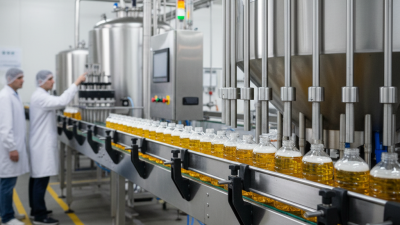
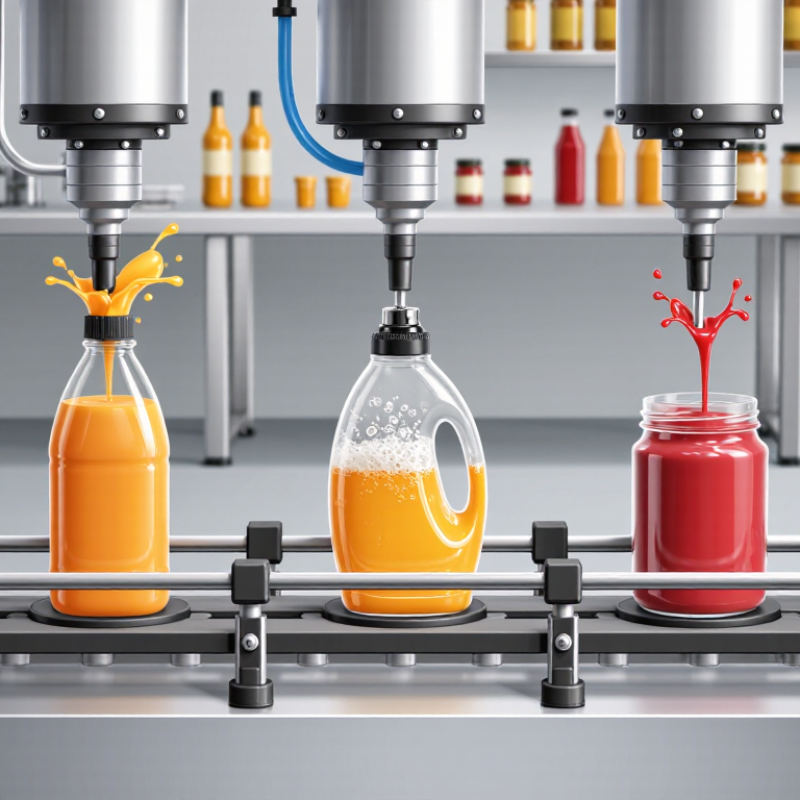
Choosing the right filling equipment starts with the product, not the machine brochure. A thin juice, a foaming detergent, and a thick sauce behave differently under the same filling conditions. Watch how each product pours, bubbles, and clings to a container. Those small details affect accuracy, cleaning time, and line speed.
An illustrative expert voice for this guide, filling-systems specialist Maya Chen, puts the selection principle this way: “Choose the filler around the product’s behavior, then prove it with a production trial.” This is an original editorial line, not a verified quotation. The principle is practical: test the actual liquid, bottle, cap, and target fill volume before committing. A bench test may look clean. A full shift can reveal drips, slow changeovers, or foam that creeps up the bottle neck.
The sections ahead compare common filler types, product and packaging needs, output targets, sanitation, and future flexibility. Look closely at the trade-offs. A high-speed machine may be the wrong fit for short runs or frequent product changes. A simpler filler may suit today’s demand, but leave little room to grow. There is no perfect choice. There is only a choice supported by clear requirements, realistic trials, and honest review of what the line can sustain.
Define Your Product, Container, and Filling Requirements
How to Choose the Right Filling Equipment?
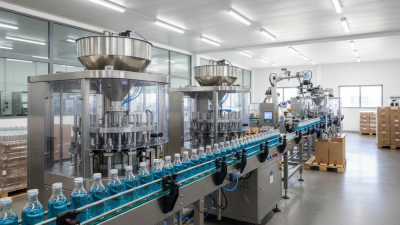
Define the product, container, and filling requirements before comparing machines. A thin, watery liquid behaves differently from a thick sauce or a product with suspended pieces. Note its viscosity, temperature range, foaming tendency, and sensitivity to air or shear. Small details matter. A few bubbles can cause inconsistent fills, while particles may need a larger product path to avoid blockages.
Check the container’s material, opening size, shape, and stability. A narrow neck may need a carefully matched nozzle; a lightweight bottle may shift under a fast-moving fill head. Test with the actual containers, not just a drawing or sample dimensions. Then set practical targets for fill volume, line speed, accuracy, and changeover time. Consider how operators will clean product-contact parts and adjust settings between runs. Gravity, piston, pump, or pressure-based systems may suit different products, but the choice depends on real operating conditions. Test both. Run trials at the intended speed and across the smallest and largest containers. I still find cleaning time easy to underestimate; it can shape daily output as much as filling speed.
Compare Filling Technologies and Their Operating Principles
Choosing filling equipment starts with the product, not the machine brochure.
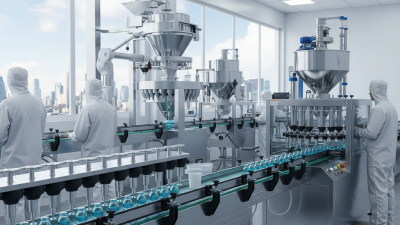
Gravity fillers use liquid height and time, making them suitable for free-flowing products with stable viscosity. They are simple, but foam and temperature changes can reduce accuracy. Pump-based systems control flow mechanically. Piston fillers measure a fixed volume, while time-pressure fillers use compressed air and timed valves. Peristaltic fillers offer gentle, closed-path handling, which can help protect sensitive liquids and simplify cleaning. Net-weight fillers measure the container during filling, supporting tighter control when density varies.
PMMI’s 2023 State of the Industry report valued U.S. packaging machinery shipments at approximately 11.3 billion dollars in 2022, showing strong investment across automated lines. The report also identifies labor availability and operational efficiency as major purchasing pressures. These pressures can make high-speed equipment attractive, but speed alone is a weak selection criterion. A 2024 report from Grand View Research estimates continued growth in the global filling machine market, driven by automation and demand for flexible production. Yet the data does not replace testing. It may even encourage overconfidence.
During trials, record fill-weight variation, changeover minutes, product loss, and cleaning time. Watch the first and last containers in each run. They often reveal problems hidden by averages. A thick sauce may need a servo-driven piston, while a thin liquid may perform better with gravity or flowmeter filling. For powders, auger systems measure by screw rotation, whereas net-weight systems verify the final dose. Consider maintenance access, calibration routines, container size changes, and future products. The right technology is the one that remains accurate on an ordinary production day.
Evaluate Accuracy, Speed, Capacity, and Material Compatibility
How to Choose the Right Filling Equipment?
Evaluate Accuracy, Speed, Capacity, and Material Compatibility
Accuracy should be measured across the full filling range, not only at one target volume. Check repeatability, acceptable tolerance, and product loss during startup. A machine that fills 250 milliliters well may perform poorly at 30 milliliters. Small errors accumulate. Request test results using your actual container and product. Do not rely on catalog figures alone.
Speed must match the complete production process, including container handling and cleaning pauses. A fast filler can create delays when upstream equipment cannot supply containers consistently. Review hourly capacity under realistic conditions, not ideal laboratory settings. Consider shift patterns, changeover time, and operator workload. More speed is not always better.
Material compatibility requires practical testing. Viscous liquids may need gentle pumping, while products containing particles require suitable passages and valves. Temperature can change flow behavior significantly. Confirm contact materials, seal durability, cleaning requirements, and corrosion resistance. Test the real product. In equipment evaluations, I have seen promising trials fail after a minor formula change. That experience makes flexibility important. A wider adjustment range may support future products, but it can also increase maintenance demands. Ask technicians to inspect access points, calibration procedures, and wear components before purchase.
Assess Cleaning, Safety, Automation, and Maintenance Needs
Choosing filling equipment starts with the product, but cleaning often reveals the real cost. In my experience, residue around valves and seals creates long delays. Ask operators to inspect a sample machine after a full production run. Can every product-contact surface be reached without special tools? Smooth welds, drainable lines, and removable nozzles reduce hidden buildup. A ten-minute rinse is useful, but verify cleaning time under actual conditions.
Tips: Request documented cleaning procedures, material certificates, and maintenance records. Test emergency stops with the line running at normal speed. Check guards, sensors, and access doors before discussing output rates. Automation should support people, not confuse them. Clear screens, alarms, and manual overrides matter during a rushed shift. I once saw an automated system slow production because staff could not diagnose a simple sensor fault.
Maintenance deserves equal attention. Count seals, pumps, filters, and change parts before approving the design. Are common spares locally available? Can one trained technician replace a worn seal safely? A machine may perform beautifully during a demonstration, yet fail in a humid, dusty room. Measure noise, vibration, washdown exposure, and temperature near the installation area. Do not trust a perfect trial. Real operators occasionally miss a cleaning step or install a part backwards. Build inspection points into the workflow, and record failures honestly. That evidence is more reliable than impressive performance figures.
Select Equipment Based on Budget, Compliance, and Future Growth
How to Choose the Right Filling Equipment?
Budget should not be the only filter. PMMI’s 2023 Packaging Machinery Shipments Study valued U.S. shipments at about $10.2 billion in 2022. This signals strong investment, but expensive automation is not always wise. Compare total ownership costs, including cleaning, changeovers, training, spare parts, and downtime. A lower-cost filler may become expensive when product viscosity changes. That risk is easy to underestimate.
Compliance needs practical evidence. Check hygienic design, material compatibility, traceability, calibration, and cleaning validation. Food operations should align equipment controls with applicable food-safety requirements, such as 21 CFR principles. Pharmaceutical facilities need documented qualification and repeatable process controls. Ask suppliers for test records, not attractive promises. Documentation matters during audits.
Tips: Write three-year and five-year production scenarios. Measure containers per minute, fill accuracy, changeover time, and rejected units. Leave room for sensors, recipe controls, and additional filling heads. Deloitte’s 2023 Smart Manufacturing Survey found that 86% of manufacturers expect smart manufacturing to support competitiveness within five years. Still, digital features can create unnecessary complexity. I have seen teams buy advanced systems before defining basic data needs. Start with the process, then choose scalable automation. Growth plans should be realistic, but not timid.
How to Choose the Right Filling Equipment?
Select equipment based on budget, compliance requirements, and future production growth.
The chart shows representative nominal throughput ranges commonly used for early-stage equipment planning. Actual performance depends on product viscosity, container size, filling accuracy, changeover requirements, and line configuration.
Budget
Manual and semi-automatic systems generally reduce initial capital cost and are suitable for lower-volume production or product testing.
Compliance
For regulated products, prioritize cleanable product-contact parts, documented calibration, controlled filling accuracy, and hygienic equipment design.
Future Growth
Inline and rotary automatic systems provide higher throughput and more automation potential, making them better suited to sustained volume growth.