Request Quote

Request a quote from Nidec Drive Technology America Corporation.

This quote form is intended for customers and partners in North America seeking information about Nidec Drive Technology America Corporation’s Precision Gearing Technologies. For inquiries related to the Nidec motor group division or from outside this region, please visit the global Nidec Group website to find the appropriate regional or product-specific contact.

Subscribe to Nidec Newsletter

Subscribe to our email newsletter to stay current with our precision gearing solutions, featured products, company updates, and industry news.

Why Choose Precision Machine Parts for Global Sourcing?

Global manufacturers choose precision machine parts when accuracy, repeatability, and dependable delivery matter. A well-made component can keep an assembly aligned, reduce maintenance, and protect production schedules. In real sourcing projects, small details often decide success. A 0.02-millimeter deviation may affect an entire mechanism. Surface finish matters too. So does packaging.

Experienced buyers look beyond attractive prices. They review technical drawings, tolerance requirements, material grades, and inspection methods. Reliable suppliers should explain their capabilities clearly. They should also provide measurable evidence, such as dimensional inspection reports, material certificates, and traceability records. These documents support responsible purchasing decisions across borders. They also reduce uncertainty between engineering and procurement teams.

Communication remains critical. Time zones, shipping routes, and language differences can create avoidable mistakes. A responsive manufacturer confirms unclear dimensions before production begins. That simple habit can prevent expensive rework. Quality systems help, but they are not a complete guarantee. A certificate alone does not prove consistent performance. Buyers should evaluate samples, production controls, corrective actions, and customer references where available.

There is room for reflection. The lowest quotation may look efficient, yet hidden costs can appear later. Delayed approvals, rejected batches, or poor protective packaging can change the calculation. No supplier is perfect. However, transparent processes make problems easier to identify and correct. For global sourcing, the strongest choice combines engineering skill, inspection discipline, practical experience, and honest communication. That combination gives precision machine parts lasting value beyond their initial purchase price.

Why Choose Precision Machine Parts for Global Sourcing?

What Are Precision Machine Parts?

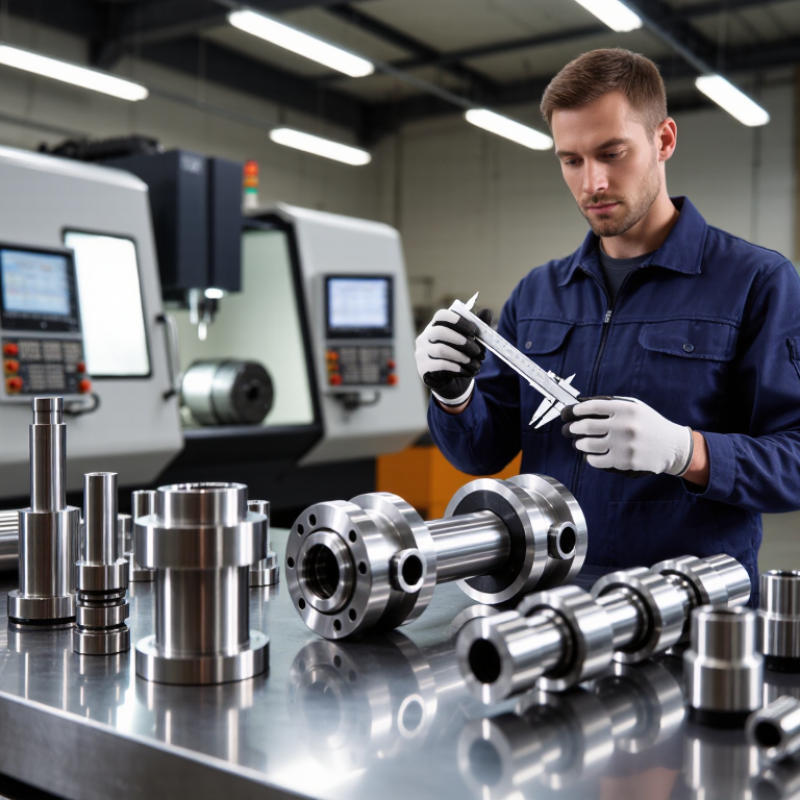
Precision machine parts are components manufactured to exact dimensions, tight tolerances, and defined surface finishes.

They may include shafts, housings, gears, pins, fittings, and custom assemblies. Unlike ordinary hardware, these parts must fit a specific design without excessive play or unwanted friction. A small deviation can affect alignment, sealing, vibration, or service life.

The meaning of “precision” depends on the application. A medical fixture, optical mount, and industrial shaft may require different tolerance levels. Exact numbers matter.

Manufacturers create these parts through CNC turning, milling, grinding, drilling, wire cutting, or other controlled processes. Material selection is equally important.

Stainless steel resists corrosion, aluminum reduces weight, and engineering plastics can lower friction.

Drawings should define dimensions, geometric tolerances, hardness, threads, and inspection points. Without clear specifications, even a skilled machinist must guess.

Guessing costs time.

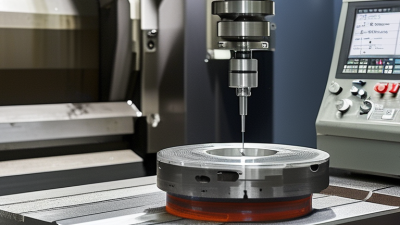
For global sourcing, buyers should review process capability, calibration records, material certificates, and sample inspection reports. Coordinate measuring machines, gauges, and surface testers help verify the finished part.

Yet inspection alone cannot repair a weak design or unstable process. A prototype may pass measurement but fail after heat, load, or repeated cycling.

Ask how parts are packed, traced, and protected during shipment. I would also challenge my own assumptions: tighter tolerances are not always better, because they can increase cost without improving performance.

Good precision serves a clear function.

How Precision Machining Supports Global Sourcing

Why Choose Precision Machine Parts for Global Sourcing?

Global sourcing depends on more than low unit cost. It requires parts that perform consistently across borders. Precision machining supports this need through controlled tolerances, repeatable processes, and documented inspection. UNCTAD’s Global Trade Update reported that global trade was on track to reach 33 trillion dollars in 2024. As trade expands, sourcing teams need fewer surprises between production and delivery.

Precision machining makes reliability measurable. That matters. Coordinate-measuring reports, first-article checks, and tool-life records give buyers practical evidence. Shared drawings, revision controls, and inspection standards also make supplier comparisons fairer. Deloitte’s 2024 Smart Manufacturing and Operations Survey found that 86% of manufacturers view smart manufacturing as a major competitiveness factor within five years. Digital production records can support this direction by linking material certificates, machine settings, and inspection results.

The World Bank’s 2023 Logistics Performance Index covered 139 economies and evaluated customs, tracking, infrastructure, and timeliness. Machined parts cannot fix every logistics delay, but stable quality reduces avoidable rework. Yet precision is not automatic. A tight tolerance may increase cost without improving the final assembly. A supplier can meet a drawing and still miss the real functional need. Sourcing teams should test samples, review process capability, and question unnecessary specifications before placing larger orders. Mistakes still happen. Good documentation makes them visible early.

Which Quality Standards Define Reliable Machine Parts?

When sourcing precision machine parts globally, quality begins before the first chip is cut. A reliable supplier can show a controlled quality system, commonly aligned with ISO 9001. For aerospace work, AS9100 may be relevant. The certificate matters, but its scope matters more. Ask whether it covers the actual factory and process. Do not accept a polished document as proof. That mistake is easy.

Dimensional quality should be tied to clear drawings and recognized standards. ISO 1101 helps define geometric tolerances, while ISO 2768 can support general tolerances when drawings allow them. Critical features need measured evidence, not verbal assurance. Look for calibrated CMM reports, first-article inspection records, and gauge calibration dates. Check datums, hole positions, flatness, and surface roughness. A part can look perfect and still fail assembly.

Material control is equally practical. Request heat numbers, mill certificates, and traceability from raw stock to final inspection. Confirm hardness, coating thickness, and heat-treatment results when specified. Sampling plans should reflect risk, not convenience. A low-risk bracket and a safety-critical shaft deserve different scrutiny. I have learned that inspection reports can hide weak assumptions. Tolerances may be copied incorrectly, or measurements may use unsuitable datums. Review the method, not just the number. Reliable sourcing leaves an audit trail, but it also leaves room for questions.

What Cost and Supply Benefits Do Precision Parts Offer?

Why Choose Precision Machine Parts for Global Sourcing?

Precision machine parts can reduce total sourcing costs when specifications are controlled from the beginning. Accurate tolerances help limit rework, rejected batches, and assembly delays. A well-made part should fit correctly without repeated adjustments. That saves labor at the production line.

Supply benefits appear in small details. Clear drawings, material certificates, and inspection records make supplier communication more reliable across time zones. Standardized processes also support repeat orders, even when demand changes. For example, a documented batch with measured hole diameters can be reproduced more consistently six months later. Smaller defects are easier to trace. Faster tracing means fewer costly interruptions.

Shipping costs may also decrease when parts arrive ready for assembly. Fewer replacement shipments reduce freight use and production downtime. However, precision does not automatically mean the lowest purchase price. Tight tolerances can increase machining time, inspection needs, and tooling expenses. That trade-off deserves careful review. A practical sourcing plan compares unit price, defect risk, lead time, packaging, and freight together. No plan is perfect. Material availability can shift, and an approved drawing may still need clarification after the first sample. Experienced teams usually leave room for that learning stage instead of hiding it.

Why Choose Precision Machine Parts for Global Sourcing?

What Cost and Supply Benefits Do Precision Parts Offer?

Higher logistics performance generally indicates more reliable customs processing, infrastructure, international shipments, tracking, and delivery timeliness. For precision machine parts, these capabilities can help reduce schedule risk, inventory buffers, rework exposure, and total landed cost.

Data source: World Bank Logistics Performance Index 2023. Scores range from 1 (low) to 5 (high). The index is a country-level supply-chain benchmark and does not represent a supplier quotation or guaranteed delivery performance.

How to Select a Global Precision Machining Supplier?

Selecting a global precision machining supplier begins with clear drawings, tolerances, materials, and inspection requirements. Ask for evidence, not promises. A polished website proves little.

Request sample parts made from comparable materials and processes. Check critical dimensions with calibrated equipment, then compare them with the supplier’s inspection report. Evaluate process control carefully. Ask how the team manages tool wear, heat, burrs, and dimensional drift during long production runs.

Review material certificates, first-article records, and revision control before approving production. Communication matters across time zones. A capable supplier should answer technical questions clearly and report deviations early. Confirm production capacity, realistic lead times, packaging methods, and export documentation. Do not rely on optimistic schedules.

Reliable sourcing also requires traceability. Work orders should connect materials, machine settings, operators, and inspection results. Consider a virtual or on-site audit.

Look for labeled work areas, organized gauges, and consistent measurement routines. Independent audits can add confidence, but they cannot replace technical judgment.

Cost still matters. Yet the lowest quote may hide weak inspection, unstable processes, or costly rework. I would test a small batch before committing to annual volumes.

That step may feel slow when deadlines are tight. It can expose unclear tolerances, poor feedback, or packaging damage before these problems reach your customers.

No supplier is perfect, including one that communicates well. Keep reviewing performance after the first shipment.