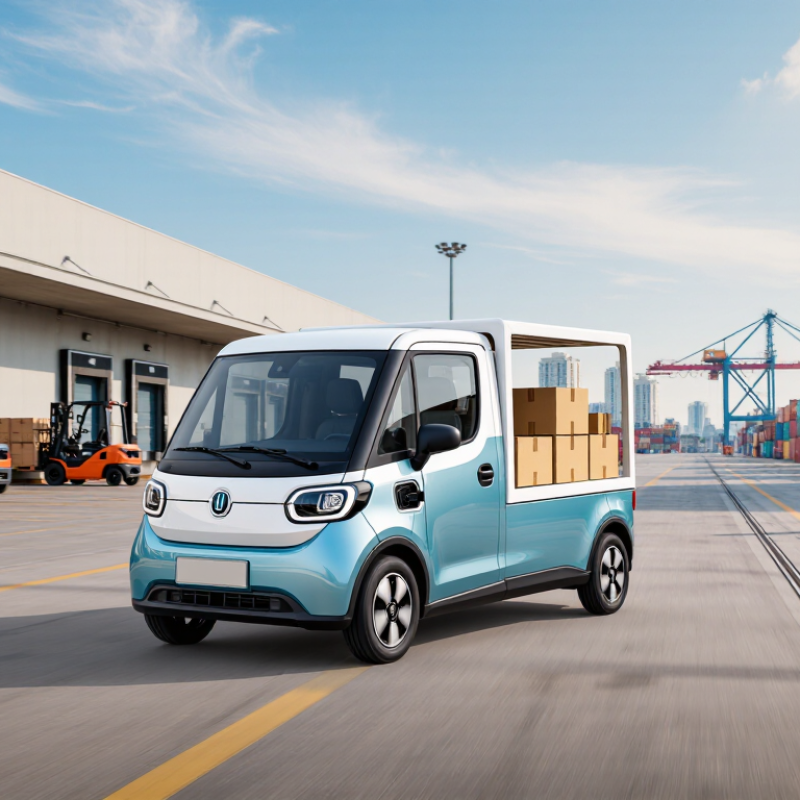
| Port and warehouse transfers | Moves small consignments, documents, tools, and time-sensitive parts between nearby facilities without dispatching a larger vehicle. | Compare the vehicle’s rated payload and cargo volume with the actual shipment, packaging, driver, and equipment weight. | Confirm that the route, loading area, and terminal rules permit the vehicle’s dimensions and operating class. |
| Last-mile delivery | Supports deliveries from a local depot, urban consolidation centre, or port-area warehouse to nearby customers. | Plan the route using loaded range, traffic, terrain, temperature, and the energy needed for return travel. | Low-emission-zone rules, vehicle registration, and commercial access restrictions differ by city and country. |
| Shipment size and load limits | Works best for compact, lighter loads rather than replacing heavy trucks used for container or bulk transport. | Use the vehicle manufacturer’s rated payload, gross vehicle weight, axle limits, and cargo-space measurements; do not estimate from appearance. | Road-weight limits and vehicle classifications vary by jurisdiction. Cargo must also be secured in accordance with local requirements. |
| Container and freight handling | Can handle local pickup or delivery of selected packages and components associated with containerised freight. | A standard 20-foot ISO freight container is approximately 6.06 m long externally; a tiny truck is not a substitute for a container tractor or terminal handling equipment. | Container dimensions, maximum gross mass, and permissible road loads should be verified against the container plate and applicable transport rules. |
| Charging and daily scheduling | May be recharged during planned depot time, helping coordinate local work with warehouse operating hours. | Check the vehicle’s charging connector, supported charging power, battery capacity, and charging time in its technical documentation. | Connector types, electrical supply, charging infrastructure, and grid conditions differ across markets. Confirm compatibility before deployment. |
| Energy use and emissions | Electric drive produces no tailpipe exhaust while operating, which can be useful in indoor or densely populated delivery areas where permitted. | Compare energy consumption per kilometre using the same route, payload, speed, and operating conditions. | Lifecycle emissions depend on electricity generation, vehicle manufacture, battery production, and end-of-life treatment. |
| Fleet coordination | Can be assigned to repeatable short routes while larger vehicles carry freight over longer distances. | Track payload utilisation, route distance, charging downtime, delivery completion, and maintenance availability. | Telematics, data connectivity, software, and reporting requirements may differ between countries and operators. |
| Customs and cross-border movement | Supports local logistics around a border facility or port but does not remove customs or freight-document requirements. | Prepare the shipment’s commercial invoice, packing list, transport documents, and any required permits according to the route. | Customs declarations, duties, vehicle homologation, insurance, and cross-border operating permissions depend on the countries involved. |
| Total operating cost | May reduce energy and routine service costs on suitable routes, while requiring investment in vehicles, charging, and fleet processes. | Compare purchase or lease cost, electricity, charging equipment, insurance, maintenance, downtime, and resale value over the planned service life. | Electricity prices, incentives, taxes, parts availability, and servicing costs vary by market; use local quotations for a reliable comparison. |
| Best-fit use case | Short, predictable, lower-payload trips between nearby logistics sites or for urban distribution. | Confirm that daily distance, payload, cargo dimensions, charging access, and duty cycle match the selected vehicle’s specifications. | For long-haul transport, heavy freight, or routes without dependable charging, a different vehicle class or transport mode may be more suitable. |