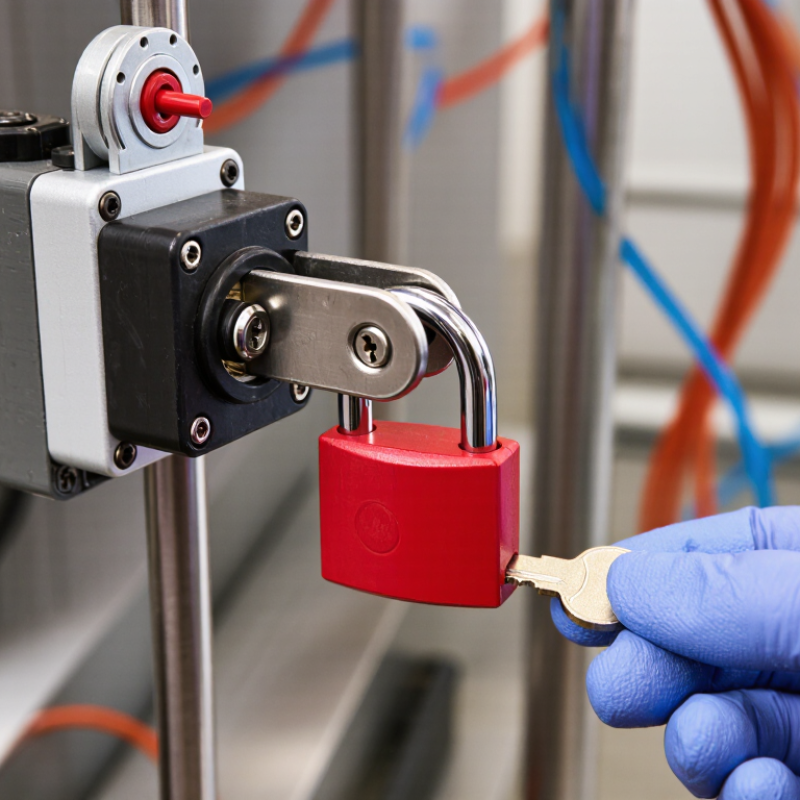
| Purpose | A safety lockout padlock is a dedicated lock used as part of a lockout/tagout (LOTO) procedure to help prevent equipment from being operated while work is underway. | It helps keep an energy-isolating device in its safe position and makes the lockout visible to workers. | Use it with the correct energy-isolating device and the site’s documented LOTO procedure; a padlock alone does not make equipment safe. |
| How It Works | An authorized worker applies the lock to a suitable isolation point or lockout device and controls the key while the equipment is being serviced. | The locked device helps prevent the isolator from being moved back to an operating position without removing the lock. | Before work begins, follow the required shutdown, isolation, stored-energy control, and verification steps. |
| Personal Control | In group work, each authorized worker may apply a personal lock to a group lockbox or an approved hasp arrangement, according to the site procedure. | Personal locks help ensure that equipment is not returned to service while a worker’s lock remains in place. | Only the worker who applied a personal lock should remove it, except under a documented, authorized exception procedure. |
| Keying Options | Locks may be keyed differently, so each lock has its own key, or keyed alike, so a designated set can share a key. | Keying plans can support individual control or organized group lockout practices. | Choose a keying system that supports accountability and prevents unauthorized access; do not assume one arrangement suits every site. |
| Key Retention | Many lockout padlocks are designed so the key cannot be removed while the shackle is open. | This feature can help reduce the chance of a worker leaving an unlocked padlock at an isolation point. | Check the product’s operating instructions, since key-retention features vary by model. |
| Materials and Design | Lockout padlocks are available with bodies and shackles made from different materials, including nonconductive options for some applications. | Purpose-designed construction can help the lock suit the isolation point and the surrounding work environment. | Consider electrical hazards, corrosion, temperature, chemicals, and the required shackle dimensions. Confirm suitability with the manufacturer’s specifications. |
| Identification | Locks can be labeled or otherwise identified with worker or department information; color may also be used as a site identification aid. | Clear identification can help workers recognize who applied a lock and support communication during maintenance. | Use colors only according to a consistent site system. Color alone should not replace clear identification or training. |
| Compatibility | A padlock may be used with hasps, valve lockout devices, circuit-breaker lockouts, and other compatible isolation accessories. | Compatible devices help secure different types of energy-isolating equipment in the intended position. | Check that the shackle diameter, clearance, and device design fit the isolation point and cannot be easily defeated. |
| Regulatory Context | In the United States, OSHA’s general industry lockout/tagout standard, 29 CFR 1910.147, addresses control of hazardous energy and requirements for energy-control devices. | The standard calls for devices used in lockout/tagout to be durable, standardized, substantial, and identifiable, among other requirements. | Applicable rules differ by jurisdiction and industry. Employers should consult current regulations and their written energy-control procedures. |
| Inspection and Removal | Locks and accessories should be checked for damage, wear, legibility, and correct operation, and removed according to the established procedure. | Routine checks help identify equipment that may no longer provide reliable lockout control. | Do not use damaged or unsuitable equipment. Verify the work area is clear and follow the required steps before restoring energy. |