| Slit Strip Width | Approximately 10–1,500 mm | Common target: ±0.10 mm for many precision slit programs | Measured across the strip width; narrower strips and tighter tolerances may require dedicated tooling and inspection. | Matches the customer’s forming, stamping, tube-making, or progressive-die requirements while reducing secondary trimming. |
| Material Thickness | Approximately 0.05–3.00 mm | Typical order tolerances are specified by the applicable ASTM, EN, or JIS product standard. | Thickness should be checked at defined locations and away from burrs, welds, and coil ends. | Helps maintain consistent springback, part weight, strength, and feed performance during production. |
| Thickness Uniformity | Across-width and along-length control | Controlled to the ordered material specification; tighter uniformity may be negotiated for critical parts. | Variation can result from the original rolling process, coil position, temper, and measurement method. | Supports stable forming loads and more predictable dimensions throughout a long production run. |
| Slit Length / Coil Weight | Specified by required line capacity and handling limits | Cut-to-length or recoiled to an agreed outside diameter and maximum weight | Core size, outside diameter, lift-point limits, and packaging requirements should be confirmed before processing. | Improves line uptime and allows the coil to fit the customer’s decoiler, pay-off, or automated feeding equipment. |
| Edge Condition | Standard slit, deburred, rounded, or specially conditioned edge | Edge requirements defined by burr height, sharpness, or edge profile | Burr formation is influenced by knife clearance, material thickness, hardness, and tool condition. | Reduces handling risk and improves performance in welding, tube forming, bending, and high-speed feeding. |
| Coil Winding | Oscillated, tight, or ribbon-wound configuration | Winding pattern and telescoping limit specified on the order | Recoiling tension, alignment, strip width, and surface condition affect winding quality. | Promotes smooth unwinding and reduces strip wandering, overlaps, and feed interruptions. |
| Stainless Steel Grades | Common grades include 304, 304L, 316, 316L, and 301 | Chemical and mechanical requirements verified against the selected standard | Grade selection affects corrosion resistance, formability, strength, magnetism, and work hardening. | Enables the coil to be matched to the operating environment and the required manufacturing process. |
| Surface Finish | 2B, BA, No. 1, brushed, or other specified finish | Surface condition and protective film requirements defined before slitting | Appearance and surface protection may be affected by handling, tooling contact, and recoiling. | Maintains the required visual quality and minimizes additional finishing or surface repair. |
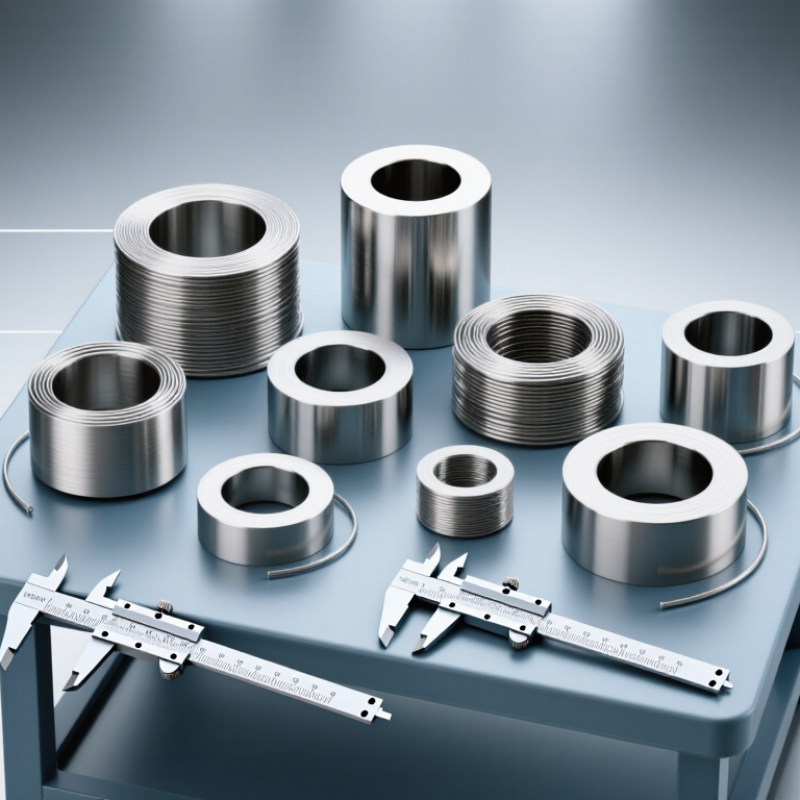
| Dimensional Inspection | Width, thickness, burr, camber, coil ID/OD, and weight | Inspection frequency and sampling plan agreed with the purchase specification | Calibrated instruments and a consistent measurement method are essential for reliable results. | Provides traceable confirmation that each custom coil is suitable for the intended production line. |