What Is a Stainless Steel Coil Manufacturer?
A Stainless Steel Coil Manufacturer produces wide, continuous strips of stainless steel for construction, automotive, food-processing, and industrial applications. The process begins with carefully selected slabs, followed by hot rolling, cold rolling, annealing, pickling, and finishing. Each stage changes the coil’s thickness, surface, strength, and corrosion resistance. These details matter when a coil will become a kitchen panel, pressure vessel, or precision component.
Experienced manufacturers do more than operate rolling mills. They review material grades, dimensional tolerances, surface requirements, and end-use conditions before production begins. Their technical teams monitor furnace temperatures, rolling pressure, edge quality, and coil shape. Testing may include chemical analysis, hardness checks, tensile testing, and visual inspection. Traceable records connect each coil to its production batch. That evidence supports dependable purchasing decisions.
Quality is visible in practical details. A finished coil should unwind smoothly, show consistent width, and maintain a clean surface under proper lighting. Packaging also matters. Strong supports, moisture protection, and clear labels can prevent damage during storage and transport. However, no factory is flawless. Small variations can appear between batches, especially when specifications are unclear or inspections are rushed. A trustworthy supplier acknowledges these risks and explains them plainly. Buyers should ask for test certificates, inspection procedures, production experience, and realistic delivery information. This article examines how a Stainless Steel Coil Manufacturer works, what separates capable producers from ordinary suppliers, and how technical evidence can guide a safer, more informed selection. Guesswork is expensive.
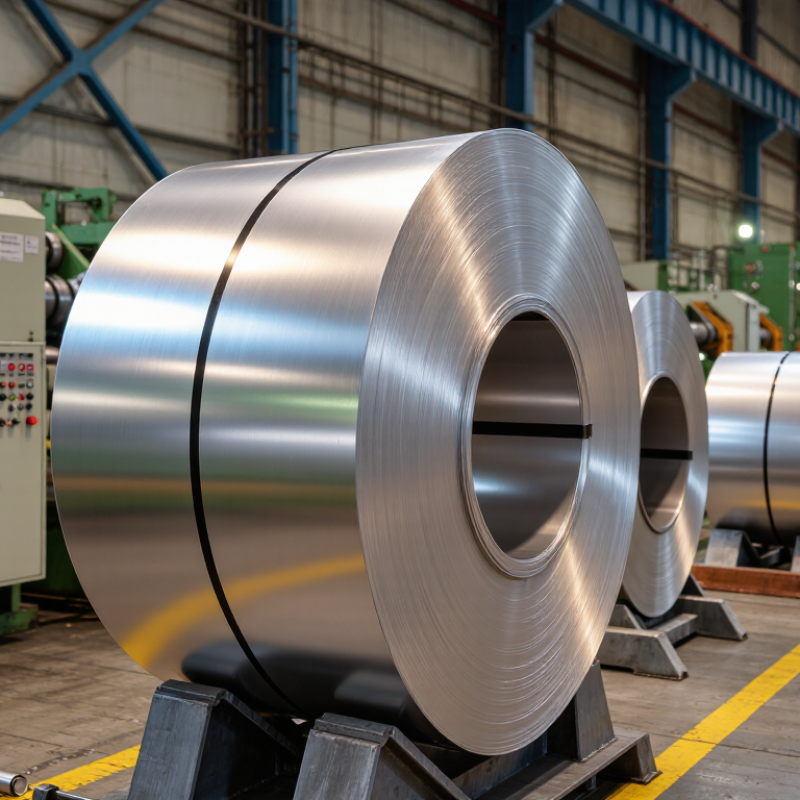
Stainless Steel Coil Manufacturers: Definition, Scope, and Core Functions
A stainless steel coil manufacturer converts raw materials into rolled, inspected, and traceable metal coils. Its work usually begins with melting and refining, followed by continuous casting, hot rolling, cold rolling, annealing, and pickling. Some facilities also provide slitting, leveling, edge trimming, and surface finishing.
The scope is wider than production alone. Manufacturers manage grades, thicknesses, widths, surface finishes, tolerances, packaging, and delivery schedules. They also issue mill test certificates and maintain heat-number traceability. In practical use, buyers may inspect coil edges, flatness, surface marks, and winding tension before fabrication. Small defects can create large losses during stamping or tube forming.
The International Stainless Steel Forum reported 58.4 million tonnes of global stainless crude steel production in 2023. That figure shows the industry’s scale, but it does not measure manufacturing quality by itself. Quality depends on process control, testing, and honest documentation. ASTM and EN requirements often guide chemical analysis, mechanical testing, dimensions, and surface condition. Yet standards are not always interpreted identically. This is where experienced technical communication matters. A capable manufacturer should clarify the application, not merely quote a grade. It should explain limitations, lead times, and inspection methods before shipment. Some suppliers may call themselves manufacturers while only cutting or reselling coils. The boundary is not always clear. Checking production certificates, facility capabilities, and independent inspection records remains sensible.
What Is a Stainless Steel Coil Manufacturer?
A stainless steel coil manufacturer converts steelmaking inputs into flat-rolled, continuously wound products. Its core functions include melting and refining, casting, hot and cold rolling, annealing, pickling, finishing, inspection, and coil packaging.
Chart interpretation: Chromium provides stainless steel’s basic corrosion resistance, while nickel supports austenitic structures and improves toughness. The figures show representative specification limits for commonly used coil grades and are not company-specific production data.
Raw Materials and Grades: 10.5% Chromium, 304, 316, and Duplex Steel
A stainless steel coil manufacturer begins with controlled raw materials, not with rolling equipment. Steel becomes stainless when chromium reaches at least about 10.5%, allowing a protective oxide film to form. That film is thin but remarkably effective. It can repair itself when oxygen is available. Nickel, molybdenum, carbon, and nitrogen then adjust strength, formability, and corrosion resistance. Small details matter.
Grade 304 is widely used for kitchen equipment, tanks, and general fabrication. It usually contains around 18% chromium and 8% nickel. Grade 316 adds molybdenum, often near 2–3%, improving resistance to chlorides and salt exposure. However, 316 is not immune to corrosion. Surface contamination, poor cleaning, and stagnant water can still create problems. That point is sometimes overlooked.
Duplex steel combines austenitic and ferritic structures. It commonly offers higher strength than 304 or 316, with useful resistance in demanding environments. Its production requires careful control of heat treatment and cooling. A coil manufacturer should verify chemical composition, mechanical properties, thickness, surface finish, and heat-number traceability. Mill certificates help, but a certificate alone is not enough. Independent testing may reveal variation between batches. The difficult part is resisting convenient assumptions. One grade may fit several applications, yet the correct choice depends on temperature, chloride levels, forming requirements, welding, and maintenance conditions.
