How to Use Precision Technology for Enhanced Efficiency?
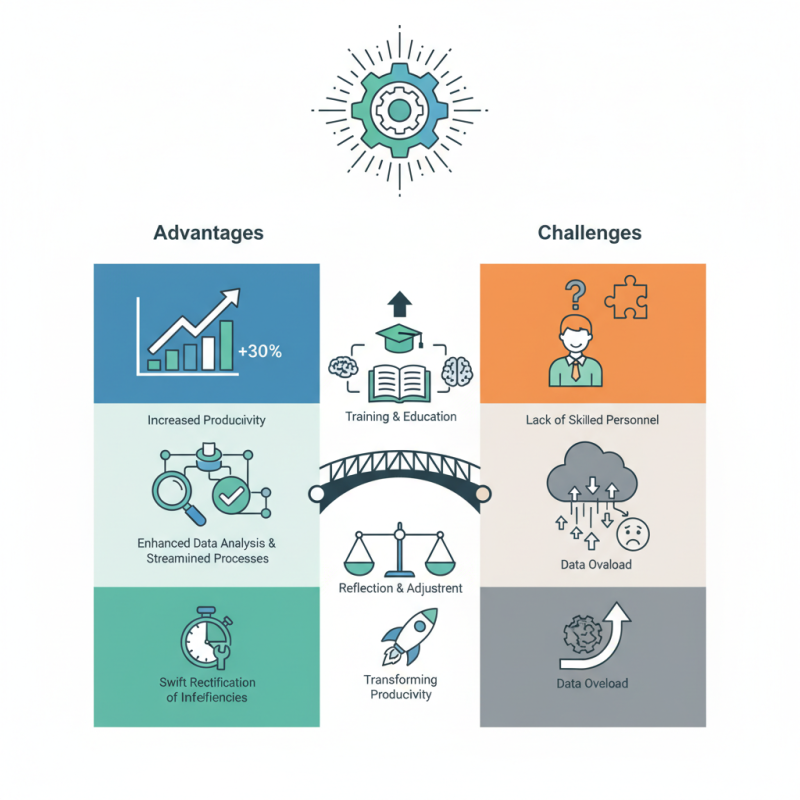
In recent years, the concept of precision technology has gained significant traction across various industries. A McKinsey report found that companies implementing precision technology can increase productivity by up to 30%. This improvement stems from enhanced data analysis and streamlined processes. Companies can identify inefficiencies and rectify them swiftly.
However, despite these advantages, many organizations still face challenges in adopting precision technology. A Deloitte survey revealed that over 40% of businesses struggle due to a lack of skilled personnel. The gap between the potential of precision technology and its actual implementation remains a concern. This disparity highlights the importance of training and education in maximizing efficiency.
Furthermore, precision technology is not without its flaws. Businesses may encounter data overload, leading to confusion rather than clarity. Finding the right balance is crucial. Careful integration of precision technology can transform an organization’s productivity landscape, but it requires ongoing reflection and adjustment.
Understanding Precision Technology and Its Benefits
Precision technology is transforming industries by enhancing efficiency and productivity. It allows for accurate measurements and timely data analysis. With advanced tools, organizations can better understand their processes and identify areas for improvement. This precise approach fosters innovation and accelerates decision-making.
The benefits of precision technology are manifold but not without challenges. For instance, while automation improves speed, it can lead to initial setbacks like technical malfunctions. Organizations may need to retrain staff to adapt to new systems. This transition can be uncomfortable, yet it is essential for long-term gain.
Investing in precision technology often results in reduced waste and higher quality outputs. For example, in manufacturing, precise measurements ensure consistent product standards. In agriculture, data-driven approaches optimize resource use while minimizing environmental impact. However, the investment can be daunting. Organizations might struggle with upfront costs or employee resistance. Embracing this technology calls for a thoughtful approach to navigate its complexities.
How to Use Precision Technology for Enhanced Efficiency
Key Components of Precision Technology Systems
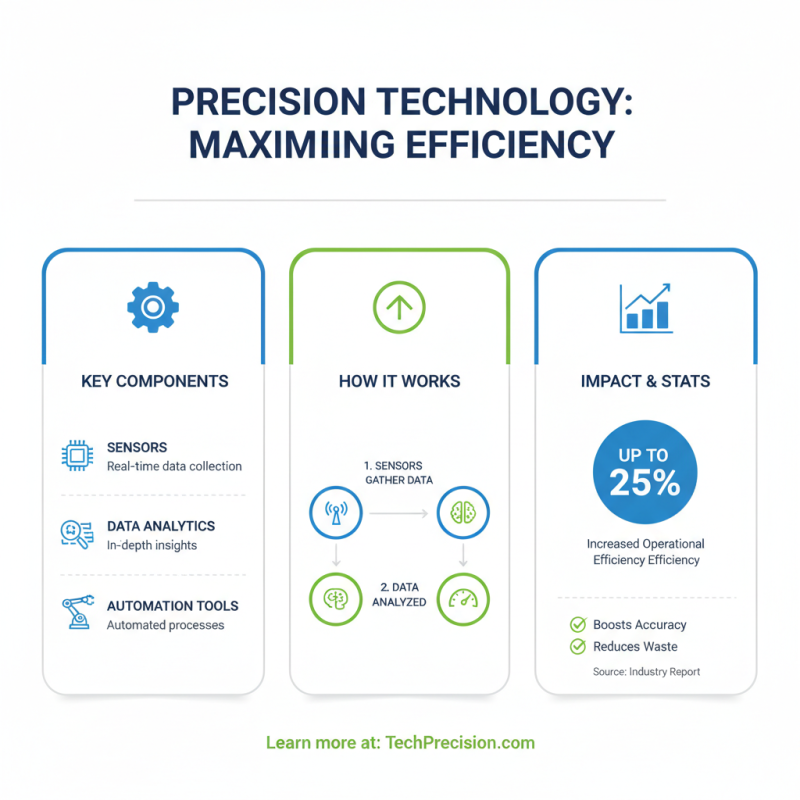
Precision technology has transformed various industries. It focuses on maximizing efficiency through advanced systems. Key components include sensors, data analytics, and automation tools. Sensors gather real-time data, boosting accuracy. According to a recent industry report, effective sensor usage can enhance operational efficiency by up to 25%.
Data analytics plays a crucial role in interpreting sensor information. Advanced algorithms reveal patterns that aid decision-making. Companies using analytics report a 15% increase in productivity. Automation tools streamline repetitive tasks. However, integrating these systems can be challenging. Employees may resist change, and technology may need adjustments.
Tips: Start small. Implement one precision technology component at a time. Monitor its impact before scaling. Training is essential. Ensure team members understand new systems fully. This reduces resistance and increases adoption rates. Regularly review data insights to optimize processes. Continuous improvement is key to maximizing the benefits of precision technology.
Implementing Precision Technology in Various Industries
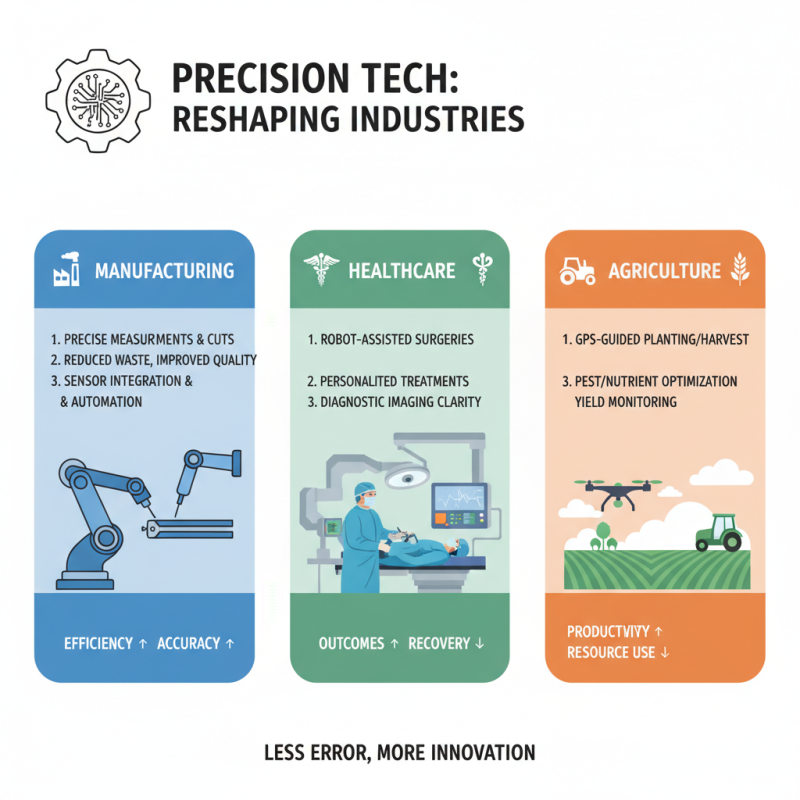
Precision technology is reshaping various industries by enhancing efficiency and accuracy. In manufacturing, it allows for precise measurements and cuts. This leads to reduced waste and improved quality of products. The integration of sensors and automation in production lines means fewer errors. Workers can focus on complex tasks while machines handle repetitive actions.
In agriculture, precision technology plays a vital role. It aids farmers in crop management by providing data about soil quality and moisture levels. Drones and GPS technology help in mapping fields and monitoring plant health. Consequently, farmers can optimize resource usage, leading to more sustainable practices.
**Tips:** Start small by implementing precision technology in one area. Assess the impact before scaling up. Training for staff is crucial. They need to understand new systems thoroughly. Reflect on initial challenges—recognizing pitfalls is essential for future success. Remember, adaptation takes time.
Measuring the Impact of Precision Technology on Efficiency
Precision technology can significantly enhance operational efficiency across various sectors. By employing accurate measurements, companies can optimize their processes. This technology reduces waste and improves quality control. Tools like sensors and data analytics help identify inefficiencies. They allow businesses to adjust their strategies quickly.
However, the implementation is not without challenges. Many organizations struggle with integrating new tools. Staff training is often insufficient, leading to underutilization. Some companies face resistance to change from employees. It's crucial to address these issues to maximize effectiveness. Small adjustments in workflow can yield substantial improvements in productivity.
Measuring the impact of precision technology is vital. Tracking metrics can reveal the effectiveness of new strategies. Companies should monitor changes in production speed and defect rates. Feedback from team members can provide insights into operational hurdles. Sometimes, the data shows less improvement than expected. This reflection can lead to better implementation strategies in the future.
How to Use Precision Technology for Enhanced Efficiency? - Measuring the Impact of Precision Technology on Efficiency
| Technology Type |
Application Area |
Efficiency Improvement (%) |
Measurement Method |
Cost Savings ($) |
| Automated Manufacturing Systems |
Production Line |
25 |
Output vs. Input Analysis |
$50,000 |
| IoT Sensors |
Supply Chain Management |
15 |
Data Analytics |
$20,000 |
| Precision Agriculture Tools |
Agricultural Production |
30 |
Yield Comparison |
$15,000 |
| 3D Printing Technology |
Prototype Development |
40 |
Time-to-Market Reduction |
$10,000 |
| Cloud Computing |
Data Storage & Processing |
20 |
Resource Utilization Metrics |
$30,000 |
Future Trends in Precision Technology for Enhanced Performance
Precision technology is transforming various industries. It allows for accurate and efficient operations. Companies are increasingly adopting advanced tools that improve performance. For instance, in agriculture, drones monitor crop health in real time. This enables farmers to apply resources more precisely, reducing waste. However, reliance on technology can lead to oversight. Not every system works as intended, requiring constant evaluation.
Looking ahead, the trends in precision technology are promising yet complex. Machine learning and artificial intelligence drive improvements. They analyze data faster than ever before. This leads to smarter decisions and enhanced productivity in sectors like manufacturing. Yet, there are challenges. Data privacy and security concerns must be addressed. Misinterpretation of data can lead to costly mistakes. Continuous improvement is essential for harnessing the full potential of these technologies.
In summary, the future of precision technology looks bright, but it is not without its pitfalls. Industries must remain adaptable and mindful of how these advancements are used. Balancing efficiency with ethical considerations will be key to successful implementation.