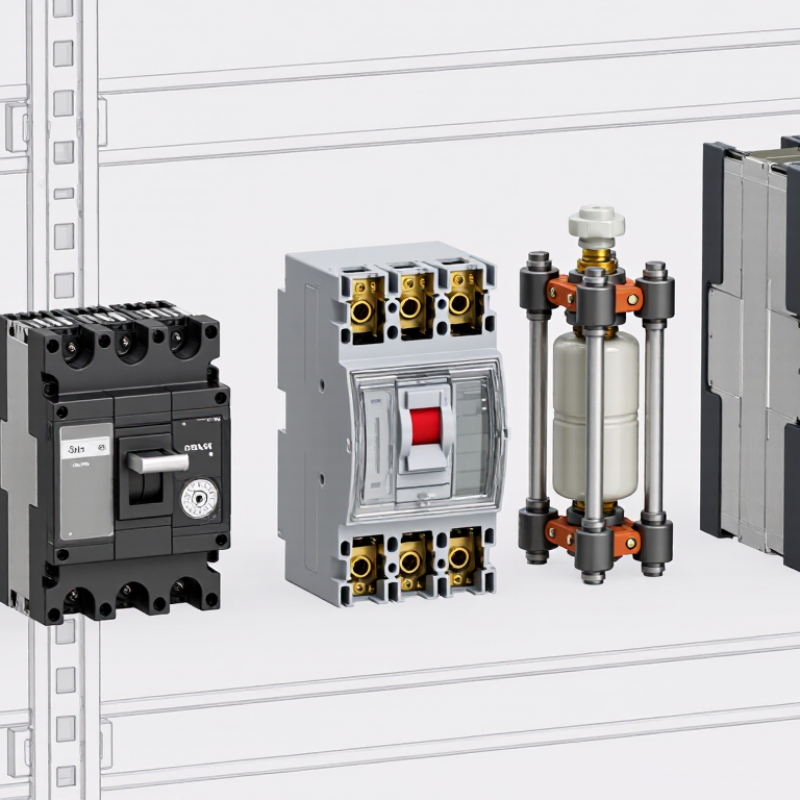
| Miniature Circuit Breaker (MCB) | Typically uses thermal and magnetic trip mechanisms: heat responds to sustained overcurrent, while magnetic action responds rapidly to high fault current. | Residential and light-commercial branch circuits, such as lighting and socket circuits. | Overload and short-circuit protection. | Choose the rated current and trip characteristics to suit the circuit, conductors, and applicable electrical rules. |
| Molded Case Circuit Breaker (MCCB) | Interrupts fault current using a trip mechanism housed in an insulated molded case; some designs offer adjustable trip settings. | Commercial and industrial feeders, distribution panels, and larger equipment circuits. | Overload and short-circuit protection; available configurations may add other protective functions. | Check the breaker’s interrupting rating against the available fault current at its installation point. |
| Air Circuit Breaker (ACB) | Opens contacts in air and uses an arc-control arrangement to extinguish the electrical arc. | Low-voltage main and feeder protection in larger commercial and industrial switchboards. | Protects against overloads and short circuits; electronic trip units can provide additional protection functions. | Often selected where higher current ratings, adjustable protection, or serviceable switchgear are required. |
| Vacuum Circuit Breaker (VCB) | Separates contacts inside a sealed vacuum interrupter, where the arc is extinguished as the current passes through zero. | Medium-voltage distribution systems, including substations and industrial switchgear. | Interrupts fault currents on medium-voltage circuits when correctly rated and coordinated with the protection system. | Voltage, continuous-current, and fault-interruption ratings must match the system design. |
| SF₆ Circuit Breaker | Uses sulfur hexafluoride gas for insulation and, depending on the design, arc interruption. | Some medium- and high-voltage substations and gas-insulated switchgear installations. | Interrupts high-voltage fault currents as part of a coordinated protection system. | SF₆ is a potent greenhouse gas, so leak prevention, gas handling, and applicable environmental requirements are important. |
| Oil Circuit Breaker | Uses insulating oil to help insulate contacts and extinguish the arc during interruption. | Legacy installations and certain existing medium- or high-voltage systems. | Provides fault-current interruption when maintained and operated within its ratings. | Requires attention to oil condition and presents fire and maintenance considerations; many applications use newer technologies. |
| Residual-Current Device (RCD/RCCB) and RCBO | An RCD/RCCB detects an imbalance between outgoing and returning current. An RCBO combines residual-current protection with overcurrent protection. | Circuits where additional protection against certain electric-shock or earth-leakage hazards is required. | An RCD/RCCB provides residual-current protection but generally not overload or short-circuit protection; an RCBO also provides overcurrent protection. | These devices complement, rather than replace, correctly selected circuit protection. Requirements vary by installation and jurisdiction. |