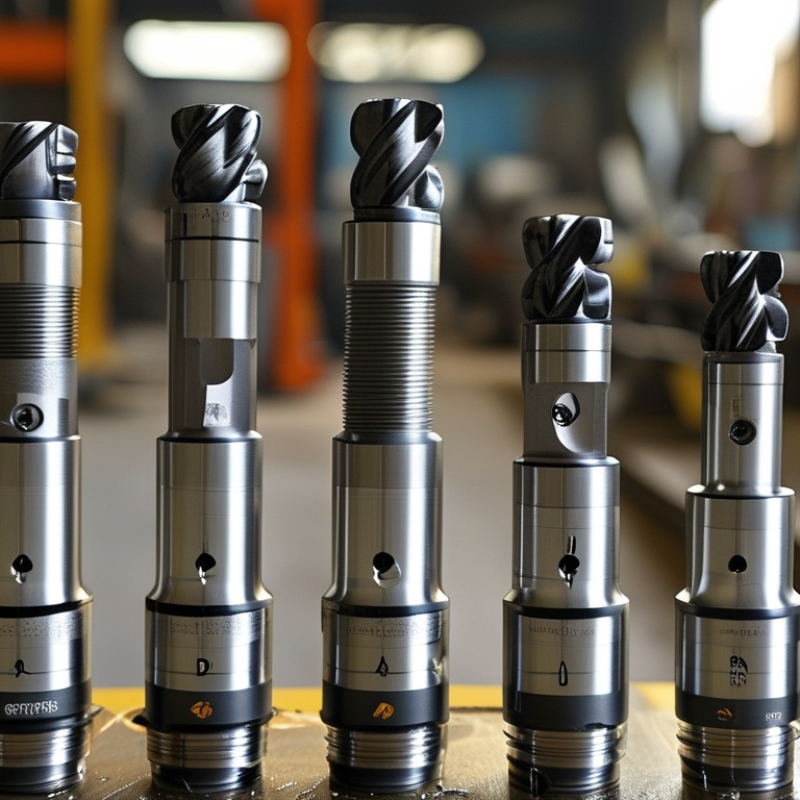
| 1 | ER Collet Chuck | PSC polygonal shank with flange contact; holder dimensions must match the selected ISO 26623 interface size. | Slender nose with a threaded collet nut and internal taper. | Elastic ER collet compressed by a precision nut. | Small and medium shank tools; exact capacity depends on the ER collet series and holder size. | Through-tool coolant may be available; confirm sealing design and coolant pressure rating. | General milling, drilling, reaming, and flexible multi-diameter tool use. | Check collet type, clamping diameter, balance grade, gauge length, and allowable spindle speed. |
| 2 | Hydraulic Expansion Chuck | PSC interface manufactured to the applicable ISO 26623 dimensional requirements. | Rigid body with an internal hydraulic chamber and precision bore. | Hydraulic pressure uniformly clamps the tool shank. | Usually suited to cylindrical shank tools within the holder’s stated bore capacity. | Through-tool coolant is commonly supported, subject to the holder’s sealing specification. | Finishing, drilling, reaming, and operations requiring low runout and smooth clamping. | Verify permissible tool shank tolerance, runout specification, balancing condition, and service procedure. |
| 3 | Shrink-Fit Holder | PSC polygon and flange interface; the heating system and holder bore are separate from the ISO interface. | Compact, thin-wall nose with a precision thermal bore. | Thermal expansion and contraction of the holder bore. | Through-tool coolant depends on the holder construction and sealing arrangement. | High-speed milling, deep cavity work, and applications needing good access and rigidity. | Confirm heating compatibility, tool material limits, minimum insertion depth, and thermal handling requirements. |
| 4 | Milling Chuck | PSC shank and flange geometry selected according to the machine spindle and ISO 26623 size. | Short, robust body with a mechanical clamping chuck. | Mechanical tightening mechanism with positive radial clamping. | Often available with through-tool coolant, but the exact passage layout is product-specific. | Heavy roughing, side milling, slotting, and high-torque cutting. | Check maximum torque, tool shank diameter, interference clearance, balance, and recommended tightening torque. |
| 5 | Shell Mill Arbor | PSC interface combined with a face-mill or shell-mill mounting arrangement. | Flanged nose with a pilot diameter, drive keys, and a central retaining feature. | Central screw, retaining bolt, or other specified cutter-retention hardware. | Designed for face mills, shell mills, and cutters using a compatible mounting bore. | Coolant outlets may be directed toward the cutter; verify outlet position and sealing. | Face milling, shoulder milling, high-feed milling, and large-diameter cutter use. | Match pilot diameter, key location, cutter bore, retaining screw thread, and cutter manufacturer requirements. |
| 6 | Morse Taper Adapter | PSC external interface with an internal Morse taper adapter; the Morse taper is not itself the PSC interface. | Stepped or extended body with a female or male Morse taper. | Morse taper friction fit, drawbar retention, or a separate retention system depending on design. | Morse taper drills, centers, sleeves, and compatible legacy tooling. | Coolant-through capability varies widely and should not be assumed. | Drilling, center work, and machine-tool applications using Morse taper tooling. | Confirm Morse taper number, retention method, axial stop, drawbar compatibility, and coolant arrangement. |
| 7 | Tapping Chuck | PSC polygonal shank and flange interface with a tapping-specific working end. | Rigid or compensating body with a square-drive or synchronized-tapping connection. | Tap collet, quick-change holder, or dedicated square-drive retention. | Machine taps within the stated tap-collet or square-drive size range. | Through-tool coolant may be available; verify pressure, sealing, and chip evacuation requirements. | Synchronized tapping, rigid tapping, and production threading. | Check compensation type, synchronization requirements, tap drive dimensions, thread size, and reversing behavior. |
| 8 | Boring Head Adapter | PSC connection to a modular boring system or boring-head interface. | Rigid adapter with a short, concentric mounting nose. | Threaded, keyed, or modular boring-head connection. | Used with adjustable boring heads and modular boring bars rather than ordinary solid shank tools. | Coolant delivery depends on the boring system and adapter passage design. | Precision boring, stepped bores, interrupted cuts, and diameter adjustment operations. | Verify modular connection, maximum boring diameter, radial adjustment range, gauge length, and balance. |
| 9 | Drill Chuck Adapter | PSC interface combined with a keyed or keyless drill-chuck mounting arrangement. | Compact adapter body with a threaded or tapered chuck connection. | Drill chuck jaws grip cylindrical drill shanks. | Small and medium twist drills or other cylindrical-shank tools within the chuck capacity. | External coolant is generally more practical; through-tool coolant depends on the complete assembly. | General-purpose drilling, setup work, repair machining, and low-volume production. | Check chuck capacity, maximum speed, runout, gripping range, and suitability for carbide tooling. |
| 10 | Extension or Reduction Adapter | PSC interface with an additional modular or reduced tool connection; overall assembly length affects performance. | Extended, stepped, or reduced-diameter body for access to deep or restricted features. | Threaded, collet-based, hydraulic, shrink-fit, or modular connection depending on the adapter design. | Selected according to the receiving tool-holder interface and the final cutting-tool shank. | May include through-tool coolant, but every interface in the assembly must be checked for continuity. | Deep cavities, five-axis access, narrow work zones, and special reach requirements. | Evaluate total gauge length, rigidity, runout accumulation, balance, collision clearance, and speed derating. |