Request Quote

Request a quote from Nidec Drive Technology America Corporation.

This quote form is intended for customers and partners in North America seeking information about Nidec Drive Technology America Corporation’s Precision Gearing Technologies. For inquiries related to the Nidec motor group division or from outside this region, please visit the global Nidec Group website to find the appropriate regional or product-specific contact.

Subscribe to Nidec Newsletter

Subscribe to our email newsletter to stay current with our precision gearing solutions, featured products, company updates, and industry news.

Top 5 Manufacturing Solutions Tips for Global Buyers?

Navigating the complexities of global sourcing requires a robust strategy. As manufacturers and suppliers expand their reach, the demand for efficient manufacturing solutions rises. Each buyer's quest for reliability is paramount. The right solutions not only streamline production but also ensure quality and cost-effectiveness.

In this competitive landscape, buyers must critically evaluate their options. The best manufacturing solutions blend innovation with industry expertise. It’s vital to consider local partnerships, technological integration, and sustainable practices. Global buyers often face challenges, such as cultural differences and regulatory hurdles. Recognizing these can guide better decision-making.

It's essential to embrace a flexible mindset. What works today might not suffice tomorrow. Continuous learning and adaptation are key. Each success can teach valuable lessons, while failures demand reflection and improvement. The journey to find optimal manufacturing solutions is ongoing, requiring patience and diligence.

Top 5 Manufacturing Solutions Tips for Global Buyers?

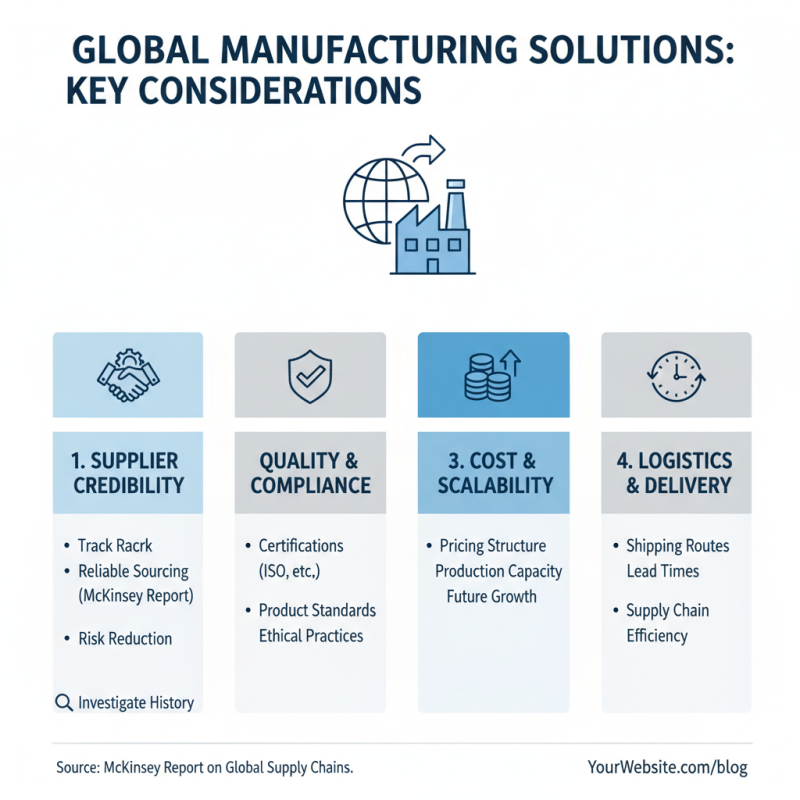
Key Considerations for Choosing Manufacturing Solutions for Global Buyers

Top 5 Manufacturing Solutions Tips for Global Buyers?

Choosing the right manufacturing solutions is critical for global buyers. Understanding key considerations can shape successful partnerships. According to a recent report by McKinsey, manufacturers that prioritize reliable sourcing reduce risks significantly. This highlights the importance of supplier credibility. Always investigate a supplier's track record before engaging.

One tip is to assess production capabilities. A survey by Deloitte indicates that 79% of global buyers face issues due to unforeseen capacity limits. Evaluate how well a supplier can scale production without compromising quality. By doing so, buyers can avoid potential pitfalls related to unexpected demands.

Another critical consideration is technological integration. The World Economic Forum found that manufacturers adopting advanced technologies see productivity increases of 30%. Seek suppliers who value innovation and can seamlessly integrate new technologies into existing systems. This adaptability is essential for maintaining competitive advantage in a rapidly evolving market.

Understanding the Importance of Supplier Ethics and Compliance Standards

In today's global market, understanding supplier ethics and compliance standards is vital for buyers. This is not just about transaction efficiency; it reflects a commitment to social responsibility. Ethical sourcing can enhance brand reputation and foster trust among consumers. Buyers must ensure that their suppliers adhere to ethical labor practices, such as fair wages and safe working conditions. This requires ongoing assessments and open communication channels.

Compliance standards vary across regions and industries. Buyers need to be aware of local regulations and international guidelines. They can request certifications or audits to confirm adherence. These steps help mitigate risks related to reputational damage or legal issues. However, navigating these complexities can be challenging. Suppliers may sometimes provide incomplete or misleading information, which calls for diligent verification on the buyer's part.

Investing in ethical practices can lead to long-term benefits. Buyers who prioritize ethics often see higher employee satisfaction. Engaging with ethically compliant suppliers can also reduce supply chain disruptions. Nevertheless, finding reliable partners can be difficult and requires continuous effort. Buyers should be prepared for a learning curve in building a responsible supply chain.

Evaluating Manufacturing Capabilities and Technological Advancements

When evaluating manufacturing capabilities, global buyers must consider various factors. Assessing a manufacturer’s technological advancements is crucial. Advanced technology can boost efficiency and innovation. Look for factories utilizing automation, robotics, and AI. These technologies can reduce costs and enhance precision. The integration of smart systems also enables real-time monitoring of production processes.

Moreover, it's vital to inspect the manufacturer's track record. How have they adapted to new technologies? A company that embraces change often indicates resilience. Check for certifications that reflect expertise in modern manufacturing practices. This can include quality assurance and environmental standards.

Evaluate the scalability of their operations. Can they adjust production volume based on demand? Flexibility is a sign of a robust manufacturing partner. However, not every advanced facility guarantees quality or reliability. Some may invest heavily in tech but neglect skilled labor. Finding a balance between human skills and technological capabilities is essential.

Top 5 Manufacturing Solutions Tips for Global Buyers

The Role of Communication in Global Supply Chain Management

Effective communication is pivotal in global supply chain management. It bridges geographical distances and cultural differences. In a world where manufacturers and suppliers span continents, clear dialogue is essential for success. Miscommunication can lead to costly delays or misunderstandings.

Using diverse communication tools can improve collaboration. Video calls, emails, and instant messaging can create more dynamic interactions. However, reliance on technology shouldn't overshadow the importance of face-to-face meetings. Sometimes, issues are best resolved in person, where nuances are easier to convey.

Regrettably, many companies overlook cultural differences. Understanding local etiquette can enhance relationships with partners. A lack of cultural awareness may lead to unintentional offenses or misinterpretations. Therefore, training teams on these differences fosters better communication. These efforts can create stronger bonds and more efficient operations. Emphasizing clarity and empathy can guide teams toward more resilient supply chains.

Top 5 Manufacturing Solutions Tips for Global Buyers

Tip Number Manufacturing Solution Description Benefits Communication Role
1 ERP Systems Integrates all facets of an operation, including product planning. Improved efficiency and real-time data access. Facilitates smooth information exchange across departments.
2 Supply Chain Management Software Optimizes logistics and inventory streams. Cost reduction and improved delivery times. Ensures transparency and coordination among global suppliers.
3 Quality Management Systems Monitors and controls production quality. Reduces defects and enhances product reliability. Encourages proactive communication regarding quality standards.
4 Lean Manufacturing Tools Eliminates waste to improve overall productivity. Enhanced productivity and reduced cycle times. Promotes collaborative efforts for continuous improvement.
5 Automated Manufacturing Uses robotics and technology for efficient operations. Increases production speed and precision. Fosters real-time communication between machines and operators.

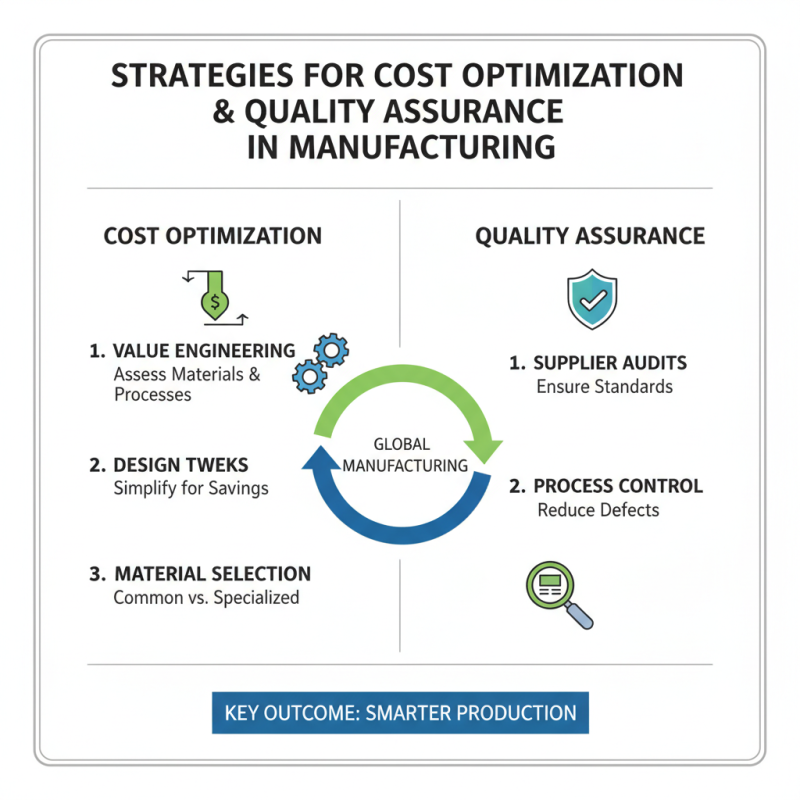
Strategies for Cost Optimization and Quality Assurance in Manufacturing

Top 5 Manufacturing Solutions Tips for Global Buyers?

Navigating global manufacturing requires strategic approaches to cost optimization and quality assurance. Buyers need to explore value engineering. This involves assessing materials and processes to find cost-effective alternatives without compromising quality. A small tweak in design can lead to significant savings. For instance, using common materials instead of specialized ones can keep costs down.

Quality assurance must be woven into every stage of production. Implementing rigorous testing protocols is crucial. Regular audits of suppliers ensure they meet quality standards. It’s important to collaborate closely with suppliers. Communication can uncover potential issues early. However, too much reliance on a single supplier can create risks. Diversifying sources can help mitigate these risks while enhancing competition among suppliers.

Maintaining a balance between costs and quality is challenging. Buyers might feel pressure to lower costs, which can sometimes compromise quality. Reflecting on past failures is key. Analyze where cost-cutting may have led to quality issues in previous projects. Learning from these experiences can guide more informed decisions in future sourcing strategies. Quality should never be an afterthought; it should be a priority at every step.