Request Quote

Request a quote from Nidec Drive Technology America Corporation.

This quote form is intended for customers and partners in North America seeking information about Nidec Drive Technology America Corporation’s Precision Gearing Technologies. For inquiries related to the Nidec motor group division or from outside this region, please visit the global Nidec Group website to find the appropriate regional or product-specific contact.

Subscribe to Nidec Newsletter

Subscribe to our email newsletter to stay current with our precision gearing solutions, featured products, company updates, and industry news.

Top 10 Industrial Automation Solutions in China What to Buy?

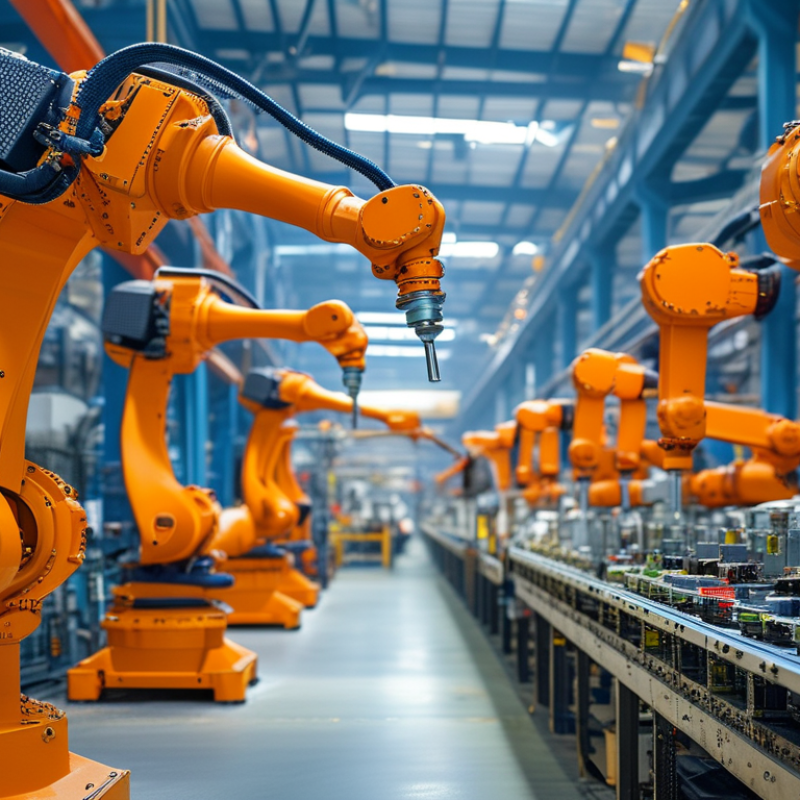
Industrial automation solutions play a crucial role in enhancing productivity and efficiency in various industries. As companies in China strive to remain competitive, the demand for advanced automation technologies grows. Many businesses are exploring options to implement these solutions to optimize their operations.

This article delves into the top industrial automation solutions available in China. It examines critical factors to consider when making buying decisions. There are numerous choices, each with unique features and costs. Evaluating these options requires careful consideration of the specific needs of your operations.

With a focus on reliability and performance, understanding what to buy is vital for success. Investing in the right industrial automation solution can bring significant returns. However, businesses must be aware of potential pitfalls. The challenge lies in selecting technologies that align with current and future needs.

Top 10 Industrial Automation Solutions in China What to Buy?

Top Trends in Industrial Automation in China's Manufacturing Sector

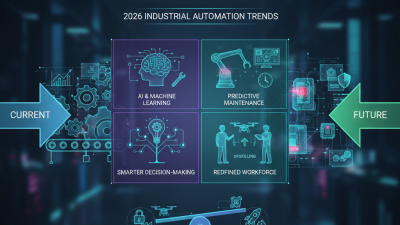
China's manufacturing sector is embracing key trends in industrial automation. Companies are prioritizing smart technologies to enhance productivity. These technologies include artificial intelligence, robotics, and the Internet of Things (IoT). Manufacturers are now implementing data analytics to optimize operations. This shift helps improve efficiency and reduce waste.

Another important trend is the rise of collaborative robots, or cobots. These machines work alongside human operators. Their design allows for flexibility and safety in the workplace. However, integrating these systems can present challenges, such as training staff and ensuring compatibility with existing processes. Organizations must navigate these hurdles carefully.

Additionally, sustainable practices are gaining traction. Businesses are exploring eco-friendly automation solutions. This focus aims to reduce energy consumption and minimize environmental impact. Companies often face the dilemma of choosing between cost and sustainability. Balancing these factors requires thoughtful evaluation and strategic planning.

Key Players in the Chinese Industrial Automation Market in 2023

In 2023, the Chinese industrial automation market is evolving rapidly. Key players focus on improving productivity and efficiency in various sectors. Companies are leveraging advanced technologies like AI, IoT, and machine learning. These innovations are transforming traditional manufacturing processes.

The market is diverse, with multiple segments including robotics, process automation, and control systems. Each player brings unique strengths to the table. Some specialize in robotics, while others excel in software solutions. Understanding these strengths is crucial for making informed purchasing decisions. Industry trends indicate a growing emphasis on sustainability and energy efficiency as well.

However, navigating this market isn't easy. Companies often face challenges in integrating new solutions into existing operations. The investment in training employees to use these technologies is significant. This aspect cannot be overlooked. As technology advances, companies must stay adaptable to maintain their competitive edge. Continuous learning and reflection are necessary for successful automation adoption.

Comparative Analysis of Automation Equipment: Cost vs. Performance

When exploring industrial automation solutions, understanding the balance between cost and performance is crucial. Cost-effective equipment may seem attractive initially. However, it often leads to higher maintenance expenses and lower productivity. In contrast, high-quality solutions may require a larger investment upfront, but they tend to provide better performance over time.

A key consideration is to analyze the long-term savings versus the initial costs. For instance, machinery that operates efficiently can reduce energy consumption. This results in lower utility bills. Investing in advanced automation can enhance production speed and reduce error rates. Over time, such improvements can yield significant returns.

Tip: Look for reviews and case studies before making a decision. They provide valuable insights into real-world performance.

Another aspect worth noting is the scalability of automation solutions. Many businesses outgrow their initial equipment. Choosing systems that can adapt to increased production demands is beneficial. This adaptability can save costs on future upgrades. Reflecting on your needs now and in the future can guide your investment.

Tip: Engage with industry experts to clarify your requirements. Their experience can help you avoid common pitfalls.

Emerging Technologies in China's Industrial Automation Solutions

Emerging technologies are transforming industrial automation in China. The country is seeing significant growth in robotics, AI, and IoT integration. According to a report by the International Federation of Robotics, China's industrial robot sales increased by 20% in 2022. This trend highlights the growing acceptance of automation technologies across various sectors.

Artificial intelligence is a crucial component in this evolution. Factories are implementing AI to enhance productivity. A McKinsey study found that AI could add $1.6 trillion to China's manufacturing sector by 2030. This potential drives investment in AI-driven solutions. Internet of Things (IoT) technologies are also instrumental, allowing machines to communicate and share data seamlessly. This connectivity aids in predictive maintenance and efficiency improvements.

However, challenges remain. Many companies struggle with the initial costs and complexity of integrating these technologies. A survey indicated that 36% of manufacturers cite high costs as a barrier to automation adoption. Addressing these issues is vital for future growth. As industries navigate these hurdles, understanding and implementing emerging technologies will be essential for staying competitive in the evolving market.

Top 10 Industrial Automation Solutions in China What to Buy? - Emerging Technologies in China's Industrial Automation Solutions

Solution Type Key Features Applications Expected Benefits
Robotics Advanced perception, dexterity, and adaptability Manufacturing, assembly lines Increased efficiency and precision
Industrial IoT Real-time data collection, analytics Asset tracking, predictive maintenance Reduced downtime, cost savings
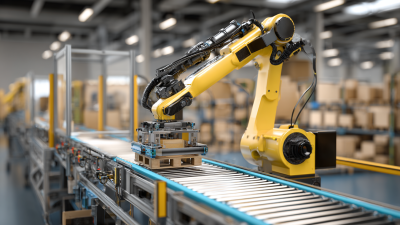
Automated Guided Vehicles (AGVs) Navigation, obstacle avoidance Warehouse logistics, manufacturing Increased safety and productivity
PLCs (Programmable Logic Controllers) Robust logic processing, modular design Process automation, machine control Reliability and flexibility
SCADA (Supervisory Control and Data Acquisition) Centralized control, remote monitoring Utilities, manufacturing Improved decision-making and control
CNC Machines Precision machining, automation Metalworking, aerospace High efficiency and accuracy
Vision Systems Image processing, flaw detection Quality control, automation Enhanced product quality
Artificial Intelligence (AI) Machine learning, adaptive systems Predictive maintenance, optimization Increased efficiency and reduced costs
Energy Management Systems Real-time energy monitoring, control Manufacturing, facilities management Cost savings and sustainability

Case Studies of Successful Implementations in Chinese Industries

In recent years, many Chinese industries have successfully implemented industrial automation solutions. These case studies highlight the transformative impact of automation on productivity and operational efficiency. For instance, a leading food manufacturer improved processing speed by 30% through advanced robotic systems. This shift not only streamlined operations but also reduced labor costs significantly.

Another interesting example comes from the automotive sector. A Chinese car manufacturer integrated AI-driven quality control processes. As a result, defect rates decreased by over 15%. Employees received training to adapt to these technologies. This shows that incorporating automation involves more than just machines; it requires a cultural shift within the company.

When considering automation solutions, look closely at your industry needs. Identify specific pain points that technology can address. Always evaluate the return on investment. Sometimes, the most expensive systems don't yield the best results. Regularly assess the implementation process. Reflecting on what works and what doesn't can guide future improvements.