Top 10 Industrial Automation Solutions to Improve Efficiency?
In the fast-paced world of manufacturing, the need for efficiency is paramount. Experts like Dr. John Smith, a leader in industrial automation solutions, assert, “Automation is not just a trend; it’s essential for survival.” Implementing the right industrial automation solutions can dramatically boost productivity and reduce errors. The industry continuously evolves, presenting both challenges and opportunities.
Many companies still struggle to integrate these solutions effectively. This can lead to wasted resources and missed chances for growth. Industrial automation solutions aren't just a luxury; they are vital in today’s competitive landscape. Investing in technology can often feel overwhelming. Businesses must continually assess their approaches, weighing potential benefits against the time and cost of implementation.
Despite the benefits, some organizations hesitate. They may fear high upfront costs or disruption during the transition. However, the long-term savings and improvements can outweigh these initial concerns. In this article, we explore the top 10 industrial automation solutions that can enhance efficiency and ultimately, drive success.
Overview of Industrial Automation Solutions for Increased Efficiency
Industrial automation is revolutionizing efficiency in various sectors. According to a study by McKinsey, companies implementing automation can see productivity gains of 30% or more. This significant increase is due to reducing manual labor and streamlining processes. Automation solutions like robotics, artificial intelligence, and IoT devices work together to optimize workflows.
However, challenges remain. A report from the International Federation of Robotics highlights that 40% of automation projects fail to meet their goals. This suggests that organizations must carefully plan and integrate these technologies. The cost of implementing automation can be high, which raises concerns about ROI and long-term value.
Real-time data analytics is one solution that can drive better decision-making. Companies that leverage data effectively can improve operational efficiency by 15%, as noted in a report by Deloitte. While automation offers a pathway to greater efficiency, it requires a commitment to ongoing evaluation and adjustment. Embracing these technologies is essential, but so is the willingness to learn and adapt.
Key Benefits of Implementing Automation in Industrial Settings
In industrial settings, automation offers significant benefits. It enhances efficiency by reducing human error. Manual tasks can slow down production lines. Automation ensures consistency and precision. This leads to higher quality products.
Another key benefit is cost reduction. Fewer errors mean less waste. Labor costs can decrease too, as machines take over repetitive tasks. Workers can focus on complex issues instead. This improves job satisfaction but may raise concerns about job security.
**Tip:** Invest in training for employees. They need to adapt to new tools. This helps them understand automation better.
Implementing automation can lead to unforeseen challenges. Workers might resist changes. Miscommunication about new processes can create confusion. Address these issues upfront to ensure a smooth transition.
**Tip:** Utilize feedback to improve systems. Regularly check in with employees. Their insights can help refine automation strategies.
Automation can transform industries, but it requires careful consideration. Balancing technology and human input is essential for lasting success.
Top 10 Industrial Automation Solutions to Improve Efficiency
Top Technologies Driving Industrial Automation Forward
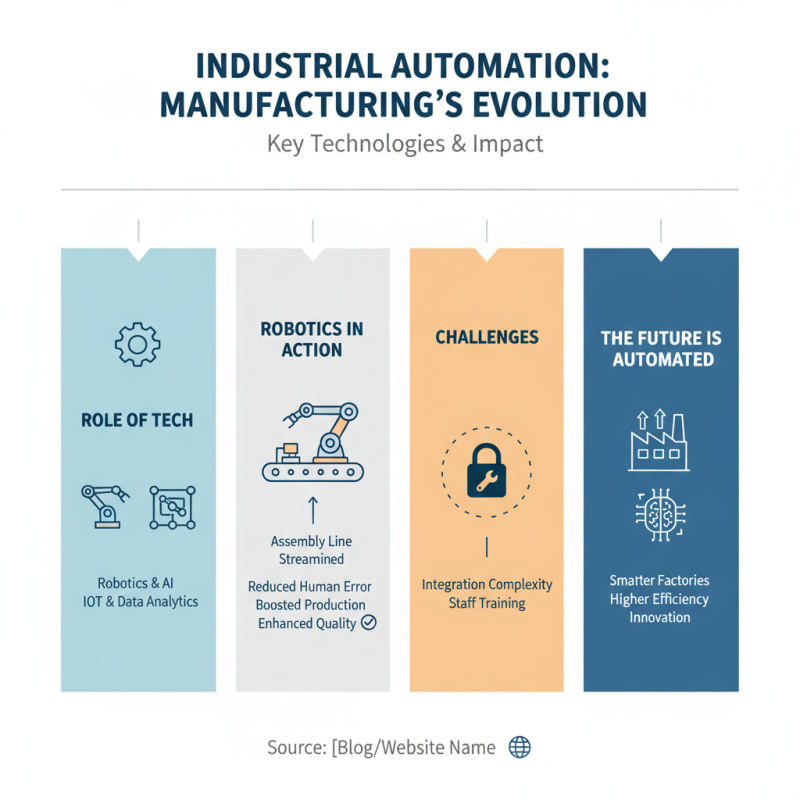
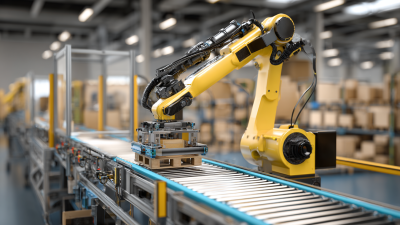
Industrial automation is transforming the manufacturing landscape. Technologies play a crucial role in this shift. Robotics, for instance, streamline assembly lines. They reduce human errors and boost production rates. With precise movements, they enhance product quality. However, integration can be challenging. Companies must train staff to ensure smooth transitions.
Artificial intelligence (AI) is another game-changer. AI analyzes vast amounts of data quickly. It helps predict equipment failures, minimizing downtime. These insights lead to better maintenance schedules. Yet, relying too much on AI raises concerns. There is a risk of overlooking human intuition. Balancing both is key.
Lastly, the Internet of Things (IoT) connects machines and monitors performance in real time. This connectivity allows for immediate adjustments. Sensors collect valuable data across production lines. Still, data security becomes a significant issue. Protecting sensitive information cannot be ignored. Each of these technologies pushes the boundaries of what’s possible. Continuous evaluation and adaptation are vital for success.
Case Studies of Successful Industrial Automation Implementations
The rise of industrial automation has transformed many sectors. Recent case studies reveal striking improvements in efficiency and productivity. For instance, a major automotive manufacturer increased production speed by 30% after implementing robotic automation. Such changes have allowed for more precise assembly and reduced waste.
Another notable example involves food packaging facilities. One company adopted smart sensors and AI to optimize supply chain management. The result? They reduced downtime by 25% and improved inventory accuracy significantly. This demonstrates the impact of tailored solutions on operations. However, challenges remain. Many companies struggle to integrate new systems with legacy equipment.
Moreover, workforce training often lags behind technology. Employees need to adapt, but some express concerns over skill gaps. As automation evolves, organizations must prioritize ongoing education. They must support teams in understanding new technologies. This reflection is essential for smooth transitions and maximizing the benefits of automation. Effective implementation strategies are crucial in addressing these gaps.
Future Trends in Industrial Automation and Efficiency Improvement
Industrial automation is evolving rapidly, shaped by technological advancements. According to a recent report, the industrial automation market is projected to grow at a CAGR of 8.6% between 2022 and 2030. This growth signals significant changes in how organizations approach efficiency.
One key trend is the integration of Artificial Intelligence (AI) and machine learning. These technologies can analyze data in real-time. This helps in predictive maintenance, reducing downtime significantly. Sensors and IoT devices are also becoming crucial. They provide real-time visibility into operations. This visibility leads to better decision-making and efficiency improvements.
Tip: Invest in training teams to leverage these new technologies effectively. User adoption is vital; technology alone isn’t a panacea.
While embracing these technologies offers many benefits, challenges remain.
Not all organizations can adapt quickly. Resistance to change can hinder progress. Some might face data overload from increased automation.
Filtering relevant data is crucial for actionable insights.
Tip: Start small. Implement automation in one area first, and expand as your team gains confidence. Continuous evaluation will help refine processes.
As automation becomes more complex, staying updated with trends is essential. Organizations must remain
flexible, adapting to new tools and methodologies to maintain efficiency in the future.