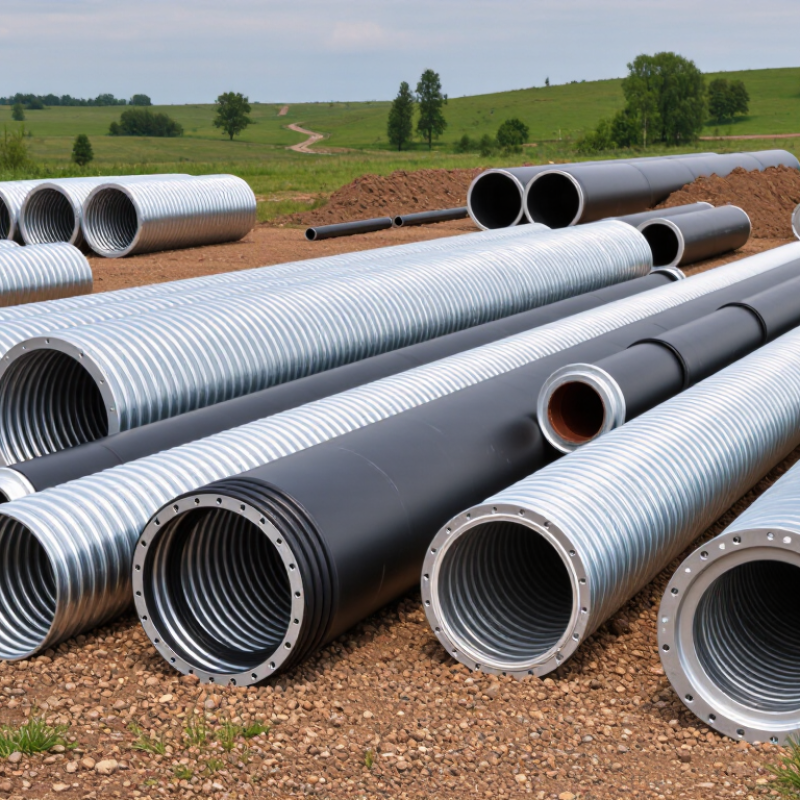
Corrugated steel pipe gains strength from its repeated ridges and valleys. These corrugations increase stiffness without requiring excessive steel thickness. The pipe wall commonly uses galvanized steel, aluminized steel, or polymer-coated steel. Each material responds differently to moisture, soil chemistry, abrasion, and temperature. Galvanized surfaces suit many drainage projects. More aggressive environments may require additional coating protection. Material selection should follow tested site data, not habit.
Common profiles include annular, helical, deep-corrugated, and structural plate designs. Annular corrugations run around the pipe. Helical corrugations follow a continuous spiral seam. Larger diameters often use bolted structural plates assembled on site. Shape, depth, pitch, and thickness influence load capacity. A small profile change can affect hydraulic flow and installation behavior. Details matter.
Manufacturing usually includes coil preparation, forming, corrugating, joining, coating, and inspection. Factories check dimensions, seam quality, coating coverage, and visible defects. Qualified buyers should request material certificates and test records. They should also confirm the design loads, bedding conditions, and expected service environment. A pipe may pass factory checks yet perform poorly with weak backfill or careless handling. No profile is perfect. Field conditions still deserve honest review.