What Are the Top 10 Types of Wheels for Global Buyers?
Global buyers now judge wheels by more than appearance. They compare safety, load capacity, material, manufacturing method, durability, and total ownership cost. This wider view matters as vehicles become heavier, faster, and increasingly electric.
Fortune Business Insights valued the global automotive wheel market at approximately USD 36.63 billion in 2023. It projects the market to reach about USD 52.86 billion by 2032. The International Energy Agency also reported that global electric car sales exceeded 14 million units in 2023. That shift increases demand for lightweight, strong, and aerodynamically efficient wheels. The numbers are persuasive, but they do not answer every buying question.
Automotive engineer Gordon Murray captures the core principle: “The wheel is the car’s connection to the road.” Buyers still need practical evidence. A forged alloy wheel may reduce weight, while a steel wheel may offer lower replacement cost. Carbon-fiber wheels can deliver exceptional stiffness, but their price remains difficult for many fleets. There is no universal winner.
This guide examines ten major types of wheels used across passenger cars, commercial vehicles, racing applications, and electric vehicles. It considers real-world details, including pothole resistance, brake clearance, corrosion exposure, certification, and supply consistency. Some categories overlap, and product quality varies sharply between manufacturers. That is worth remembering.
The best choice depends on vehicle weight, road conditions, climate, budget, and intended use. A visually impressive wheel can still be technically unsuitable. This ranking offers direction, not a final purchasing decision.
Wheel Basics: Structure, Materials, and Key Performance Differences
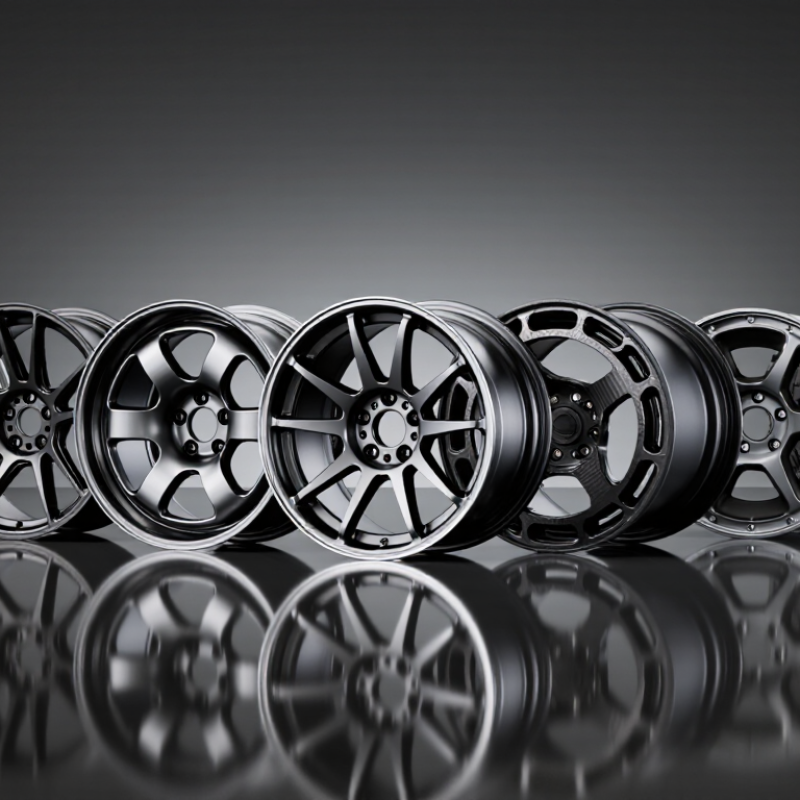
Wheel choice starts with structure, not appearance. A wheel has a hub, center bore, spokes, rim, and mounting face. These parts transfer vehicle weight and braking forces. One-piece wheels are simple and usually easier to inspect. Two-piece and three-piece designs allow more fitment adjustment, but add joints, seals, and maintenance points. Ten common categories include steel, cast alloy, forged alloy, flow-formed, multi-piece, wire, carbon-fiber, beadlock, split-spoke, and deep-dish wheels. Some categories describe construction, while others describe shape. That distinction is often missed.
Material changes performance. Steel wheels resist impacts and cost less, but their extra mass can reduce steering response. Cast alloy wheels are lighter and release heat efficiently, though poor casting can create weak areas. Forged alloy wheels use compressed material for high strength and lower weight. Flow-formed wheels strengthen the barrel without the full cost of forging. Carbon-fiber wheels can reduce mass dramatically, yet repair expertise and price limit their use. Wire wheels provide visual character, but sealing and cleaning can demand more care. Weight matters.
Fitment requires more than diameter. Buyers should check width, offset, bolt pattern, center bore, load rating, and brake clearance. A larger wheel may sharpen response, but its shorter tire sidewall can make rough roads feel harsher. Beadlock wheels suit demanding off-road use, although road legality varies by location. I would not treat the lightest wheel as the best wheel. Manufacturing quality, corrosion protection, and documented testing may matter more than impressive numbers. A perfect-looking wheel can still be a poor match.
The Top 10 Wheel Types Used Across Global Markets
What Are the Top 10 Types of Wheels for Global Buyers?
The top 10 wheel types reflect different roads, budgets, and vehicle duties worldwide. OICA recorded about 93.5 million motor vehicles produced in 2023, creating broad demand for practical wheel designs. Grand View Research valued the global automotive wheel market at approximately USD 37.8 billion in 2023.
Steel wheels remain common on commercial vehicles and entry-level cars because they resist impact and cost less. Cast aluminum alloy wheels offer lower weight and easier styling. Painted alloy wheels lead many passenger-car markets, while chrome-finished wheels serve appearance-focused buyers.
More specialized choices include forged aluminum, flow-formed, multi-piece, carbon-fiber, wire-spoke, and off-road beadlock wheels. Forged and flow-formed designs can reduce mass, which matters for electric vehicles and performance applications. Carbon-fiber wheels are lighter, but their price limits wider adoption. Wire-spoke wheels still suit motorcycles and heritage vehicles. Beadlock wheels support demanding off-road use, although buyers must verify local regulations and installation requirements. Multi-piece wheels allow repair or appearance changes, but their hardware needs careful maintenance.
The ranking is not absolute. That is where neat lists fail. A fleet manager may choose steel, while a desert driver needs a reinforced design.
Research from the International Energy Agency shows electric-car sales exceeded 14 million globally in 2023, increasing attention on wheel weight and durability. Yet lighter wheels do not automatically deliver better value. Load ratings, corrosion resistance, brake clearance, tire compatibility, and service availability should guide every purchase. Data helps, but real road conditions decide.
How Each Wheel Type Fits Different Vehicles and Driving Conditions
Global buyers should match wheel design with vehicle load, road surface, and climate. Stamped steel wheels suit commercial vans, pickups, and rough rural roads. They are affordable and easy to repair. Cast aluminum wheels fit passenger cars and crossovers, offering lower weight and attractive styling. Forged aluminum wheels suit performance cars because their dense structure supports high strength and reduced mass. Flow-formed wheels offer a practical middle ground for sport sedans and daily driving. The U.S. Department of Energy reports that a 10% vehicle weight reduction can improve fuel economy by roughly 6–8%. Wheel weight matters, but not alone.
Multi-piece wheels support specialist performance applications and allow component replacement. Beadlock wheels fit off-road vehicles that run very low tire pressures on sand or rock. They need careful installation. Painted wheels are useful for winter regions because their coating can resist everyday corrosion. Polished wheels suit dry climates, although road salt demands frequent cleaning. Chrome-plated wheels deliver a reflective finish, but surface damage can become visible quickly. Winter-specific wheel packages, usually smaller steel or alloy sets, leave more sidewall for snow, potholes, and cold-weather impacts. They can look less dramatic.
The Tire Industry Association stresses correct tire-and-wheel fitment, including load capacity and inflation control. UNECE wheel regulations also emphasize structural safety and compatibility. Buyers should check diameter, width, offset, bolt pattern, center bore, and certified load rating. I would not choose forged wheels for every vehicle. The price may outweigh the benefit for ordinary commuting. Some catalog data also oversimplifies fuel savings, because tires, suspension settings, and driving habits change the result.
Global Buyer Criteria: Size, Safety, Compatibility, and Certification
Global buyers often compare ten wheel types: steel, cast alloy, forged alloy, flow-formed, carbon-fiber, chrome-finished, off-road, commercial, trailer, and racing wheels. Each serves a different operating need. Steel wheels suit heavy loads and rough roads. Forged and flow-formed designs reduce weight but usually require stricter testing. Carbon-fiber wheels demand careful inspection and verified application data.
Size is more than diameter. Buyers should confirm width, offset, bolt pattern, center bore, and maximum load rating. A small mismatch can cause vibration, brake interference, or uneven tire wear. Tire clearance should be checked with the vehicle fully loaded. A perfect-looking wheel can still fail a fitment check. Do not trust appearance alone.
Safety evidence should include impact, fatigue, corrosion, and air-pressure testing from a competent laboratory. Certification requirements differ by destination market, so suppliers should provide current test reports, traceable production records, and clear marking details. Compatibility with tire-pressure sensors and hub hardware also matters. In procurement reviews, missing documents often create more risk than visible scratches. I would also question unusually low prices; they may reflect incomplete testing, inconsistent materials, or weak quality control. No checklist removes every risk. Careful sampling, dimensional inspection, and independent verification remain worthwhile.