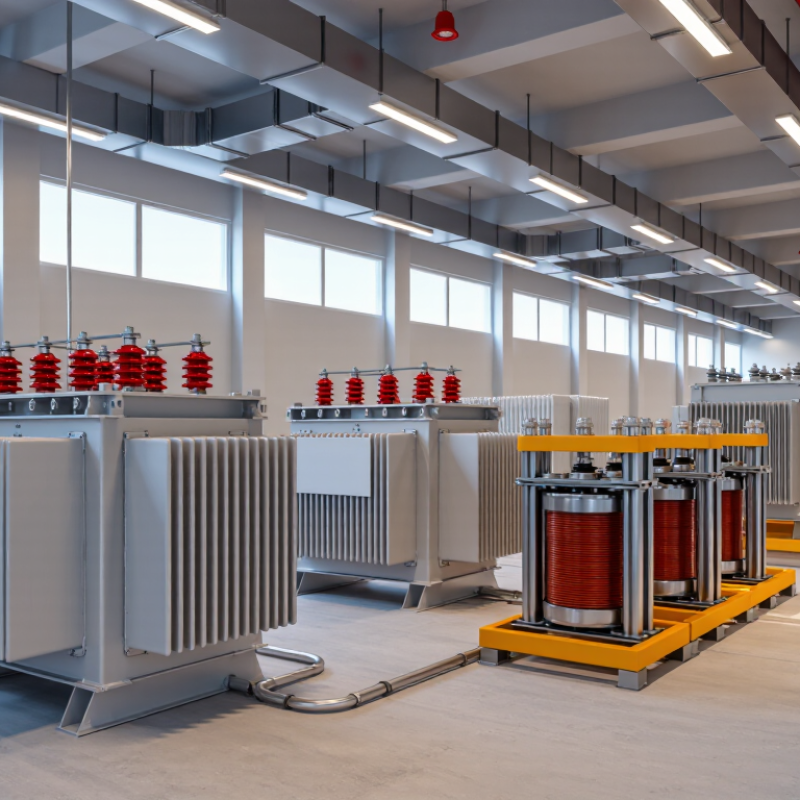
| 1 | Open-Ventilated Dry Type Transformer | Laminated electrical-steel core with exposed windings mounted in a ventilated enclosure. | AN (air natural); AF (air forced) may be added for higher capacity. | Enamel-coated conductor insulation, insulation paper, polyester film, and class F or class H materials are commonly used. | Commercial buildings, industrial distribution, and indoor electrical rooms. | Cost-effective and easy to inspect, but requires a clean, dry, and adequately ventilated installation environment. |
| 2 | Vacuum Pressure Impregnated (VPI) Transformer | Windings are vacuum-impregnated with resin and cured to improve mechanical strength and moisture resistance. | Usually AN; AF cooling can be provided when additional thermal capacity is needed. | Thermosetting polyester or epoxy-based resin impregnation combined with high-temperature solid insulation. | Industrial plants, motor drives, renewable-energy systems, and variable-load installations. | Good resistance to vibration, thermal cycling, and moderate environmental contamination. |
| 3 | Cast-Resin Transformer | High-voltage windings are fully encapsulated in cured epoxy resin; low-voltage windings are commonly foil or layered conductors. | AN as standard; AF fans may be used to increase short-term or continuous rating. | Solid epoxy encapsulation with conductor enamel, glass, and other high-temperature insulation materials. | Hospitals, tunnels, high-rise buildings, transportation facilities, and humid or dusty locations. | Flame-retardant and low-maintenance design with strong moisture resistance; generally heavier than open-wound designs. |
| 4 | Encapsulated Non-Cast Dry Type Transformer | Windings are enclosed or partially encapsulated using resin, varnish, or a molded insulating compound rather than a full cast-resin block. | AN, with optional AF cooling for increased load capability. | Resin, varnish, polyester, mica, and other solid insulation systems selected for the required thermal class. | Light industrial facilities, commercial power distribution, and indoor substations. | Provides more environmental protection than a basic ventilated design while allowing different manufacturing approaches. |
| 5 | Non-Ventilated or Sealed Dry Type Transformer | Core and windings are enclosed in a sealed enclosure that limits the exchange of surrounding air. | Heat is transferred through the enclosure by natural convection; external heat exchangers or fans may be used in some designs. | Solid insulation, resin or varnish treatment, and sealed-enclosure protection. | Dusty, corrosive, high-humidity, or restricted-air environments. | Reduces contamination from the surrounding atmosphere, but heat dissipation and enclosure temperature must be carefully evaluated. |
| 6 | Air-Core Dry Type Transformer | Windings are arranged without a ferromagnetic core, eliminating core losses and saturation effects. | AN or AF, depending on power level and installation requirements. | Enamel, polyester, epoxy, fiberglass, mica, and other solid electrical insulation materials. | High-frequency equipment, current-limiting reactors, testing systems, and specialized power-electronic applications. | Suitable for high-frequency or specialized applications, but generally has higher magnetizing-current requirements than core-type designs. |
| 7 | Core-Form Dry Type Transformer | Windings surround separate limbs of a laminated core, with the magnetic circuit completed through the top and bottom yokes. | AN or AF, using natural air circulation or forced-air fans. | Layer, disc, foil, or continuous-disk windings insulated with enamel, paper, film, resin, and pressboard. | General-purpose distribution and industrial power conversion. | Widely used construction with accessible winding geometry and efficient use of magnetic material. |
| 8 | Shell-Form Dry Type Transformer | The magnetic core surrounds or encloses a substantial portion of the windings, creating a compact magnetic structure. | AN or AF, depending on the thermal design and rated capacity. | Layered or foil windings using enamel, film, paper, pressboard, resin, and other solid insulation materials. | Rectifier systems, industrial converters, traction equipment, and applications requiring strong mechanical support. | Compact and mechanically robust; winding access and cooling-channel design require careful engineering. |
| 9 | Amorphous-Core Dry Type Transformer | Uses thin amorphous-metal core material, typically formed into wound core sections, with conventional low- or high-voltage windings. | Primarily AN; AF can be specified for suitable designs. | The insulation may be open-wound, VPI, or cast-resin; the amorphous core is a magnetic-material distinction, not an insulation system. | Energy-efficient building distribution and installations with long periods of low or no load. | Very low no-load losses are possible, although the core can be more sensitive to mechanical stress and may increase manufacturing complexity. |
| 10 | High-Temperature Dry Type Transformer | Core and windings are designed with thermally robust materials and clearances to operate at elevated temperature limits. | AN or AF; forced air is often selected where compact size or overload capability is important. | Class H or other high-temperature systems using suitable enamel, mica, fiberglass, resin, and insulating films. | Steel mills, data centers, renewable-energy plants, traction systems, and high-load industrial facilities. | Handles demanding thermal conditions when properly specified; actual loading still depends on ambient temperature, ventilation, and temperature-rise limits. |