| 1 | Verify Industry Experience | Experience with stretch sportswear and shorts leggings | At least 3 years of relevant apparel-printing experience, with documented work on polyester, nylon, or elastane-blend garments. | An anonymized project portfolio, production samples, process records, and references from comparable product categories. | 15% |
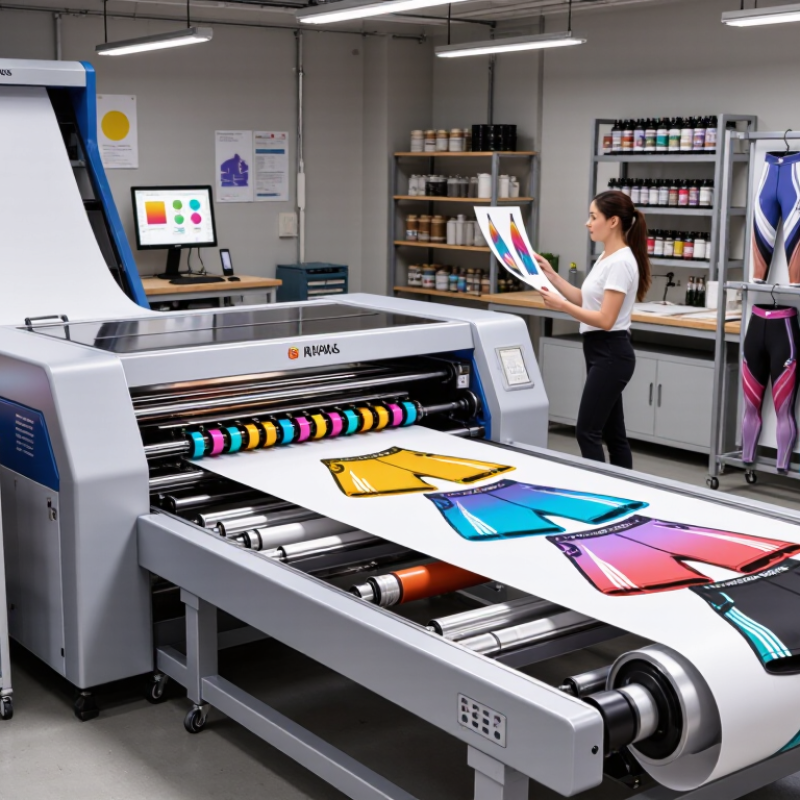
| 2 | Assess Printing Equipment | Printer type, resolution, and maintenance condition | For sublimation printing, equipment should support at least 1,200 dpi-class output; direct-to-garment systems should provide stable white-ink circulation and regular maintenance records. | Equipment list, technical specifications, calibration records, maintenance logs, and recent machine-operation videos. | 15% |
| 3 | Check Fabric and Ink Compatibility | Color performance, stretch recovery, and wash durability | The printer should test the exact fabric composition. A suitable finished print should maintain acceptable color and adhesion after repeated washing, stretching, and rubbing tests. | Fabric-specific strike-offs, wash-test results, stretch-test photos, and color samples approved against a physical standard. | 15% |
| 4 | Evaluate Production Capacity | Daily output, equipment availability, and scalability | For finished cut-and-sew shorts leggings, a small-to-medium production line commonly handles approximately 500–2,000 pieces per day, depending on design complexity and quality requirements. | Monthly capacity plan, current utilization rate, machine count, staffing plan, peak-season capacity, and contingency arrangements. | 20% |
| 5 | Review Color and Artwork Control | Color consistency, file preparation, and repeatability | The supplier should use standardized color references, documented artwork settings, and approval samples before bulk production. Repeat orders should follow the approved color standard. | Digital proof, physical pre-production sample, color approval form, artwork checklist, and batch-to-batch comparison records. | 10% |
| 6 | Inspect Quality-Control Procedures | Defect prevention, inspection rate, and traceability | Quality checks should cover fabric inspection, print alignment, color variation, stains, pinholes, seam quality, measurements, and final packing. AQL-based inspection is preferable for bulk orders. | Quality manual, inspection checklist, defect classification, inline inspection reports, final inspection records, and corrective-action procedures. | 15% |
| 7 | Confirm Lead Time and Compliance | Sampling speed, delivery reliability, and responsible production | A practical target is 5–10 working days for standard samples and approximately 20–35 working days for bulk production after artwork, materials, and pre-production samples are approved. | Written production schedule, on-time delivery history, sample approval timeline, material traceability, workplace audit records, and applicable test reports. | 10% |