How to Source Cycloidal Drive for Global Manufacturing Needs?
Cycloidal drives are essential components in various sectors, from robotics to manufacturing automation. Market trends indicate that the global cycloidal drive market is projected to grow at a compound annual growth rate (CAGR) of 7.5% from 2022 to 2030. This growth is driven by increased demand for precision and efficiency in industrial applications. Key players in the industry, such as Nabtesco and Ondrives, offer advanced solutions, but sourcing these components presents challenges.
Quality and compatibility are critical when sourcing cycloidal drives for global manufacturing needs. Factors like load requirements and space constraints can complicate the selection process. Diverse applications require an in-depth understanding of technological specifications. Additionally, supply chain disruptions, especially post-pandemic, have affected lead times and availability.
While many manufacturers aim for cutting-edge technology, the risk of overengineering often arises. Striking a balance between innovation and practicality can be difficult. Therefore, companies must conduct thorough market research and establish trustworthy relationships with suppliers. This careful approach will ensure the effective integration of cycloidal drives in manufacturing operations, fostering growth and enhancing productivity.
Understanding Cycloidal Drive Technology and Its Advantages in Manufacturing
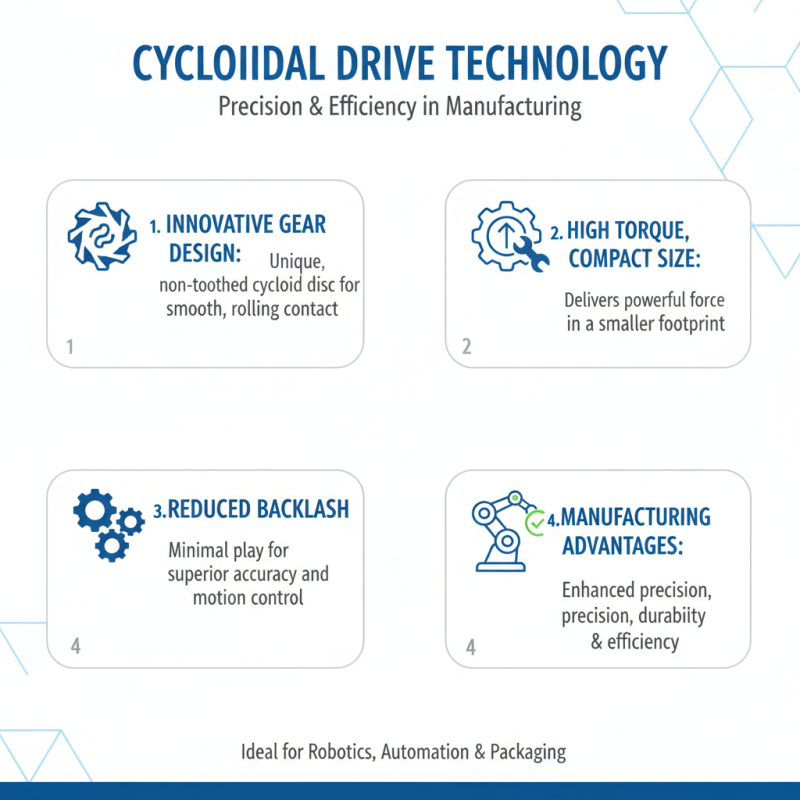
Cycloidal drives are gaining traction in modern manufacturing. This technology offers unique advantages, particularly in precision and efficiency. By harnessing an innovative gear design, cycloidal drives deliver high torque while maintaining compact size. This makes them ideal for applications where space is limited. The ability to reduce backlash is another critical aspect. Less backlash equates to improved accuracy in motion control systems.
Many industries benefit from cycloidal drives, from robotics to automated machinery. Their ability to handle high shock loads is impressive. While they are not entirely free from flaws, such as potential complexity in maintenance, the advantages often outweigh these concerns. Manufacturers appreciate the reliability that cycloidal drives bring to their operations.
Understanding the science behind cycloidal technology is essential. Professionals must study its mechanics and applications. It’s not just about sourcing; it's about leveraging this technology effectively. Companies should consider training their staff to fully utilize these systems. This ensures optimal performance and longevity of equipment.
Global Demand Trends for Cycloidal Drives in Industrial Applications
The industrial landscape is witnessing significant changes in cycloidal drive demand. According to a recent market report, global demand for cycloidal drives is projected to grow at a CAGR of 6.5% through 2028. This growth is driven by advancements in automation and robotics. As industries seek efficiency, cycloidal drives offer high torque capabilities in compact designs.
Manufacturers are recognizing the potential of cycloidal drives in applications such as robotics, conveyors, and wave energy systems. The versatility of these drives makes them ideal for various sectors, including manufacturing and renewable energy. For example, the renewable energy sector is increasingly adopting cycloidal drives for their reliability and performance in harsh conditions.
However, sourcing the right cycloidal drive can be challenging. Manufacturers must consider factors such as compatibility and performance criteria. Quality and reliability should never be compromised. Some sourcing methods may lead to inconsistencies in drive performance. Thus, careful evaluation of suppliers is crucial. Ultimately, aligning manufacturing needs with the right cycloidal drives is essential for optimized production processes.
Evaluating Suppliers for Quality and Compliance in Cycloidal Drive Production
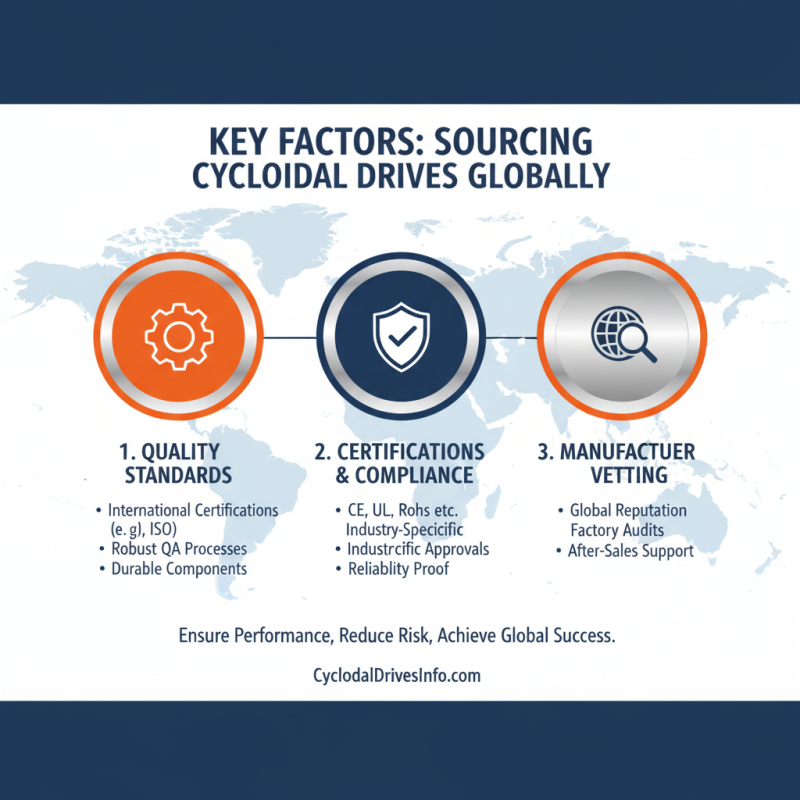
When sourcing cycloidal drives for global manufacturing, evaluating suppliers is crucial. Quality and compliance are non-negotiable factors. Each supplier must meet industry standards. It ensures that your production runs smoothly and efficiently. A less reliable supplier can lead to costly delays. Therefore, attention to detail is essential.
Tips: Always request certifications. Check for compliance with international standards. These documents reveal a lot about the supplier's commitment to quality. Additionally, ask for sample products. This will help assess their manufacturing capabilities. Even a slight variation in quality can impact the entire production process.
When assessing suppliers, communicate openly. Building a relationship can reveal their strengths and weaknesses. It's essential to understand their production capacity and flexibility. Remember, a supplier's response time reflects their reliability. Testing the waters with smaller orders can provide valuable insights. Keep an eye on their ability to adapt to changes or challenges in production.
How to Source Cycloidal Drive for Global Manufacturing Needs?
| Supplier Location |
Production Capacity (Units/Month) |
Quality Certification |
Compliance Standards |
Lead Time (Weeks) |
Cost per Unit (USD) |
| Germany |
5000 |
ISO 9001 |
CE, RoHS |
8 |
45 |
| USA |
3000 |
ISO 9001, AS9100 |
FCC, UL |
10 |
60 |
| China |
10000 |
ISO 9001 |
CCC, RoHS |
6 |
30 |
| Japan |
4000 |
ISO 9001 |
JIS, RoHS |
8 |
75 |
| India |
2000 |
ISO 9001 |
IS, RoHS |
12 |
25 |
The Future of Cycloidal Drives: Innovations and Market Growth Forecasts
The cycloidal drive industry is poised for significant innovations. Several emerging technologies focus on enhancing efficiency and reducing size. Small adjustments can yield substantial improvements. In particular, the integration of advanced materials can strengthen durability while minimizing weight. Engineers are experimenting with various composites that may revolutionize design approaches.
Market growth forecasts suggest a steady increase in demand over the next decade. Industries like robotics and renewable energy are driving this trend. However, manufacturers must remain vigilant about fluctuating material costs. This unpredictability could affect product pricing and availability. Companies often overlook the importance of supply chain stability, which could hinder progress.
In the quest for innovation, manufacturers must also pay attention to customization. Tailoring cycloidal drives for specific applications can enhance performance. Collaborative approaches with research institutions are critical in this regard. Balancing the desire for innovation with practical limitations is vital for sustainable growth. Finding this balance is often a challenge yet essential for long-term success.
Market Growth of Cycloidal Drives (2023-2030)
This chart illustrates the projected market growth of cycloidal drives from 2023 to 2030, indicating a significant increase as the demand for innovative solutions in global manufacturing rises.