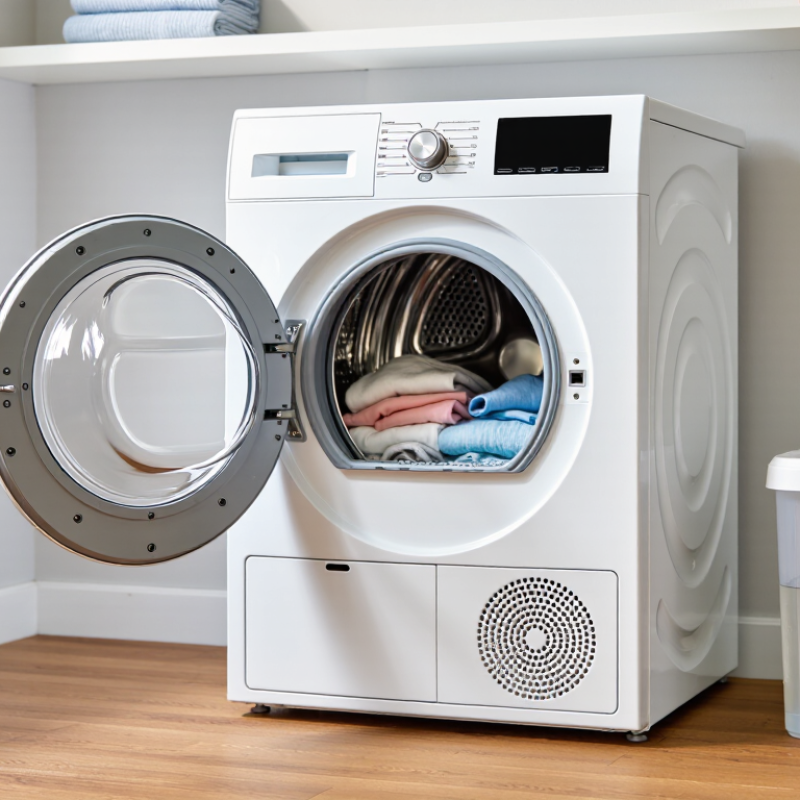
| Drum Capacity | Approximately 1.5–4.0 cu. ft. (42–113 L) | High impact | A smaller drum is suitable for compact loads, but overloading reduces tumbling space and can leave clothes damp or wrinkled. |
| Rated Load Size | Usually about 4–12 lb (1.8–5.4 kg) | High impact | Drying performance is generally best when the load remains below the manufacturer’s rated capacity and has room to move freely. |
| Heating Method | Electric resistance heating or heat-pump heating | High impact | Resistance heating usually produces faster heat-up, while heat-pump systems reuse heat and typically operate at lower temperatures with better energy efficiency. |
| Maximum Operating Temperature | Commonly about 120–160°F (49–71°C), depending on the cycle | High impact | Higher temperatures can shorten drying time but may increase shrinkage, fabric wear, and the risk of damage to heat-sensitive garments. |
| Airflow and Exhaust Design | Vented exhaust or internally condensed airflow | High impact | Strong, unobstructed airflow carries moisture away from fabrics. Blocked vents, crushed ducts, or poor room ventilation can significantly extend drying time. |
| Moisture-Sensing Control | Automatic cycles using humidity or moisture sensors | High impact | Sensors can stop the cycle when clothes are dry, helping prevent overdrying, unnecessary energy use, and excess fabric wear. |
| Timed-Dry Control | Fixed cycles commonly ranging from 20–120 minutes | Medium impact | Timed cycles offer predictable operation, but they may end too early or continue too long because they do not directly measure moisture. |
| Spin Moisture Before Drying | Washer spin speeds commonly range from 800–1,600 rpm | High impact | Removing more water during washing reduces the moisture load entering the dryer and can substantially shorten the drying cycle. |
| Cycle Temperature Options | Air-only, low, medium, and high heat | Medium impact | Multiple temperature settings allow users to balance drying speed with fabric-care requirements for cottons, synthetics, and delicate items. |
| Tumbling Action | Rotating drum with reversing or intermittent tumble options | Medium impact | Regular tumbling separates garments and exposes more fabric surface to warm air. Reversing action can help reduce tangling and uneven drying. |
| Lint Filter Condition | Cleaned after each load or according to the care instructions | High impact | A clogged filter restricts airflow, increases drying time, raises energy use, and can create an avoidable safety risk. |
| Exhaust Duct Length and Bends | Short, smooth, and minimally bent ducting is preferred for vented models | High impact | Long or sharply bent ducts increase airflow resistance and allow lint to accumulate more easily, reducing moisture removal. |
| Room Temperature and Humidity | Best results generally occur in a dry, adequately ventilated room | Medium impact | Cold or humid surroundings can reduce moisture evaporation and may make a compact dryer feel slower, especially for condenser-based designs. |
| Energy Use | Varies by heater type, cycle length, load size, and efficiency | Medium impact | Shorter cycles and moisture-sensing controls can reduce energy consumption, while heat-pump systems generally use less electricity than resistance heating. |
| Portability and Installation | Countertop, freestanding, wall-mounted, or compact floor models | Low direct impact | Installation affects convenience and airflow clearance. The dryer still needs a stable surface, adequate ventilation, and safe electrical access. |
| Fabric-Care Programs | Common options include normal, delicate, bulky, refresh, and air-only | Medium impact | Program selection controls temperature, tumble pattern, and duration, helping match drying conditions to the material and garment thickness. |