What is Rack Gear and How Does It Work?
Rack gear plays a crucial role in various mechanical systems. It converts rotary motion into linear motion, offering precision in applications. According to industry reports, the global gear market is projected to reach $300 billion by 2025, driven by advancements in automation and machinery.
The effectiveness of rack gear systems can be seen in robotics and transportation. They are essential in steering mechanisms of vehicles and in lifting devices. The design of rack gear components often raises questions about wear and durability. Industry studies indicate that efficient gear systems can enhance performance by up to 30%. However, improper installation can lead to significant issues, impacting overall efficiency.
Maintenance routines can be overlooked in some sectors, resulting in premature failures. In environments where reliability is crucial, ignoring gear health can be costly. As technology evolves, the importance of understanding rack gear will only grow. Precision engineering is essential, but we must remain vigilant about the potential for failure. Balancing innovation with practical applications is key.
What is Rack Gear?
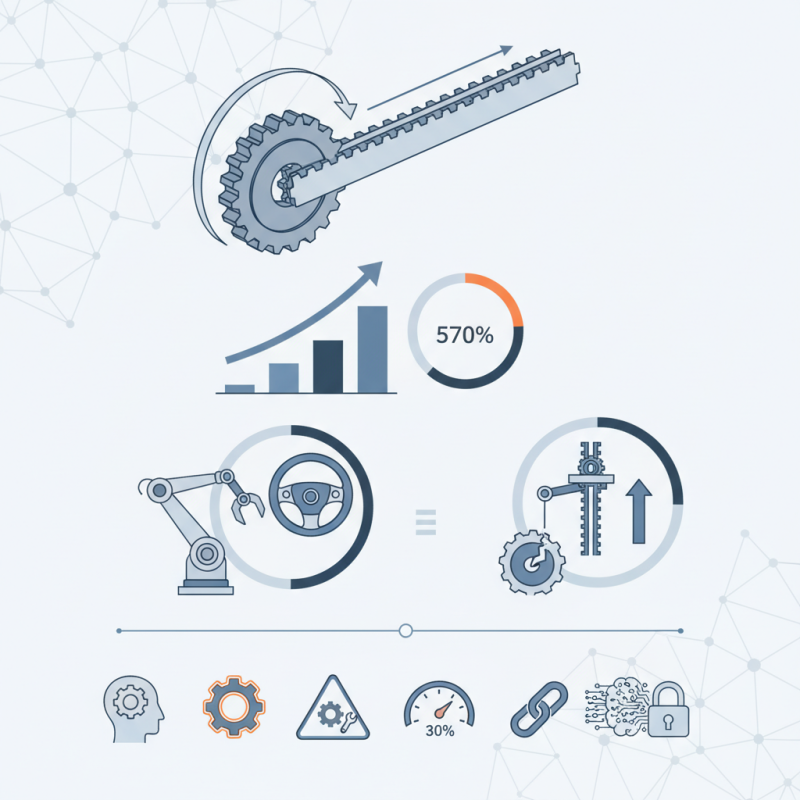
Rack gear is a mechanical device used to convert rotational motion into linear motion. It consists of a linear gear bar, known as the rack, and a pinion gear. When the pinion rotates, its teeth engage with the rack, pushing it along. This setup is fundamental in various machines, from cars to industrial machinery.
The beauty of rack gear lies in its simplicity. It is straightforward yet effective. However, it can have drawbacks. Alignment issues may arise, causing inefficiency in movement. Additionally, wear and tear can lead to performance decline. Regular maintenance is necessary but often overlooked. Operators must pay attention to these factors to ensure proper functioning.
Understanding rack gear can inspire innovations in machine design. It illustrates how basic principles can solve complex problems. Yet, one must reflect on its limitations. Finding a balance between design and functionality is essential. Perfect designs are a myth. Embracing imperfections can lead to better solutions.
Rack Gear Force vs. Distance Chart
This chart illustrates the relationship between applied force and distance for a rack gear system. As the distance increases, the force required to move the gear also increases, showcasing the mechanical advantages and principles of rack gear operations.
The Components of Rack Gear Explained
Rack gear is a crucial component in various mechanical systems. It consists of two main elements: the gear rack and the pinion. The gear rack is flat and extends in a straight line, while the pinion is a circular gear that meshes with the rack. When the pinion rotates, it moves the rack linearly, converting rotational motion into linear motion. This system is widely used in applications like elevators, steering systems, and industrial machinery.
The components of rack gear must be designed with precision. The gear teeth need to be robust to handle high loads. According to industry reports, up to 70% of failure in gear systems arises from material wear and misalignment. This indicates that proper maintenance is necessary. Additionally, the surface finish of the gear teeth plays a significant role in overall performance. A rough finish can lead to increased friction and wear, thus reducing efficiency.
Moreover, custom modifications are often required for specific applications. These adaptations can sometimes lead to unforeseen challenges, such as compatibility issues with existing systems. Many engineers encounter difficulties while integrating rack gear into complex machinery. It’s essential to assess these challenges beforehand to avoid costly errors. Regular testing and adjustments can help optimize the performance of rack gear in varied environments.
How Rack Gear Transmits Motion
Rack gear is an essential component in mechanical systems, adept at translating rotational motion into linear form. This transmission method relies on the interaction between a gear and a linear rack. When the gear rotates, it pushes the rack in a straight line. This direct conversion makes rack gears popular in various applications, from industrial machines to automotive steering systems.
Industry reports indicate that rack and pinion systems show a growing market, projected to reach $6.2 billion by 2026. These figures suggest a significant reliance on such systems in automotive and machinery sectors. However, not all designs are equal. Inefficiencies in gear alignment or wear can lead to motion loss, hindering performance. Users often overlook maintenance, which can exacerbate issues over time.
The simplicity of rack gears also poses challenges. They require precise installation to function optimally. A slight misalignment can result in mechanical failure. Consequently, regular inspections and adjustments are necessary to maintain efficiency. Understanding these nuances is vital for engineers and operators alike to ensure reliability in motion transmission.
Common Applications of Rack Gear in Machinery
Rack gear is a crucial component in various machinery. It converts
rotational motion into linear motion,
facilitating movement in diverse applications. This transformation is essential in industries such as
automation,
robotics, and
automotive.
In manufacturing, rack and pinion systems are widely used. They guide assembly lines with precision. Machinery that requires
accurate positioning benefits greatly from this gear type.
Forklifts and conveyor systems often employ rack gears for efficient lifting and transport. The reliability of these systems
ensures minimal downtime during operations.
Tip: Regular maintenance of rack gears can extend their lifespan.
Lubrication helps reduce wear and tear. Operators should monitor their performance regularly. If there are any unusual noises,
it might signal issues.
Another common application is in CNC machines. Rack gears support rapid movement of cutting tools. This enables high efficiency
in producing precise parts. In this application, misalignment can lead to severe problems. Operators should ensure proper calibration.
Tip: Always keep an eye on the alignment of your machinery.
Small adjustments can make a significant difference. Pay attention to any vibrations; they’re often an early warning sign.
Advantages and Disadvantages of Using Rack Gear
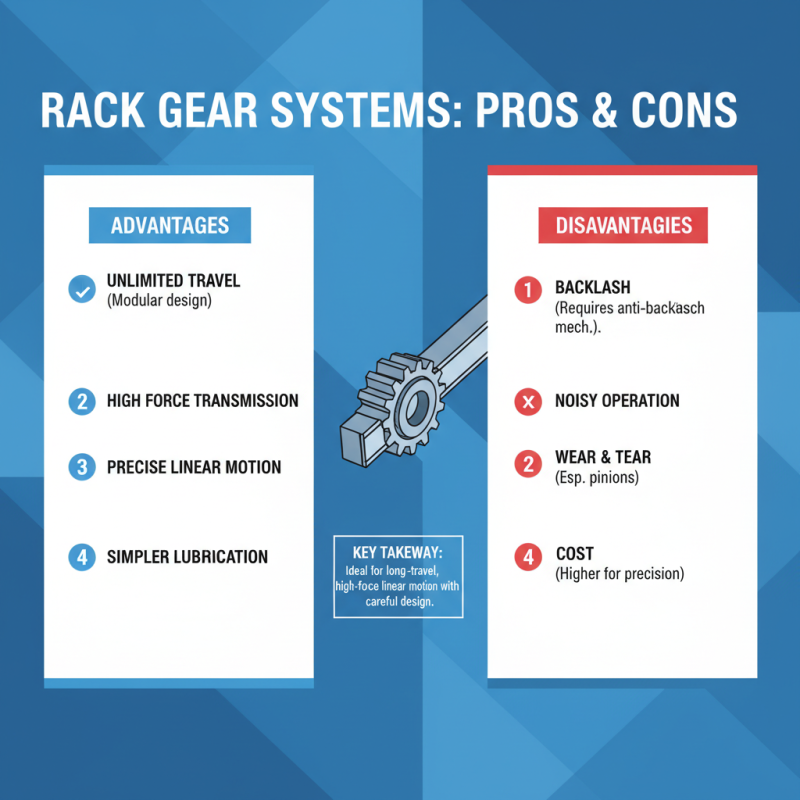
Rack gear systems offer specific advantages and disadvantages. Understanding these can help in making informed decisions.
One of the main advantages is efficiency. Rack gears provide a smooth transition from rotational to linear motion. This is essential for applications like robotics and conveyors. They also allow for high precision. When set up correctly, they minimize backlash, enhancing control over movement.
However, there are drawbacks. Rack gears may require regular maintenance. Wear and tear can affect performance. Over time, issues can arise if not addressed. Additionally, installation can be complex. Improper alignment can lead to decreased efficiency.
Tips: Always check for proper alignment during installation. Regular maintenance can extend the life of your rack system. Monitor wear levels to avoid unexpected failures.