Request Quote

Request a quote from Nidec Drive Technology America Corporation.

This quote form is intended for customers and partners in North America seeking information about Nidec Drive Technology America Corporation’s Precision Gearing Technologies. For inquiries related to the Nidec motor group division or from outside this region, please visit the global Nidec Group website to find the appropriate regional or product-specific contact.

Subscribe to Nidec Newsletter

Subscribe to our email newsletter to stay current with our precision gearing solutions, featured products, company updates, and industry news.

What Is Metal Forming and How Does It Work?

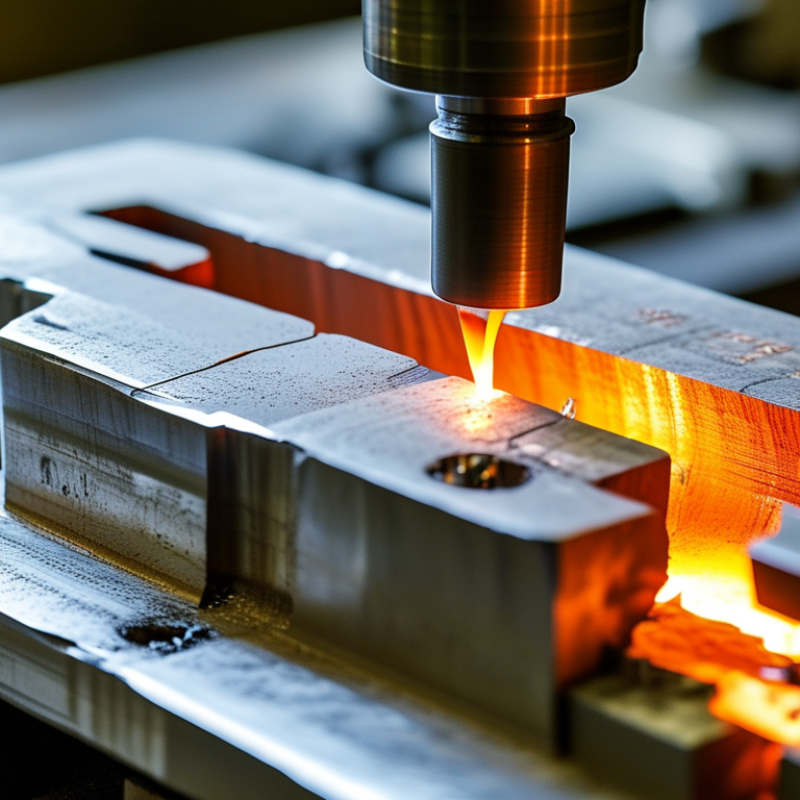
Metal forming is the controlled shaping of metal without removing large amounts of material. It turns sheet, wire, tube, or billets into useful components through force, heat, or both. A press may drive a punch into a die, while rollers gradually reduce thickness and guide the metal forward. In forging, repeated pressure changes the workpiece beneath a hammer or press. The equipment looks powerful. The results depend on small details.

Engineers select a forming method according to alloy, geometry, production volume, and required strength. Steel, aluminum, copper, and titanium respond differently to temperature and strain. A technician checks lubrication, tool clearance, grain direction, and springback before approving a production run. These checks are practical, not decorative. A tiny die-radius error can create wrinkles, cracks, or uneven walls. Gauges, laser scanners, and test parts help confirm whether the process remains stable. Experienced operators still watch the first pieces closely. Machines can repeat mistakes very efficiently.

This guide explains how metal forming works, from material preparation to final inspection. It also compares rolling, bending, stamping, extrusion, and forging. Real manufacturing rarely follows a perfect textbook sequence. Heat loss, tool wear, and changing material behavior can complicate decisions. That uncertainty deserves attention. Reliable results come from tested parameters, trained judgment, documented quality checks, and honest review of failures. Understanding these principles helps readers evaluate forming equipment and production claims with greater confidence.

What Is Metal Forming and How Does It Work?

Defining Metal Forming and Its Role in Manufacturing

Metal forming is the controlled shaping of metal without removing most of its material. Manufacturers apply force through pressing, rolling, bending, drawing, or forging. The metal changes shape while its volume remains nearly constant. This definition sounds simple, but real production is less tidy. Temperature, friction, grain direction, and tool accuracy can change the result.

Its role in manufacturing is fundamental. Forming creates strong parts for vehicles, machinery, construction systems, and everyday products. A press can bend a steel sheet into a precise panel within seconds. Rollers can transform thick stock into long sections with consistent profiles. Forging can compress heated metal and improve its strength around demanding load areas. Engineers select a process according to the material, shape, tolerance, and production volume.

Good forming begins with measurement, not guesswork. Technicians inspect thickness, hardness, surface condition, and springback after shaping. Springback is the metal’s tendency to move slightly toward its original form. That small movement can produce rejected parts. It can also reveal weak process planning. Designers may adjust tooling, lubrication, force, or bend allowance to improve accuracy.

The process is not flawless. Scrap still occurs. Careful monitoring reduces it. Reliable forming depends on trained operators, verified calculations, maintained equipment, and repeatable inspections. A part that looks correct may still contain hidden cracks or uneven stress. For that reason, responsible manufacturers combine visual checks with suitable dimensional and material testing.

Preparing Metal Stock for a Forming Operation

Metal forming begins before the press moves. Preparing metal stock correctly helps control cracking, wrinkles, springback, and uneven dimensions. The material must match the planned operation, such as bending, stamping, rolling, or deep drawing. Engineers usually check the alloy, thickness, temper, grain direction, and previous heat treatment. These details affect how the sheet will flow under pressure.

The stock should be clean and free from rust, oil buildup, sharp burrs, and deep scratches. Even a small surface defect can become a tear during forming. Operators measure thickness at several points because rolled sheet is not always perfectly uniform. Edges may need trimming before loading. In my experience, rushing this inspection creates more rework later. Still, inspection methods can miss hidden stress. That possibility deserves attention.

Tips: Store sheets flat and dry. Mark the grain direction clearly. Use clean gloves to avoid fingerprints and contamination. Confirm the blank size against the tooling plan. Apply only the recommended lubricant, since excess lubricant can cause slipping. For heat-sensitive materials, verify the temperature with a calibrated instrument. Record each check. Good records make mistakes easier to trace. Before forming, perform a small trial when the material or setup changes. Watch for unusual noise, surface marks, or sudden resistance. Stop and investigate. Controls should be adjusted carefully, not by guesswork.

How Forces and Dies Shape Metal Without Removing Material

What Is Metal Forming and How Does It Work?

Metal forming reshapes solid material through controlled force, not cutting. A press, roller, or forming tool pushes metal beyond its elastic limit. The metal flows into a new geometry while retaining nearly the same volume. Think of a steel sheet entering a die as a flat strip. Moments later, it may become a bracket, channel, or deep-drawn cup.

Force, friction, temperature, and tool geometry control the result. Stamping uses rapid press movement. Rolling reduces thickness between rotating rolls. Forging compresses heated or cold metal between dies. Extrusion forces a billet through an opening, producing a continuous profile. According to World Steel Association’s World Steel in Figures 2024, global crude steel production reached about 1.89 billion tonnes in 2023. Much of that material requires forming before it becomes useful components.

The International Aluminium Institute reported approximately 70.6 million tonnes of primary aluminium production in 2023. Aluminium often needs carefully managed forming speeds because it can wrinkle, crack, or spring back. Springback is the quiet problem. After unloading, the part slightly changes shape. Engineers compensate by adjusting die angles, force levels, and material data. In a real workshop, simulations help, but they do not replace inspection. A tiny radius error can create a visible crease. Sometimes, the first die design is simply wrong. That failure still provides valuable evidence for the next trial.

What Is Metal Forming and How Does It Work? — How Forces and Dies Shape Metal Without Removing Material

Forming Process How It Works Typical Starting Material Main Force or Motion Relative Force Level Common Thickness or Size Range Typical Applications Key Advantages and Limitations
Rolling Metal passes between rotating rolls that reduce thickness or create a continuous profile. Slabs, billets, plates, or strip Compression between rotating rolls High Thin foil below 0.1 mm to heavy plate above 50 mm Sheet, plate, rail, structural sections, and foil Highly productive and suitable for long products; requires large equipment and precise roll alignment.
Forging Localized compressive force deforms a heated or cold workpiece between dies. Billets, bars, or preforms Impact or gradual compression High Small precision parts to components weighing several tonnes Gears, shafts, connecting parts, pressure components, and high-strength fittings Improves grain flow and strength; dies and presses can be expensive, especially for complex shapes.
Sheet-Metal Bending A punch pushes sheet into or against a die to create an angle, flange, or channel. Sheet and thin plate Three-point or wrap-around bending Medium Approximately 0.5–12 mm for common press-brake work Brackets, enclosures, frames, cabinets, and structural panels Flexible and economical for low-to-medium production; springback must be controlled.
Deep Drawing A punch draws a flat blank into a die cavity while a blank holder controls wrinkling. Flat sheet-metal blanks Tensile drawing with compressive flange forces High Commonly about 0.5–6 mm sheet thickness Cans, housings, sinks, cups, and automotive body components Produces seamless hollow parts; excessive drawing can cause tearing or wrinkling.
Stamping A press drives a punch and die to blank, pierce, bend, emboss, or form sheet metal. Coiled strip or sheet blanks Rapid press-stroke compression and shear-free deformation Medium to High Approximately 0.2–6 mm for many high-volume parts Clips, brackets, electrical contacts, panels, and appliance parts Fast and repeatable in high volumes; dedicated tooling can be costly and setup-sensitive.
Extrusion A billet is pushed through a shaped die to produce a continuous profile with a fixed cross-section. Billets, commonly aluminum, copper, or steel Axial compression through a die opening High Profiles from a few millimeters to more than 300 mm in width Heat sinks, window frames, tubes, channels, and structural profiles Creates complex constant profiles with good material utilization; die wear and extrusion force can be substantial.
Wire Drawing Rod or wire is pulled through one or more dies to reduce diameter and increase length. Rod, wire, or small-diameter bar Tension combined with compressive die contact Medium From several millimeters down to fractions of a millimeter Cable, spring wire, fasteners, electrical conductors, and fine wire Provides accurate dimensions and smooth surfaces; repeated passes may be needed for large reductions.
Roll Forming Continuous sheet or strip passes through successive roll stations that gradually create a profile. Coiled sheet or strip Incremental bending by rotating rolls Medium Approximately 0.3–6 mm strip thickness Roofing panels, studs, rails, channels, and framing sections Efficient for long, uniform profiles with low scrap; less suitable for short or highly variable shapes.
Swaging Radial dies repeatedly hammer or squeeze a tube, rod, or wire to reduce or reshape its cross-section. Tube, rod, wire, or hollow billet Radial compressive force Medium to High Small to medium diameters, depending on machine capacity Tapered shafts, tube ends, cable fittings, and aerospace or medical components Can form tapers and reduce diameters efficiently; tooling and precise dimensional control are important.
Hydroforming High-pressure fluid pushes sheet or tube against a die to create a detailed shape. Tube or sheet-metal blank Internal hydraulic pressure Medium to High Thin- to medium-wall tubes and sheet components Lightweight frames, exhaust parts, manifolds, and complex hollow structures Reduces part count and can improve stiffness; equipment and cycle times may be higher than conventional forming.

Note: Force levels, dimensions, and material ranges are general engineering guides. Actual values depend on alloy strength, temperature, lubrication, die geometry, reduction ratio, equipment capacity, and required tolerances.

Major Metal Forming Processes and Their Working Principles

Metal forming reshapes solid metal through controlled force, without removing most of the material. The process changes geometry through plastic deformation. Engineers study stress, strain, friction, temperature, and grain flow before selecting a method. A steel sheet may bend around a narrow die, while a heated billet can change shape under a powerful press.

Rolling passes metal between rotating rolls. The gap controls the final thickness, but friction must remain stable. Forging compresses metal between dies, often improving strength by directing grain flow. In open-die forging, the material spreads outward. In closed-die forging, it fills a shaped cavity. Extrusion pushes a billet through a die, producing long sections with consistent profiles. Drawing pulls rod, wire, or tube through a smaller opening. The material becomes longer and thinner.

Sheet metal forming includes bending, stamping, and deep drawing. A punch forces sheet metal into a die during stamping. Deep drawing creates cups, housings, and other hollow parts from flat blanks. Springback can slightly change the final angle after pressure is released. Tool designers often compensate for it. Heat may lower forming forces, yet excessive heat can weaken the surface or alter the microstructure.

In practice, the textbook model is incomplete. Lubrication, uneven thickness, and worn tooling can change results quickly. A calculation may look correct. The part may still crack. Careful inspection, trial forming, and measured adjustments remain essential.

Key Materials, Equipment, Benefits, and Limitations

What Is Metal Forming and How Does It Work?

Metal forming reshapes solid material through force, heat, or both. Common methods include stamping, rolling, forging, extrusion, and bending. The material usually remains intact rather than being cut away. That difference reduces waste, although it does not eliminate it.

Steel and aluminium dominate many forming operations. The World Steel Association reported approximately 1.89 billion tonnes of crude steel production in 2023. The International Aluminium Institute recorded about 70.6 million tonnes of primary aluminium production in the same year. These materials behave differently. Steel offers high strength, while aluminium provides lower weight and strong corrosion resistance. Material grade matters more than many beginners expect.

Equipment ranges from mechanical presses and hydraulic presses to rolling mills, dies, furnaces, and computer-controlled inspection systems. A well-designed die can produce thousands of consistent parts. Forming also supports faster production and repeatable dimensions. In vehicle structures, it can create deep panels with relatively little scrap. However, the process needs careful control. Excessive force can cause cracks, springback, wrinkles, or die damage. Energy use can also be substantial, especially during heating and forging. The U.S. Department of Energy identifies metal forming as an energy-intensive manufacturing activity, though actual consumption varies by material and process. The difficult part is often not shaping the metal. It is predicting how the metal will respond. Engineers still rely on simulations, testing, and occasional correction after the first tool trial.