Why Are Machine Tools Essential for Modern Manufacturing?
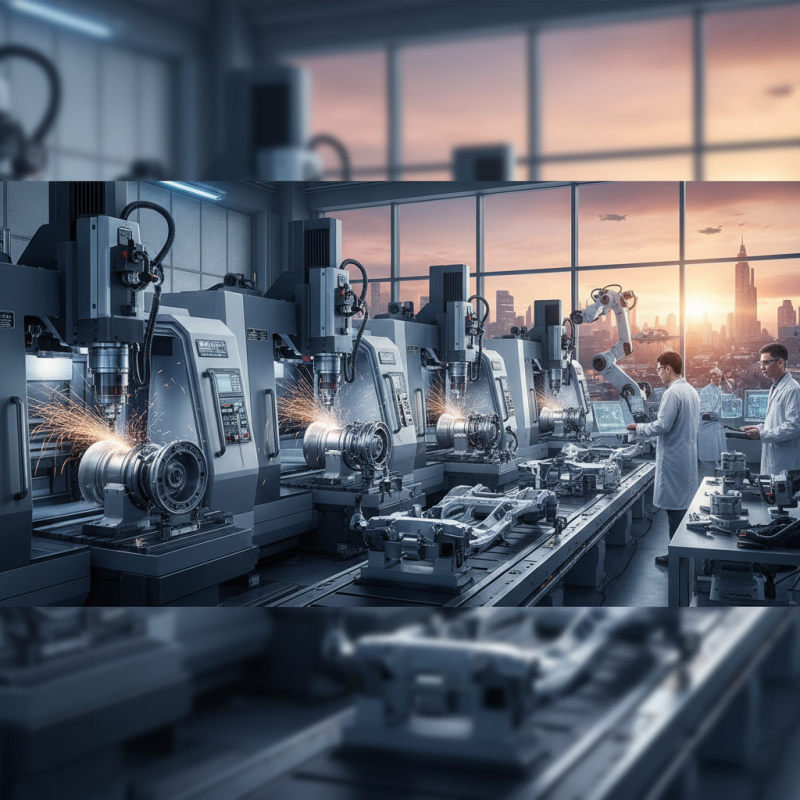
Machine tools play a crucial role in modern manufacturing. These machines shape, cut, and finish materials to create precise parts. Their impact reaches various industries, from automotive to aerospace. Without machine tools, the production process would be inefficient and less accurate.
The evolution of machine tools has transformed manufacturing. Traditional methods were often slow and labor-intensive. Today, advanced machine tools enhance speed and precision. They also allow for greater customization of products. However, dependency on technology raises concerns. Are we losing skilled labor in the process?
Innovation drives the development of machine tools. As industries grow, the demand for efficiency increases. Yet, the balance between automation and human skill needs reflection. We must consider the implications of relying solely on machines.
Importance of Machine Tools in Contemporary Manufacturing Processes
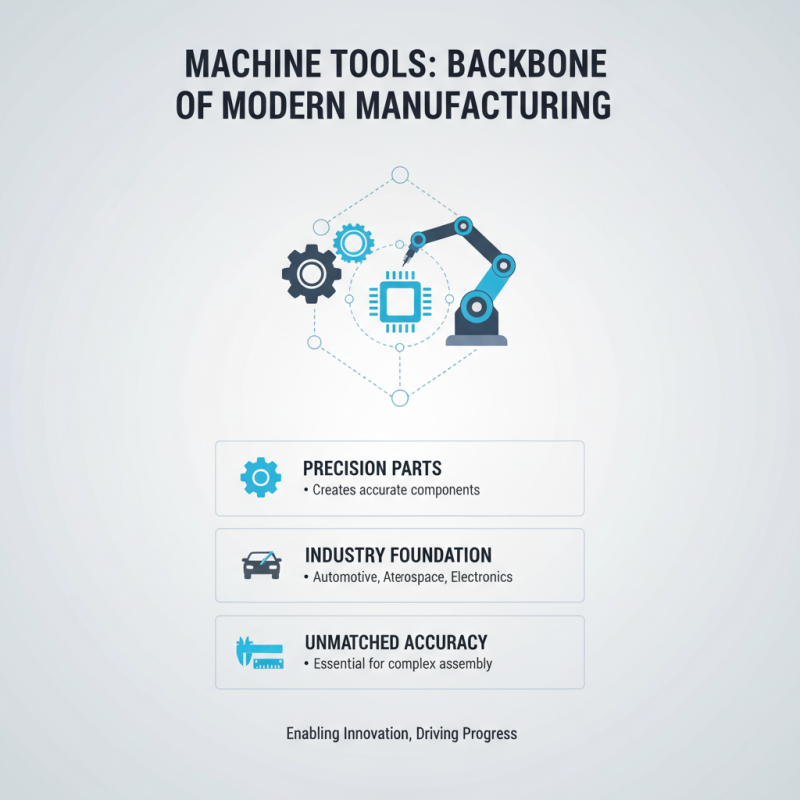
Machine tools play a crucial role in modern manufacturing. These machines help create precision parts. They are the backbone of industries like automotive, aerospace, and electronics. Without them, achieving accuracy is a challenge. Imagine assembling a car without the ability to mill engine blocks or drill holes accurately. It would be nearly impossible.
The importance of machine tools extends beyond mere production. They enable innovation and efficiency. For example, CNC machines can produce complex shapes with minimal human intervention. However, relying solely on automation can lead to skills neglect within the workforce. Balancing technical advancement with skilled labor is essential for long-term growth.
Maintenance is another crucial point. Machine tools require regular servicing to perform well. Even a small malfunction can lead to delays in the production line. Manufacturers must often choose between investing in new technologies or maintaining existing ones. This creates a constant tension between progress and reliability.
Types of Machine Tools and Their Functions in Industry
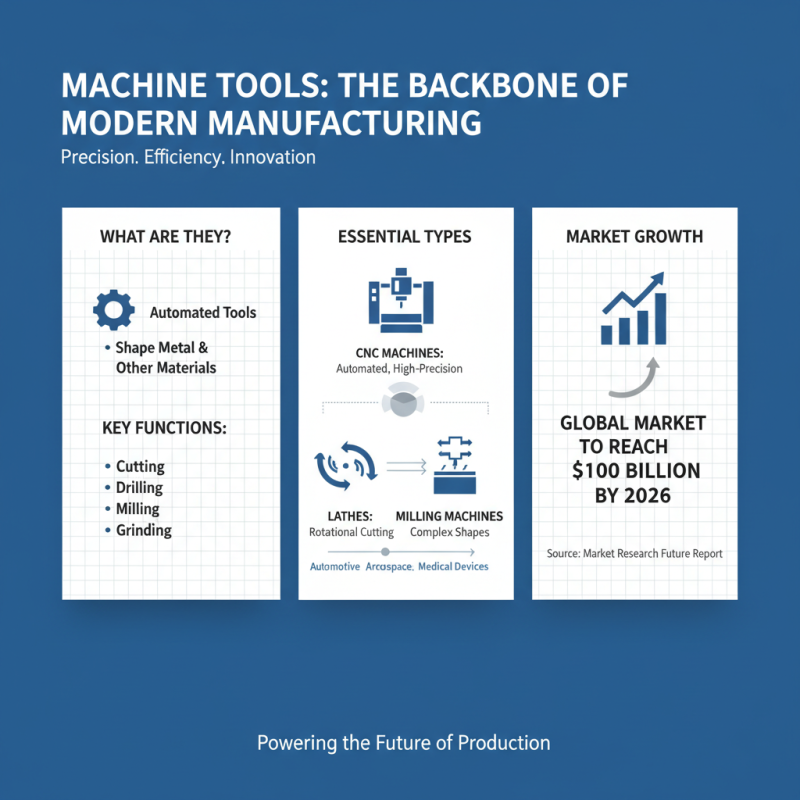
Machine tools play a vital role in modern manufacturing. They enable precision and efficiency in production processes. Various types of machine tools are essential in different industries. CNC machines, lathes, and milling machines are among the most prominent. According to a report by Market Research Future, the global machine tool market is expected to reach $100 billion by 2026.
CNC machines offer unparalleled automation. They can produce intricate parts with high accuracy, reducing human error. However, reliance on this technology may create a skills gap. Operators need advanced training to manage CNC systems effectively. A 2022 study indicated that 58% of manufacturers faced this challenge. Meanwhile, traditional lathes and milling machines still hold value. They are preferred for simpler tasks or smaller production runs. Many workshops struggle to balance the old with the new.
While new technologies emerge, the industry must reflect on sustainability. Machine tools often consume significant resources. Manufacturers are encouraged to adopt energy-efficient practices. This can reduce waste and improve overall productivity. A recent survey showed that 30% of companies are still lagging in this area. Integrating newer tools while enhancing sustainability is a complex challenge. The path forward requires innovation and adaptability.
Advancements in Machine Tool Technology and Automation
The landscape of modern manufacturing is being transformed by advancements in machine tool technology and automation. Reports indicate that $100 billion by 2025, driven by increased demand for precision and efficiency. Automation in machining processes can reduce labor costs and improve product quality. It’s estimated that automated systems can enhance production rates by up to 40%.
However, integrating new technologies can be challenging for many manufacturers.
For instance, while CNC (Computer Numerical Control) machines offer enhanced precision, they require skilled operators for programming and maintenance. A study found that nearly 60% of manufacturers struggle to find qualified personnel to operate these advanced machines. Keeping pace with these advancements often necessitates significant investment, which can be a barrier for small to medium enterprises. Many companies face a dilemma: spend on new technology or maintain existing tools.
Automation may lead to productivity gains, but it also raises concerns about job security and workforce displacement. These issues must be addressed to fully harness the potential of modern machine tools.
Impact of Machine Tools on Product Quality and Precision
Machine tools have a profound impact on product quality and precision in modern manufacturing. They enable manufacturers to create complex shapes and tight tolerances. Precision is crucial in industries like aerospace and medical, where even small errors can lead to failures. Machine tools help achieve consistent results in these demanding fields. The ability to fine-tune settings for speed and feed rates contributes to better outcomes.
However, not all machine tools are perfect. They require regular maintenance and calibration. A small oversight can result in defects that compromise a product. Many manufacturers grapple with this challenge, balancing productivity and quality. The learning curve can be steep, particularly for new operators. Training is essential to ensure tools are used correctly.
Investing in advanced machine tools can enhance precision significantly. Yet, some companies may hesitate due to high costs. They must weigh the benefits against potential risks. Embracing innovation is essential, but it comes with uncertainty. Finding the right balance between old and new technology is a constant struggle in the manufacturing world.
Future Trends in Machine Tool Manufacturing and Development
The evolution of machine tool manufacturing is closely tied to burgeoning technology trends. One notable trend is the integration of smart technology. Machine tools are now equipped with sensors and data analytics. This allows for real-time monitoring and adjustments during operations. Attention to detail is crucial, yet many manufacturers still struggle with implementation. They must learn and adapt rapidly.
Another emerging trend is the movement towards sustainable practices. Eco-friendly materials and energy-efficient designs are gaining traction. However, transitioning to greener methods can be challenging for traditional manufacturers. The need for training and new skill sets often creates resistance. It requires a shift in mindset to embrace these changes fully.
Lastly, additive manufacturing is reshaping the landscape. 3D printing technologies are influencing how components are designed and created. While this offers significant advantages, it also presents challenges. Quality control becomes more complex and requires ongoing evaluation. As innovative practices evolve, manufacturers must reflect on their strategies continuously.