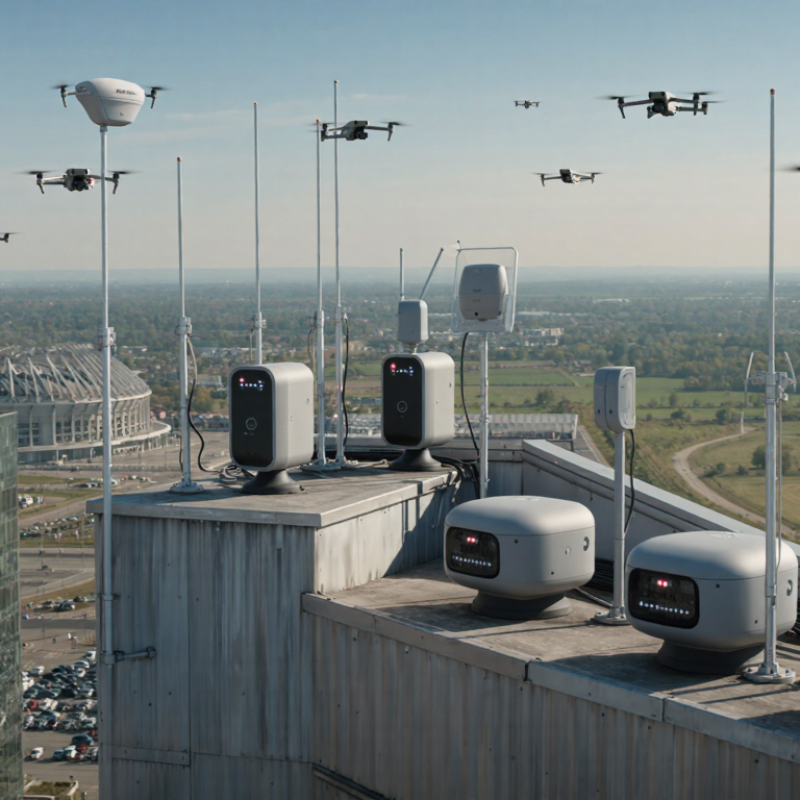
How to Choose the Right Drone Detector?
Match Sensors to Drone Signals: 2.4 GHz, 5.8 GHz, Radar, and RF
Choosing a drone detector starts with understanding the signals around your site. The 2.4 GHz band often supports control links, telemetry, and wireless video. The 5.8 GHz band commonly carries high-bandwidth video. A detector covering both bands can identify more activity, but interference from Wi-Fi may create false alerts. A quiet warehouse differs from a crowded stadium.
Radar adds another layer. It detects movement, distance, direction, and sometimes altitude, even when a drone transmits weakly. This matters near trees, walls, or changing light. However, small drones can appear as difficult targets, especially during rain or heavy background movement. Radar is not magic. Placement and calibration matter greatly.
RF sensing can recognize radio emissions and support protocol analysis without relying on visible contact. It may help classify signal patterns, but encrypted or unfamiliar links can reduce confidence. Combining RF with radar usually improves verification. Look for adjustable thresholds, event logs, time-stamped evidence, and clear operator alerts. Test the system with permitted equipment in the actual environment. Metal roofs, nearby transmitters, and rotating machinery can change results. My own preference is conservative alerting, although that may miss a brief event. A detector that explains uncertainty is often more trustworthy than one claiming perfect identification.