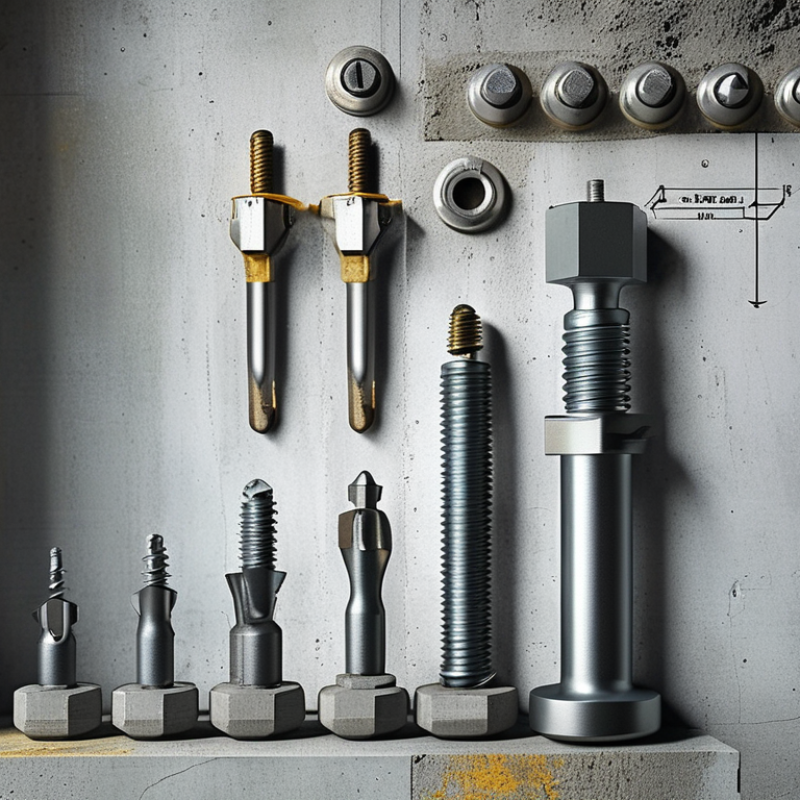
| L- or J-Shaped Cast-In Anchor Bolt | Positioned in fresh concrete before it hardens; the bent end provides mechanical anchorage. | New concrete foundations and slabs. | Equipment bases, steel columns, sign structures, and light poles. | Reliable tension and shear resistance when sufficient embedment and edge distance are provided. | Bolt diameter, embedment depth, bend geometry, projection length, reinforcement layout, and accurate positioning. |
| Headed Cast-In Anchor Bolt | Installed in fresh concrete with a forged or welded head embedded in the concrete. | New structural concrete. | Heavy machinery, base plates, structural steel connections, and precast elements. | Good resistance to tension through head bearing and to shear through the embedded shaft and surrounding concrete. | Head diameter, embedment depth, concrete strength, edge distance, spacing, and design code requirements. |
| Expansion Wedge Anchor | Inserted into a drilled hole; tightening expands a wedge against the hole wall. | Sound, uncracked or cracked concrete, subject to the product's approval. | Guardrails, machinery supports, structural brackets, and retrofit attachments. | High immediate clamping force with effective tension and shear performance when installed correctly. | Concrete condition, hole diameter and depth, minimum spacing, edge distance, torque, and suitability for cracked concrete. |
| Sleeve Anchor | A sleeve expands against the sides of a drilled hole as the nut is tightened. | Concrete, solid brick, and some dense masonry applications. | Light- to medium-duty fixtures, handrails, shelving, and equipment supports. | Moderate tension and shear capacity; performance depends strongly on base-material quality. | Base-material strength, sleeve length, fixture thickness, hole cleanliness, spacing, and edge distance. |
| Drop-In Internal-Thread Anchor | Set inside a drilled hole using a setting tool; an internal thread accepts a machine screw or threaded rod. | Concrete, generally for applications approved by the anchor manufacturer or design standard. | Suspended services, cable trays, pipe supports, and removable fixtures. | Primarily suited to static tension loads; shear resistance depends on the fixture and anchor design. | Correct setting depth, hole cleaning, concrete condition, thread engagement, and allowable load under the applicable code. |
| Concrete Screw Anchor | Threaded directly into a properly drilled pilot hole in hardened concrete or masonry. | Concrete and approved masonry substrates. | Light- to medium-duty brackets, electrical fixtures, framing, and temporary attachments. | Convenient installation with moderate tension and shear performance; not automatically suitable for high sustained loads. | Pilot-hole size, screw diameter, embedment, substrate condition, installation torque, and approval for cracked concrete or seismic use. |
| Adhesive or Chemical Anchor | Resin is injected into a cleaned hole, followed by insertion of threaded rod or a reinforcing bar. | Concrete, and selected masonry substrates when specifically approved. | Heavy equipment, structural retrofits, close-to-edge installations, and post-installed reinforcement. | Can provide high tension capacity and reduced expansion forces, but strength depends on bond, temperature, and curing. | Resin qualification, hole cleaning, embedment, installation temperature, cure time, moisture condition, and inspection requirements. |
| Bent-Plate or Plate Anchor | A threaded rod or bolt is welded to a plate or fabricated shape and cast into concrete. | New concrete foundations and heavily reinforced concrete elements. | Heavy structural columns, industrial frames, towers, and custom foundation connections. | High load potential through plate bearing and reinforcement interaction when designed as part of the connection. | Plate size, weld design, steel grade, embedment, reinforcement congestion, load path, and fabrication tolerances. |