How to Choose the Best Portable Treadmill for Your Needs?
Choosing the best Portable Treadmill requires more than comparing speed, price, and screen size. Your room, walking habits, body weight, and noise tolerance matter just as much. A machine that fits under a sofa may still feel unstable during a brisk walk. That difference becomes obvious after several weeks of use.
The World Health Organization recommends 150–300 minutes of moderate aerobic activity weekly for most adults. Its physical activity guidelines also emphasize reducing sedentary time. Meanwhile, the American College of Sports Medicine identifies regular exercise as a central part of long-term health, not a short-term trend. These recommendations explain why compact home equipment continues attracting attention. Market research from Grand View Research also reports steady growth in the global home fitness equipment market, supported by apartment living and flexible workout routines.
Yet market growth does not guarantee a good purchase. A thin walking pad may suit office breaks, while a wider treadmill may better support daily training. Check the belt dimensions, motor rating, maximum user weight, incline function, warranty, and emergency stop system. Listen for noise at your intended speed. Small details matter.
I have found that convenience often beats impressive specifications. However, this assumption deserves testing. Some portable models fold easily but lack sufficient cushioning or stability. Others advertise powerful motors without clearly explaining continuous-duty performance. This guide examines those differences carefully, using practical experience, manufacturer information, safety guidance, and independent industry data. The goal is not to name one universal winner. It is to help you choose a Portable Treadmill that fits your space, routine, and realistic fitness expectations.
Define Your Goal Using WHO’s 150-Minute Weekly Activity Target
Choosing the best portable treadmill starts with a clear goal, not the smallest folded frame. The World Health Organization recommends at least 150 minutes of moderate activity each week for most adults. Brisk walking usually fits this level when breathing becomes faster, but conversation remains possible. That target can become five 30-minute walks or shorter sessions across busy days. A 20-minute walk before work and another after dinner can still build useful consistency.
Your goal should guide the treadmill’s features. For steady walking, check belt length, handrail support, noise, and easy storage. For light jogging, choose a longer, more stable belt and a suitable speed range. Place the treadmill on a firm, level surface, then test whether your natural stride feels cramped. I once underestimated room around the machine. That mistake made stepping off awkward. Measure the floor space, ceiling height, and storage route before purchasing. Also, increase weekly time gradually if you have been inactive. The 150-minute target is useful, but it is not a race.
Tips: Divide sessions into realistic blocks. Keep a simple weekly record. Use a pace that feels moderately challenging. Check the safety key, power cord, and user-weight limit before every regular session. If pain, dizziness, or unusual breathlessness appears, stop and seek qualified medical advice. A portable treadmill should support your routine, not create a new obstacle.
Set Space and User-Fit Criteria with 100–130 cm Deck-Length Benchmarks
How to Choose the Best Portable Treadmill for Your Needs?
Set Space and User-Fit Criteria with 100–130 cm Deck-Length Benchmarks
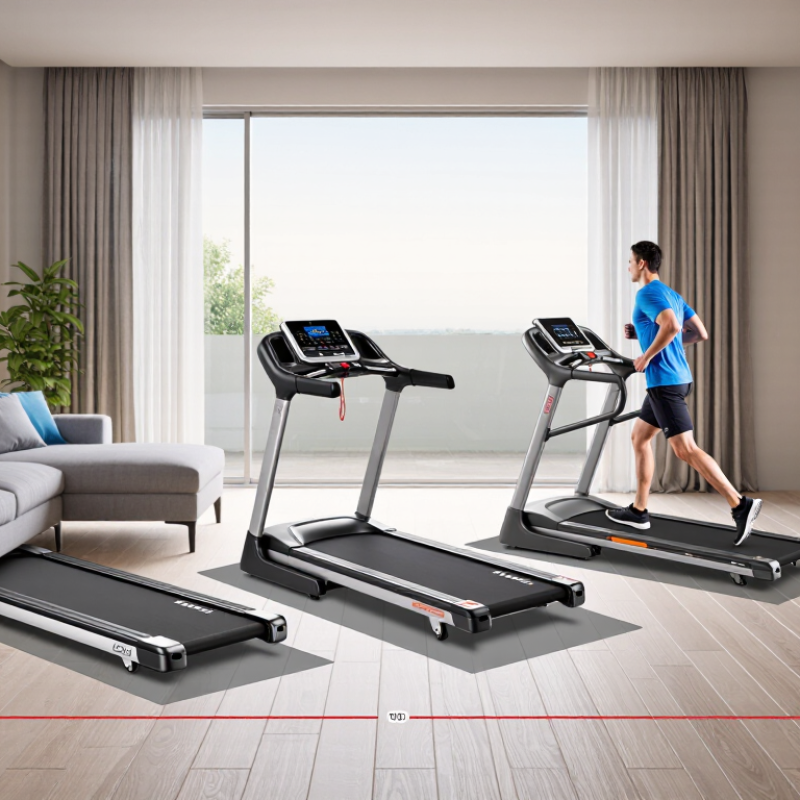
Portable treadmills solve a real problem: a narrow room, a desk, and limited storage. Yet portability should not decide the deck size. For most walking users, a 100–110 cm deck can suit shorter strides and compact rooms. Users above about 175 cm, or anyone jogging, should examine 120–130 cm instead. That range provides more landing space. The 100–130 cm benchmark is practical, not a universal safety guarantee.
The World Health Organization’s 2022 Global Status Report on Physical Activity estimates that 31% of adults worldwide are insufficiently active. It also warns that inactivity could reach 35% by 2030 without stronger action. The American College of Sports Medicine commonly recommends 150 minutes of moderate activity weekly. Therefore, user fit matters more than a sleek folded footprint. Measure your stride on the floor. Leave clear space behind the belt, and check the stated user-weight limit. Do not assume a small deck feels stable.
Tips: Mark 100, 110, and 130 cm rectangles with tape. Walk naturally for five minutes. Notice heel clearance, arm swing, noise, and whether the rear edge feels close. Folded dimensions matter too; a treadmill may fit under a sofa yet remain awkward to lift.
One honest caveat: stride length changes with speed, posture, and mobility, so these numbers need personal checking.
Compare Motors by Continuous CHP Rather Than Peak HP Ratings
How to Choose the Best Portable Treadmill for Your Needs?
When comparing portable treadmills, study continuous CHP before peak HP. Continuous CHP shows the motor’s usable output during regular exercise. Peak HP only describes a short performance burst. That number can look impressive, but it may not reflect steady walking or running. A treadmill rated at 1.5 continuous CHP may feel more dependable than one advertising a higher peak figure.
Think about your real routine. A 170-pound user walking briskly for 40 minutes creates more sustained demand than a brief speed test. Add incline, frequent starts, or heavier users, and motor strain increases. During my own equipment checks, I pay attention to speed stability, unusual heat, and belt hesitation. Small changes can reveal more than a large number on the specification sheet.
Do not shop by CHP alone. Belt length, deck cushioning, ventilation, user capacity, and noise also affect daily comfort. A compact motor can work well for light walking, but it may struggle with regular running. Ask whether the listed CHP applies continuously under load. Some specifications remain unclear, and that deserves caution. Independent testing is preferable, though it is not always available. If possible, walk for several minutes and listen for surging or grinding sounds. Quiet operation helps, but stable motion matters more.
Match Speed and Incline to ACSM Walking and Running Intensity Ranges
How to Choose the Best Portable Treadmill for Your Needs?
A portable treadmill should match your intended intensity, not just its folded size. The ACSM classifies moderate exercise as 3.0–5.9 METs. Vigorous exercise begins at 6.0 METs. Its 2021 guidelines also use 40–59% heart-rate reserve for moderate effort. Vigorous effort reaches 60–89%. For walking, a speed near 3 mph at zero incline usually creates light-to-moderate demand. Adding a 5% incline can raise the effort to roughly 5.4 METs. A 4 mph pace with the same incline may exceed 6 METs. Small motors differ. Check the continuous-duty rating, not only the advertised peak speed.
Tips: Choose at least 4 mph for purposeful walking. Select 6 mph or more for regular running. An adjustable incline adds intensity without forcing a faster pace. The ACSM metabolic equation can estimate demand, but it is not perfect for every body. Fitness level, hand support, posture, and belt accuracy change the result. I once selected a compact model by maximum speed alone. Its narrow deck made relaxed running uncomfortable.
The World Health Organization’s 2020 physical-activity guidelines recommend 150–300 minutes of moderate activity weekly, or 75–150 minutes of vigorous activity. A suitable treadmill should support that target repeatedly. Look for speed adjustments in small increments, stable handrails, and an incline range that reaches your planned MET level. If your routine alternates walking and running, test transitions before purchase. A machine that feels impressive for two minutes may become impractical after twenty. Use a heart-rate monitor when possible, and reassess your intensity every few weeks.
Verify Safety Features Against ASTM F2115 Treadmill Standards
Choosing a portable treadmill starts with more than deck size or folded weight. Safety should be checked against ASTM F2115, a recognized standard for motorized treadmill design and performance. It is a useful benchmark, not automatic proof of safety.
Ask the seller for clear compliance information, testing records, and the applicable standard edition. Do not accept vague phrases such as “professional quality.” Inspect the emergency stop control. It should be easy to reach and should stop the belt promptly. Check that side rails feel firm, the walking belt tracks evenly, and the motor cover leaves no exposed moving parts. Small gaps matter. Loose edges can catch clothing or fingers.
Look closely at the power cord, plug, and overload protection. A portable model may be moved often, so repeated folding can weaken cables or locking points. Test the folding mechanism on a flat floor. It should lock without force or unusual noise. The user manual should state weight limits, clearance requirements, maintenance intervals, and safe operating conditions. Missing instructions are a warning sign.
ASTM F2115 cannot predict every household risk. Children, pets, wet floors, and poor lighting still require attention. My checklist is not perfect, either. I would record the model details, review any safety notices, and question unsupported claims before buying. A quieter motor is appealing, but reliable stopping and stable footing matter more.
How to Choose the Best Portable Treadmill for Your Needs?
ASTM F2115 safety verification checklist for portable treadmill buyers
Each bar represents one safety area to verify before purchase: one point means the item should be checked in the product documentation, during inspection, or with the seller. This checklist is not a certification result; confirm that the current product documentation identifies applicable ASTM F2115 requirements.