Request Quote

Request a quote from Nidec Drive Technology America Corporation.

This quote form is intended for customers and partners in North America seeking information about Nidec Drive Technology America Corporation’s Precision Gearing Technologies. For inquiries related to the Nidec motor group division or from outside this region, please visit the global Nidec Group website to find the appropriate regional or product-specific contact.

Subscribe to Nidec Newsletter

Subscribe to our email newsletter to stay current with our precision gearing solutions, featured products, company updates, and industry news.

How to Choose the Best Grounding Transformer in China?

Choosing the right Grounding Transformer in China requires more than comparing catalog prices. It demands careful attention to system voltage, fault current, neutral grounding method, insulation level, and operating environment. A transformer may look suitable on paper, yet perform poorly in a humid substation or during repeated earth faults. Small details matter.

Dr. J. Lewis Blackburn, a respected power-system protection engineer, stated, “Grounding is an essential part of the protection system, not an afterthought.” This principle remains highly relevant when evaluating Chinese manufacturers. Buyers should examine factory testing, core and winding materials, thermal performance, short-time withstand capability, and documented quality controls. Ask for test reports, not only polished brochures. Check whether the supplier understands IEC requirements, local grid practices, and the actual fault conditions at your site.

The best Grounding Transformer is not always the largest or cheapest model. It should provide a stable neutral, limit fault damage, and coordinate correctly with relays and protection devices. Field experience also matters. Review reference projects with similar voltage levels and climates. Inspect enclosure sealing, cooling arrangements, cable access, and maintenance space. One overlooked connection can create serious trouble.

There is room for caution. Some specifications appear complete but omit zero-sequence impedance or grounding-duration data. That omission should stop the purchase. A reliable selection process compares engineering evidence, production experience, and after-sales support together. China offers capable manufacturers, but quality varies. The final decision should rest on verified performance, transparent communication, and a design reviewed by qualified electrical engineers.

How to Choose the Best Grounding Transformer in China?

What Is a Grounding Transformer and Why Is It Used?

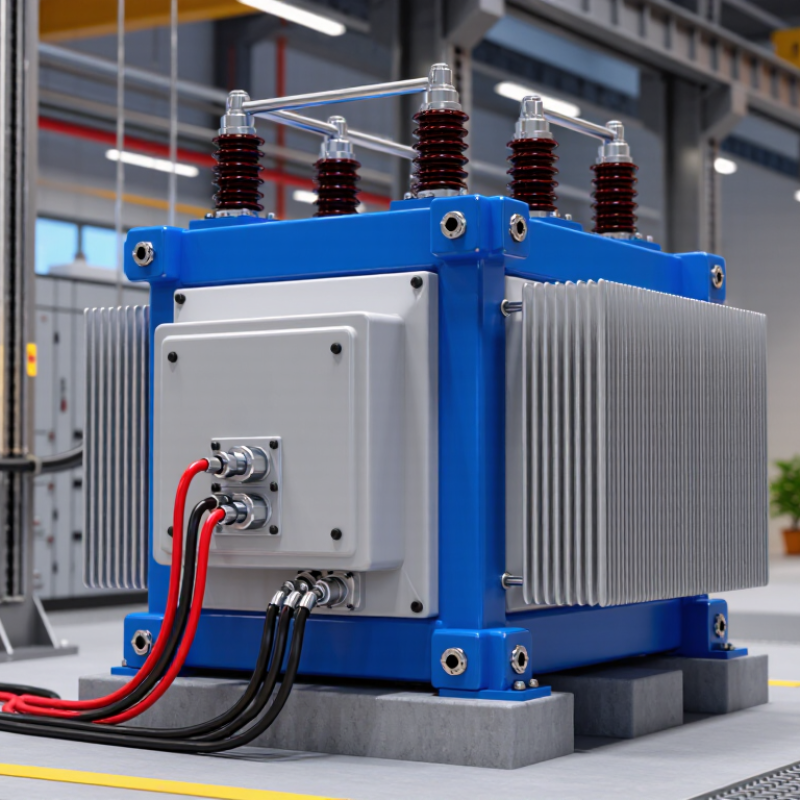
A grounding transformer creates a neutral point for a power system that lacks one. This connection gives fault current a controlled path to earth. Without it, a single line-to-ground fault may remain difficult to detect. System voltage can also shift unpredictably.

Common designs include zigzag and grounded-wye/delta transformers. A zigzag unit often provides a compact grounding path with limited influence on normal load flow. A grounded-wye/delta design can also support auxiliary power, depending on the project. The choice depends on voltage level, fault-current requirements, and available installation space.

In practical commissioning, engineers check transformer capacity, impedance, insulation level, and thermal performance. A neutral grounding resistor may limit fault current and reduce equipment damage. Protection relays must detect the selected fault-current range reliably. Cable length and system capacitance matter too. Small details can change the result.

It is easy to oversimplify this choice. A larger transformer is not automatically safer. Excessive fault current can stress switchgear, while too little current may delay protection. Engineers should review utility requirements, short-circuit studies, local standards, and future load changes before ordering. Site measurements are valuable. Calculations alone can miss grounding problems caused by moisture, long cables, or poor connections. A careful design leaves room for testing, maintenance, and a second technical review.

Which Grounding Transformer Types Are Available in China?

How to Choose the Best Grounding Transformer in China?

Which Grounding Transformer Types Are Available in China?

China’s expanding renewable network is increasing the need for controlled zero-sequence currents. The IEA Renewables 2024 report expects China to provide almost 60% of global renewable capacity additions from 2024 to 2030. The China Electricity Council reported approximately 3.35 TW of installed generation capacity by the end of 2024. These figures explain why grounding equipment now appears in wind, solar, industrial, and urban distribution projects.

The most common option is the zig-zag grounding transformer. It creates a neutral point with limited short-circuit impedance. It suits medium-voltage systems that lack an accessible neutral. Wye-delta units are also available. They provide a neutral while supporting harmonic isolation between windings. Some Chinese projects use grounding transformers with neutral grounding resistors. This arrangement limits earth-fault current and protects cables, switchgear, and transformers.

Petersen-coil systems remain useful where single-line-to-ground faults may continue briefly. They compensate capacitive current and can reduce arc damage. Oil-immersed units suit outdoor substations and higher ratings. Dry-type units fit indoor plants, tunnels, and facilities with stricter fire-control requirements. Selection should consider voltage, fault duration, insulation level, thermal duty, and local grid rules. A common mistake is choosing only by rated capacity. The fault-current target matters more. The data is rarely perfect, so field measurements and protection studies should challenge the initial specification.

How to Choose the Best Grounding Transformer in China? — Which Grounding Transformer Types Are Available in China?
Grounding Transformer Type Typical Connection Typical Medium-Voltage Application in China Neutral-Point Function Key Advantages Main Limitations Best-Fit Selection Scenario
Zig-Zag Grounding Transformer Interconnected-star winding with an accessible neutral point Commonly considered for 6 kV, 10 kV, and 35 kV distribution systems where a neutral point is not available Creates an artificial neutral and provides a low-impedance path for zero-sequence current Compact design; efficient zero-sequence performance; normally does not require a separate secondary load supply Its continuous grounding capacity must be checked carefully; it is not intended to supply ordinary three-phase loads unless specifically designed for that purpose Artificial neutral required
Star-Delta Grounding Transformer Grounded wye primary with delta secondary, often with an accessible neutral Medium-voltage networks requiring a neutral point and, in some designs, a small auxiliary power source Provides a neutral point while the delta winding helps circulate zero-sequence components internally Can offer an auxiliary secondary winding; suitable when grounding and limited station-service power are required together Usually larger and more costly than a grounding-only zig-zag unit; the secondary rating must be coordinated with the actual auxiliary load Grounding plus auxiliary supply
Grounding Transformer with Neutral Grounding Resistor Grounding transformer neutral connected to a resistor before the earth connection 6–35 kV systems where earth-fault current must be limited to a defined engineering value Establishes a neutral and limits single-line-to-ground fault current through resistance Reduces thermal and mechanical fault stress; supports selective earth-fault protection and controlled fault-current levels Requires resistor thermal-duty verification, insulation coordination, protection settings, and adequate outdoor ventilation where applicable Controlled fault current
Grounding Transformer with Neutral Grounding Reactor Grounding transformer neutral connected to a reactor before the earth connection Networks where inductive grounding is selected after system capacitance and resonance conditions are studied Introduces inductive impedance to limit or control zero-sequence current Can reduce earth-fault current while avoiding the continuous power losses associated with a resistor System capacitance, resonance, transient overvoltage, and protection coordination require detailed study Inductive grounding design
Grounding Transformer with Petersen Coil Neutral connected to a tuned arc-suppression coil Selected for certain medium-voltage overhead or mixed networks with significant capacitive earth-fault current Compensates a substantial portion of the network's capacitive earth-fault current Can reduce arcing current and help maintain service during some transient single-line-to-ground faults, subject to local operating rules Requires accurate network-capacitance assessment, tuning, automation, and suitable earth-fault protection Capacitive-current compensation
Grounding Transformer with Solidly Grounded Neutral Neutral connected directly to the grounding grid or earth system Systems designed to permit high earth-fault current for rapid protective-device operation Provides a low-impedance zero-sequence path and establishes a firm reference to earth Simple configuration; fast and decisive fault detection when protection is correctly coordinated Earth-fault current can be high, increasing equipment stress and requiring a robust grounding grid and appropriately rated switchgear Fast fault clearing
Dry-Type Grounding Transformer Usually zig-zag or star-delta winding construction without liquid insulation Indoor substations, renewable-energy collection systems, industrial facilities, and locations with fire-safety restrictions Provides the same artificial-neutral or auxiliary-supply function as the selected winding arrangement No liquid leakage risk; suitable for indoor installation; simplified fire-safety management Heat dissipation, enclosure ventilation, audible noise, and altitude derating must be considered Indoor or fire-sensitive sites
Oil-Immersed Grounding Transformer Usually zig-zag or star-delta winding construction in an insulating-liquid tank Outdoor substations and applications requiring high insulation strength or rugged environmental performance Provides an artificial neutral and can be combined with a resistor, reactor, or other neutral-grounding equipment Effective heat transfer; commonly suitable for outdoor service and higher-duty applications Requires liquid maintenance, leak prevention, fire-risk assessment, and suitable installation clearances Outdoor and higher-duty service
Selection criteria: Confirm the system voltage, highest system voltage, frequency, neutral-grounding method, required earth-fault current, short-time thermal duration, insulation level, zero-sequence impedance, continuous neutral current, installation environment, altitude, cooling method, enclosure protection, and applicable project standards before finalizing the transformer design. Typical voltage classes such as 6 kV, 10 kV, and 35 kV are application references rather than universal design limits; the final ratings must be verified through a system study and the applicable Chinese and project-specific standards.

How to Determine the Required Electrical Specifications

How to Choose the Best Grounding Transformer in China?

How to Determine the Required Electrical Specifications

Choosing a grounding transformer starts with the system’s actual operating conditions. Record the line voltage, frequency, neutral arrangement, and maximum earth-fault current. A simple nameplate review is not enough. Ask for measured load data, not only design estimates. In China, verify whether the project follows applicable GB standards, IEC requirements, or utility specifications.

The transformer’s rated voltage must match the connected network. Its neutral grounding method also affects the design. Calculate the zero-sequence impedance and specify the permitted fault current duration, such as 10 seconds or 30 seconds. Thermal performance depends on both values. For resistance grounding, select the neutral resistor with careful current and voltage calculations. For direct grounding, confirm that the transformer can withstand the expected fault duty.

Do not overlook insulation level, cooling method, altitude, enclosure protection, and installation temperature. A coastal substation may need stronger corrosion protection than an indoor plant. A dusty factory may require a different enclosure. Keep it practical. During technical reviews, I have seen oversized transformers increase cost without improving protection. I have also seen underestimated fault current create serious coordination problems. The calculation should be checked by a qualified electrical engineer, then compared with relay settings and cable withstand ratings. A neat spreadsheet can still hide a wrong assumption. Record every input, including future expansion, because a transformer selected for today may become inadequate after one production line is added.

How to Evaluate Chinese Manufacturers and Product Quality

How to Choose the Best Grounding Transformer in China?

Evaluating a Chinese manufacturer starts with engineering evidence, not attractive brochures. Ask for the transformer’s rated voltage, zero-sequence impedance, insulation level, and short-time thermal capacity. These values must match your neutral grounding system and protection design. A reliable manufacturer should explain the calculation method clearly. I also request drawings showing core structure, winding arrangement, cooling paths, and enclosure details. Small details matter. Loose documentation often signals weak process control.

Tips: Visit the production line if possible. Check copper storage, core cutting, coil winding, vacuum drying, and final assembly. Ask to see calibration records for testing instruments. A clean workshop is useful, but it proves little alone. Review routine test reports, temperature-rise results, insulation tests, and short-circuit design evidence. Independent laboratory verification adds confidence. Factory certificates help, but traceability matters more. Each transformer should have identifiable material records and inspection points.

Product quality also depends on communication after the order. Confirm delivery tolerances, spare parts, installation guidance, and response times in writing. Experienced engineers should discuss unusual loads, harmonics, altitude, humidity, and grounding resistor coordination. A factory tour can mislead me if I focus only on appearance. I once underestimated the value of reviewing failed-test procedures and corrective actions. That was a mistake. Ask how the manufacturer handles defects, design changes, and field feedback. Real reliability is shown when problems are documented, investigated, and corrected.

How to Compare Costs, Certifications, Delivery, and After-Sales Service

Choosing the best grounding transformer in China requires more than comparing the lowest quotation. Ask suppliers to separate material costs, testing fees, packaging, shipping, and installation support. A low initial price may hide expensive delays or weak components.

Request clear certification documents and recent test reports. Check whether ratings match your voltage, fault current, insulation level, and operating environment. Experienced engineers should explain neutral grounding methods, enclosure protection, temperature rise, and maintenance intervals. I prefer drawings with dimensions and terminal details before approval. Small omissions can become costly on site.

Delivery deserves equal attention. Confirm production time, inspection points, export packaging, and responsibility for transport damage. After-sales service should include remote troubleshooting, spare-part guidance, and response times in writing. Ask for references from similar projects, not only general testimonials. Real evidence matters.

Tips:
Compare three detailed quotations using the same technical specification. Ask for factory inspection photos or a live video review. Keep a written list of exclusions. Some buyers focus too heavily on price; I have made that mistake before. A slightly higher cost can be sensible when testing, documentation, and support are included. Still, do not accept vague promises. Agreement in writing is safer.