| Material Structure | Base material | Carbon steel pipe with a zinc protective coating | Combines the mechanical strength of carbon steel with improved atmospheric corrosion resistance. |
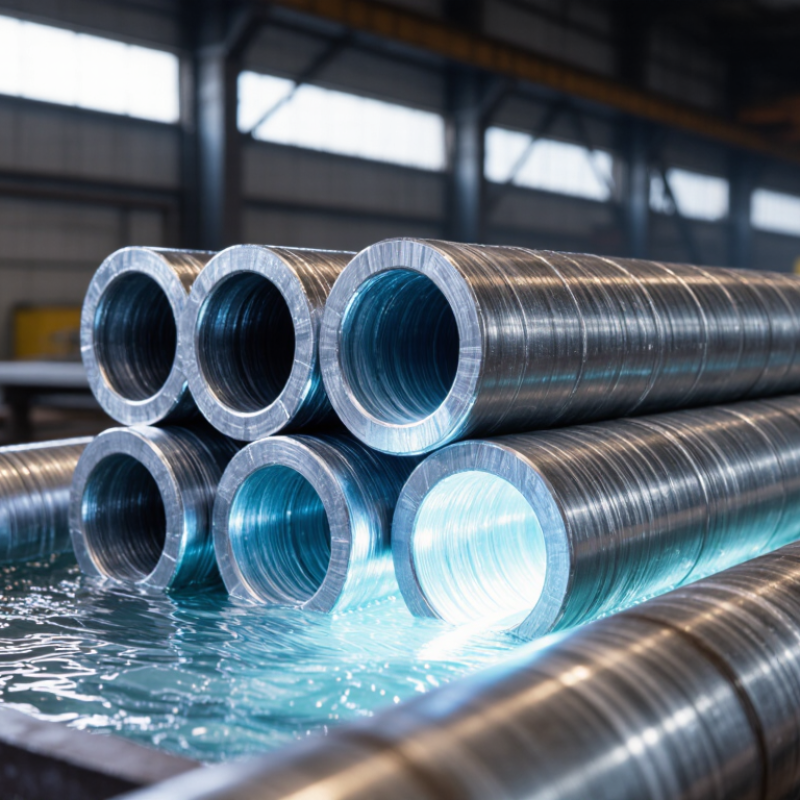
| Manufacturing | Common galvanizing process | Hot-dip galvanizing, in which cleaned steel is immersed in molten zinc at approximately 450°C | Produces a metallurgically bonded zinc-iron coating that provides both barrier and sacrificial protection. |
| Corrosion Protection | Zinc coating function | Zinc corrodes preferentially to exposed steel, including at small scratches or cut edges | Helps protect the underlying steel where limited mechanical damage occurs; severe damage still requires repair. |
| Coating Thickness | Typical hot-dip coating range | Often approximately 45–100 µm or more, depending on steel thickness and the applicable standard | A thicker zinc layer generally provides longer service life in comparable environments. |
| Mechanical Strength | Yield and tensile strength | Varies with the carbon-steel grade; common structural and utility grades may have yield strengths around 200–350 MPa and tensile strengths around 330–550 MPa | Suitable grades can withstand internal pressure, external loads, and structural service requirements. |
| Dimensional Range | Nominal pipe sizes | Commonly available from approximately 15 mm to 300 mm nominal size, with larger sizes available for specific projects | Size selection depends on flow rate, pressure, support spacing, and connection requirements. |
| Wall Thickness | Available wall schedules | Common schedules include light, standard, and heavier-wall options; actual thickness varies by nominal size and specification | Heavier walls improve pressure capacity and resistance to impact, bending, and abrasion. |
| Temperature Capability | Recommended service temperature | Generally used for moderate-temperature service; prolonged exposure above approximately 200°C can reduce coating performance | High-temperature systems may require uncoated alloy steel, specialized coatings, or engineering review. |
| Pressure Service | Pressure rating | Not a single fixed value; depends on diameter, wall thickness, steel grade, temperature, joints, and design code | Pipe must be selected and tested according to the intended fluid service and governing standard. |
| Joining Methods | Typical connections | Threaded fittings, grooved couplings, flanges, mechanical fittings, and welding where permitted | Threads and mechanical couplings preserve the coating more easily; welding requires coating removal and post-weld protection. |
| Service Life | Expected durability | Can provide several decades of service in many rural or moderate environments; life is shorter in severe marine or industrial exposure | Actual life depends on coating mass, humidity, salt, pollutants, abrasion, drainage, and maintenance. |
| Water Distribution | Typical use | Cold-water lines, service connections, irrigation, and utility piping where approved by local regulations | Durable and mechanically robust, but water chemistry and applicable drinking-water requirements must be considered. |
| Construction | Structural and utility applications | Handrails, guardrails, posts, scaffolding components, frames, and supports | The zinc coating reduces routine painting needs in outdoor environments. |
| Agriculture | Farm and irrigation systems | Irrigation piping, livestock facilities, greenhouse supports, and fencing structures | Useful where moderate corrosion resistance and impact strength are needed. |
| Fire Protection | Sprinkler and standpipe systems | May be used in selected fire-protection systems when the pipe, coating, fittings, and installation comply with the applicable fire code | Approval depends on system design, fluid compatibility, corrosion conditions, and local regulations. |
| Limitations | Chemical and environmental resistance | Zinc can be attacked by strong acids, strong alkalis, prolonged wet storage, stagnant moisture, and some aggressive chemicals | Alternative materials or protective systems may be required for highly corrosive or high-temperature service. |
| Inspection | Quality checks | Verify dimensions, coating continuity, coating mass or thickness, thread condition, straightness, and pressure-test documentation | Inspection confirms that the pipe meets the specified standard and is suitable for the intended service. |