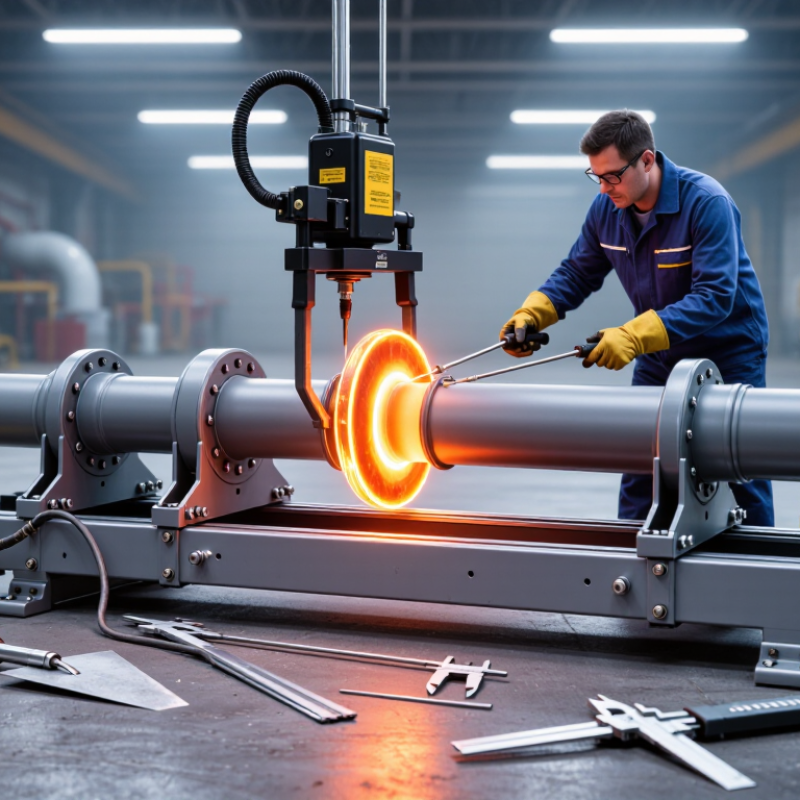
| Definition | A fusion welding machine joins compatible thermoplastic components by heating their surfaces until they soften, applying controlled pressure, and allowing the joint to cool. | The materials become one continuous joint without threaded fittings, adhesives, or conventional filler metal. |
| Primary Materials | Common materials include polyethylene (PE), polypropylene (PP), polyvinylidene fluoride (PVDF), and other compatible thermoplastics. | The pipe, fitting, or sheet must be made from a compatible material and approved grade for the intended application. |
| Main Fusion Methods | Butt fusion, socket fusion, saddle fusion, and electrofusion. | The selected method depends on the component geometry, pipe diameter, material, installation conditions, and applicable joining procedure. |
| Butt Fusion | Two prepared pipe ends are aligned, heated against a flat heating plate, brought together under controlled force, and held until cooled. | It is widely used for joining thermoplastic pipe sections with matching outside diameters and wall structures. |
| Socket Fusion | The outside of a pipe and the inside of a socket fitting are heated with matched tools and then pressed together. | It is generally used for smaller-diameter piping and fittings where a socket connection is suitable. |
| Electrofusion | An electrically heated fitting melts the contact surfaces of the fitting and pipe to create the joint. | It is useful where access is limited or where conventional butt-fusion equipment cannot be positioned easily. |
| Core Machine Components | Frame or clamps, alignment guides, hydraulic or mechanical actuator, facer, heating plate, control unit, and pressure or temperature indicators. | Each component controls alignment, surface preparation, heating, joining force, and cooling conditions. |
| Surface Preparation | Pipe ends are cleaned and mechanically faced to remove oxidation, contamination, and uneven surfaces. | Clean, square, and parallel surfaces help produce complete contact and reduce the risk of weak or misaligned joints. |
| Typical Heating Range | Many PE and PP fusion procedures use a heating-tool surface temperature of approximately 200–230°C (392–446°F), but the approved procedure governs the exact value. | Temperature varies with resin type, pipe dimensions, equipment, ambient conditions, and the applicable standard or manufacturer procedure. |
| Heating Stage | The prepared surfaces are pressed lightly against the heating element until a controlled melt bead or softened layer forms. | The goal is to soften the joining surfaces without overheating, degrading, or contaminating the thermoplastic. |
| Changeover Stage | The heating plate is removed quickly while the softened pipe ends remain aligned. | A short, controlled changeover helps prevent excessive cooling or contamination before the joint is formed. |
| Fusion and Pressure | The softened surfaces are brought together under the pressure specified by the joining procedure and equipment settings. | Correct pressure promotes molecular interdiffusion while limiting excessive melt displacement and bead deformation. |
| Cooling Stage | The joint remains clamped and undisturbed until it has cooled sufficiently to handle. | Moving or stressing the joint before adequate cooling can reduce alignment and joint strength. |
| Key Process Variables | Material type, pipe outside diameter, wall thickness, heating temperature, heating time, changeover time, fusion pressure, and cooling time. | These variables must be selected as a coordinated set; changing one value can affect the quality of the entire joint. |
| Common Applications | Potable-water pipelines, gas distribution systems, wastewater lines, industrial process piping, mining slurry lines, and agricultural irrigation. | Fusion is selected when a leak-resistant, corrosion-resistant, and continuous thermoplastic pipeline is required. |
| Main Advantages | Leak-resistant joints, no separate adhesive, strong chemical resistance, low internal flow restriction, and suitability for many field installations. | A properly made fusion joint can have performance comparable to or greater than the surrounding thermoplastic pipe, depending on the application and procedure. |
| Limitations | The process requires compatible thermoplastics, trained operators, suitable equipment, controlled conditions, and access for alignment and clamping. | It is not suitable for every plastic or for materials that cannot be softened and reformed by heat. |
| Quality Inspection | Visual inspection checks bead formation, symmetry, alignment, contamination, and surface defects. Pressure testing or other non-destructive testing may also be required. | Inspection verifies that the joint meets the project specification and the relevant joining standard. |
| Safety Requirements | Use heat-resistant gloves, eye protection, protective clothing, guarded equipment, stable work surfaces, and adequate ventilation. | Heating plates can cause severe burns, and moving clamps or hydraulic components can create pinch and crush hazards. |
| Overall Working Principle | Prepare, align, heat, join, press, and cool compatible thermoplastic surfaces in a controlled sequence. | Heat and pressure allow polymer chains from the two surfaces to intermingle; cooling then solidifies the fused connection. |