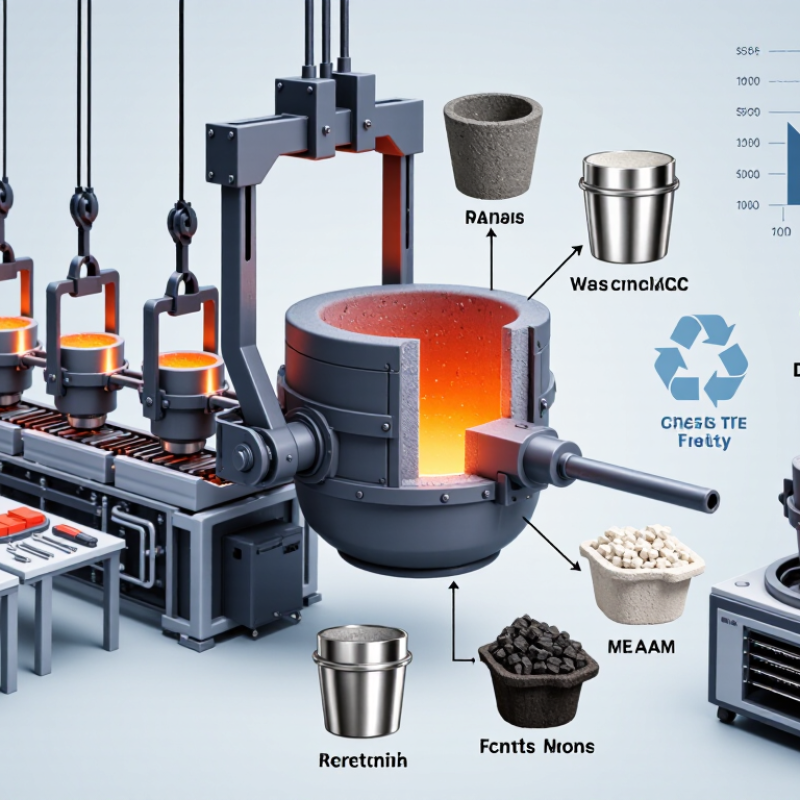
Choosing an aluminium melting pot starts with its heating method and control system. Aluminium melts at 660.323°C, according to the NIST Chemistry WebBook. A pot should therefore reach about 700–750°C without operating continuously at its limit.
Electric resistance heating is clean, stable, and easy to install. It suits small workshops and repeated batches. Gas heating usually offers faster recovery, but its flame can create uneven temperatures around the pot. Induction heating responds quickly and transfers energy efficiently, although it needs compatible equipment and careful electromagnetic design. The U.S. Department of Energy identifies temperature control and heat loss as major factors in industrial furnace efficiency.
Control features matter more than a bright digital display. A calibrated thermocouple should measure the melt, not only the air near the lid. ASTM E230/E230M provides reference requirements for thermocouple accuracy and tolerances. PID control can reduce temperature swings, while independent over-temperature protection adds a valuable safety layer. Insulated lids also reduce heat loss and oxidation exposure.
In practice, I would choose a furnace with data logging. It reveals slow heating, overshoot, and unstable cycles. A cheap sensor can still mislead. Even good equipment needs regular verification against a secondary thermometer, because metal residue can affect readings. Temperature control is never completely automatic.