How to Choose the Right Air Compressor Air Dryer?
Choosing the right Air Compressor Air Dryer is not a simple equipment purchase. It is a process decision. The dryer must protect tools, products, pipelines, and people from moisture-related problems.
Hank Van Ormer, a respected compressed-air specialist and founder of Air Power USA, has stated, “A dryer should be selected for the application, not just the compressor.” That principle deserves attention. A workshop producing clean pneumatic parts may need different protection from a food-processing line or outdoor installation. Pressure dew point, flow rate, inlet temperature, ambient conditions, and operating hours all influence the correct choice.
Small details matter. A refrigerated dryer may suit general manufacturing with moderate dew-point requirements. A desiccant dryer may be necessary where very dry air supports sensitive instruments or cold environments. An undersized dryer can create wet filters, rusty pipes, and unstable tools. An oversized unit can waste energy and increase maintenance costs.
Do not trust capacity labels alone. They may reflect ideal conditions, not your hottest production day. Measure actual airflow and pressure. Check whether the compressor runs continuously or cycles frequently. Review filter placement, drain reliability, and future production changes.
The answer is rarely perfect. Cost, energy use, maintenance, and air quality often conflict. A technically impressive dryer may become a poor investment if operators bypass it. This guide examines those trade-offs carefully, helping you choose equipment that fits real operating conditions rather than assumptions.
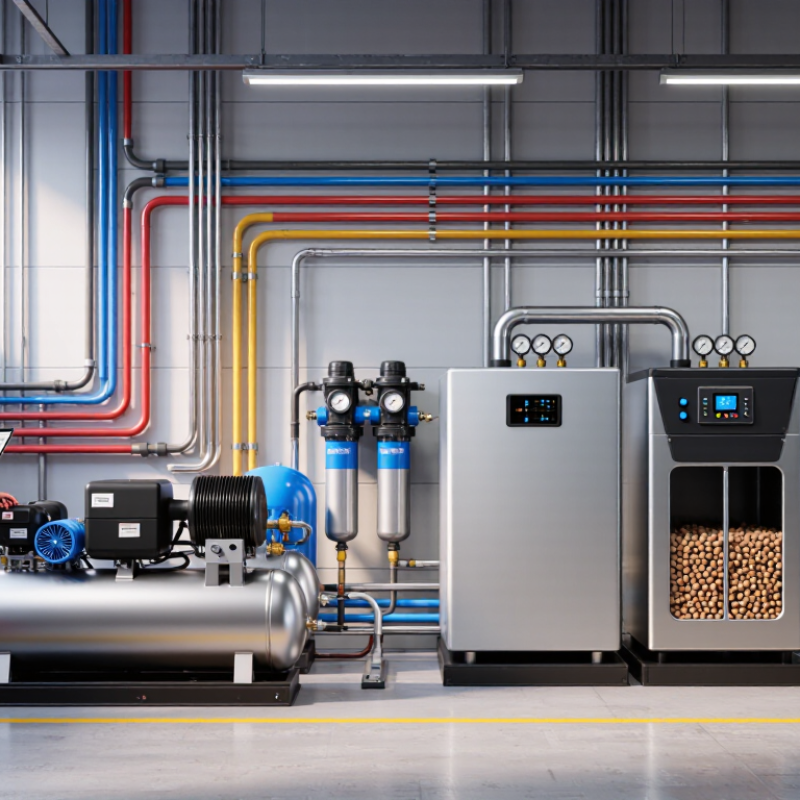
Understand the Role of an Air Dryer in Compressed Air Systems
An air dryer removes water vapor from compressed air before moisture reaches tools, pipes, and products. Without proper drying, condensation can cause rust, blocked valves, frozen lines, and inconsistent pneumatic performance. The U.S. Department of Energy’s Improving Compressed Air System Performance sourcebook reports that leaks may waste 20–30% of compressor output. Wet air can increase those losses by damaging equipment and forcing unnecessary maintenance.
Choose a dryer by checking required flow, inlet pressure, ambient temperature, and pressure dew point. Refrigerated dryers often suit general plant air, while desiccant dryers support low-dew-point applications. ISO 8573-1 provides the framework for specifying air purity classes, including water, oil, and particles. A pressure dew point of 3°C may be adequate for indoor production, but outdoor lines or cold rooms may need much drier air. It depends.
Oversizing is not always safer. A lightly loaded dryer can consume energy without improving air quality. The Compressed Air Challenge notes that compressed air may represent 10% or more of industrial electricity use in some facilities. Selecting a dryer near the real operating range can reduce waste, but peak demand still matters. Review shift patterns, seasonal temperatures, and future expansion. I have seen specifications built around nameplate capacity, not actual demand. That shortcut deserves another look. Install dew-point monitoring where moisture could affect quality, and verify performance after commissioning rather than trusting a brochure.
How to Choose the Right Air Compressor Air Dryer?
The required pressure dew point (PDP) is the main factor when selecting an air dryer. Lower PDP values indicate drier compressed air and are typically required for colder environments, outdoor piping, instrumentation, pharmaceuticals, and other moisture-sensitive processes.
ISO 8573-1 water classes define maximum pressure dew points. Refrigerated dryers commonly support around +3°C PDP, while desiccant dryers are used when lower PDP values such as −20°C, −40°C, or −70°C are required. Final selection should also consider flow rate, operating pressure, ambient temperature, air quality requirements, pressure loss, and energy consumption.
Identify Your Air Quality and Pressure Dew Point Requirements
How to Choose the Right Air Compressor Air Dryer?
Air quality begins with the application, not the compressor size. Identify the required purity class for particles, water, and oil before selecting a dryer. A clean workshop may tolerate general-purpose compressed air, while food packaging, electronics, and instrumentation need tighter control. Check the applicable ISO 8573-1 class and confirm the limits with your process engineer. Small amounts of oil or water can damage valves, stain products, or cause unexpected downtime.
Pressure dew point is equally important. It is the temperature at which moisture condenses inside a pressurized air system. A line installed in a cold warehouse needs a lower pressure dew point than one in a warm factory. For example, air at 7 bar may remain dry near the compressor but condense after traveling through an unheated pipe. Measure the coldest operating location, not only the compressor room. That detail is often missed.
Do not choose a dryer from flow rate alone. Calculate the actual air demand, inlet temperature, working pressure, and seasonal ambient conditions. Oversizing may increase cost and energy use, while undersizing can create wet air during production peaks. Pressure dew point ratings can also be misunderstood when compared at different pressures. Verify the test conditions. Recheck them. A practical selection leaves room for future demand, but excessive safety margins deserve review.
Match Dryer Capacity, Energy Use, and Operating Conditions
How to Choose the Right Air Compressor Air Dryer?
Choosing an air dryer starts with real operating data, not the compressor’s nameplate alone. Measure average and peak airflow in cubic feet per minute or cubic metres per minute. Check inlet pressure, compressed-air temperature, and ambient temperature. A dryer rated for 100 CFM may perform poorly when hot air enters at low pressure. Undersizing can cause wet air, corrosion, and product defects. Oversizing may increase purchase and energy costs unnecessarily.
Match the dryer to your required pressure dew point. Refrigerated dryers often suit general workshops and pneumatic tools. Desiccant dryers provide much drier air for sensitive instruments, paint processes, or outdoor lines. However, some desiccant systems consume purge air during regeneration. That lost air can quietly increase compressor runtime. I have seen energy estimates fail because purge consumption was ignored. Check pressure drop too. Even a small loss can make the compressor work harder throughout the day.
Tips: Record airflow during the busiest production period. Include future demand, but avoid excessive safety margins. Clean the inlet filter and drain regularly. Review seasonal temperatures. A dryer selected in winter may struggle during a hot summer. Ask for performance data at your actual pressure and temperature. If conditions change often, variable-speed control may reduce waste, though the extra complexity deserves careful maintenance planning. Perfect calculations are rare; measured site data is usually better.
Evaluate Installation, Maintenance, and Total Ownership Costs
How to Choose the Right Air Compressor Air Dryer?
Installation and ownership costs deserve more attention than the purchase price. A dryer should match the required pressure dew point, flow rate, inlet temperature, and local climate. An undersized unit may create moisture problems during production peaks. An oversized unit can consume unnecessary energy. Check pressure drop, drain design, ventilation, and access for filter replacement before approving the layout. Small details matter.
The U.S. Department of Energy reports that compressed air can represent about 10% of industrial electricity use. The Compressed Air and Gas Institute states that energy commonly accounts for 70–80% of a compressor system’s lifetime cost. These figures include the compressor, but they also expose the importance of dryer efficiency. Refrigerated dryers may suit general plant air, while desiccant dryers provide lower dew points but often require purge air or heater energy. Read the performance data carefully.
Maintenance costs are easy to underestimate. Automatic drains, differential-pressure gauges, and dew-point monitoring can prevent hidden losses. The DOE’s compressed-air guidance identifies leaks as capable of wasting 20–30% of system output. A neglected drain can behave like a permanent leak. These percentages are benchmarks, not promises. Actual results depend on load patterns and operating hours. A spreadsheet may still mislead if it ignores downtime, replacement intervals, and technician access. Ask suppliers for five-year energy and service estimates, then test those assumptions against real plant conditions.