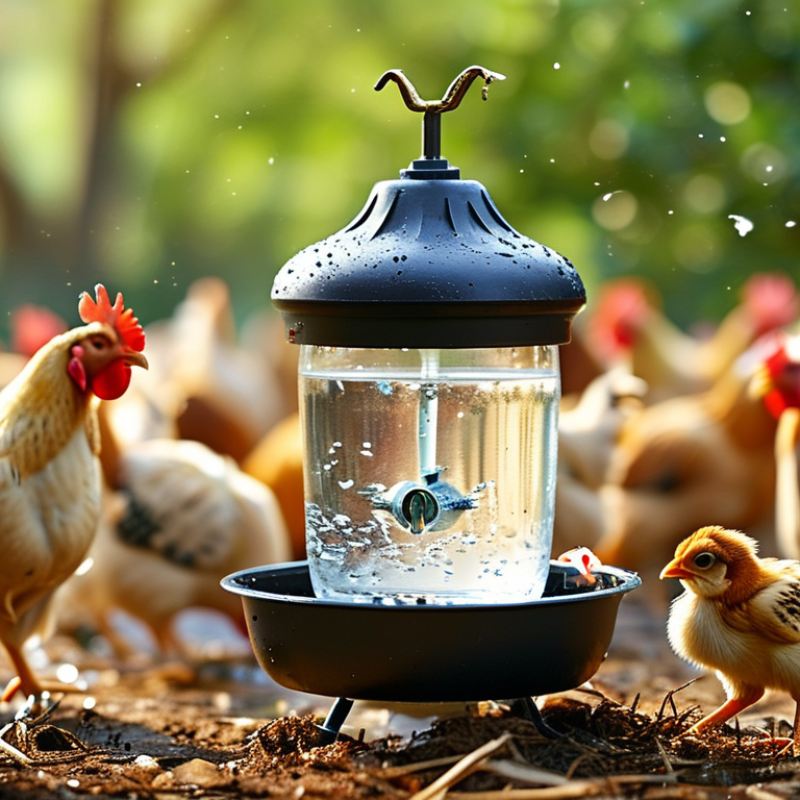
| Drinker Type | Nipple or cup drinkers for cleaner water; open troughs only when frequent cleaning is possible. | Open water surfaces collect bedding, feed, feathers, and droppings more easily. | Observe whether birds can stand in or scratch material into the water. | Reduces contamination and accidental splashing. |
| Capacity | Allow approximately 0.5–1.0 liter of available water per adult chicken per day, with extra capacity for hot weather. | Chickens drink more during heat, activity, and dry-feed consumption. | Calculate flock size × expected daily use, then add a practical reserve. | Prevents empty drinkers and reduces emergency refilling. |
| Base Stability | Use a wide, weighted, or securely mounted base that does not tip when birds push against it. | Unstable containers are a common cause of spills and wet litter. | Apply light side pressure and confirm that the unit remains upright. | Limits tipping, splashing, and floor moisture. |
| Leak Resistance | Choose sealed joints, compression gaskets, and a secure cap or reservoir connection. | Small leaks can continuously wet bedding and create sanitation problems. | Fill the drinker, place it on a dry surface, and inspect it after 15–30 minutes. | Prevents slow leaks, wasted water, and damp litter. |
| Water Delivery Valve | Use a responsive nipple or cup valve that releases water only when activated. | Controlled delivery keeps the drinking surface smaller and limits continuous flow. | Activate every outlet several times and check that it stops dripping afterward. | Reduces dripping, puddles, and exposure to debris. |
| Height and Position | Position the drinking point around the birds’ upper chest to shoulder level and adjust as they grow. | Correct positioning helps birds drink without stepping into the water or striking it forcefully. | Check that all birds can reach the outlet while keeping both feet on dry ground. | Minimizes splashing, litter entry, and difficult access. |
| Material Safety | Select food-contact-safe plastic, stainless steel, or another corrosion-resistant material with a smooth interior. | Smooth, non-corroding surfaces are easier to clean and less likely to retain residue. | Look for a smooth surface, no peeling coating, no rust, and no sharp edges. | Reduces residue buildup, corrosion, and injury risk. |
| Cleaning Access | Choose a wide opening or fully removable components that allow a brush to reach all internal surfaces. | Narrow or inaccessible areas can retain biofilm, sediment, and organic matter. | Check whether the reservoir, valve, gasket, and cup can be removed and rinsed. | Makes regular cleaning more effective and practical. |
| Refill and Drain Design | Use a stable refill opening and a low-point drain or easily detachable reservoir. | Standing water and difficult emptying can leave sediment and stale water behind. | Confirm that the unit can be emptied completely without turning it over near the flock. | Supports complete rinsing and reduces stagnant-water risk. |
| Splash Control | Prefer recessed cups, splash guards, or a partially covered drinking area. | Less exposed water means fewer splashes and less contact with litter. | Observe the water surface while several birds drink at the same time. | Keeps surrounding bedding drier and water cleaner. |
| Placement and Protection | Place the drinker away from feeders, dust baths, direct traffic, and areas where manure accumulates. | Location strongly affects the amount of dust, feed, and litter entering the water. | Inspect the surrounding area for loose bedding, spilled feed, and droppings. | Reduces external contamination and accidental knocks. |
| Cold-Weather Suitability | Choose a design that can be checked frequently and emptied easily; use suitable frost protection where necessary. | Frozen water is unavailable to birds and can damage containers or valves. | Check the water and valve operation during the coldest part of the day. | Maintains water availability and reduces freeze-related leaks. |
| Inspection Routine | Inspect water clarity, odor, valve function, leaks, and litter moisture at least daily. | Early detection prevents small problems from becoming persistent hygiene issues. | Record refill needs, cleaning dates, and any damaged parts. | Supports consistent sanitation and reliable operation. |