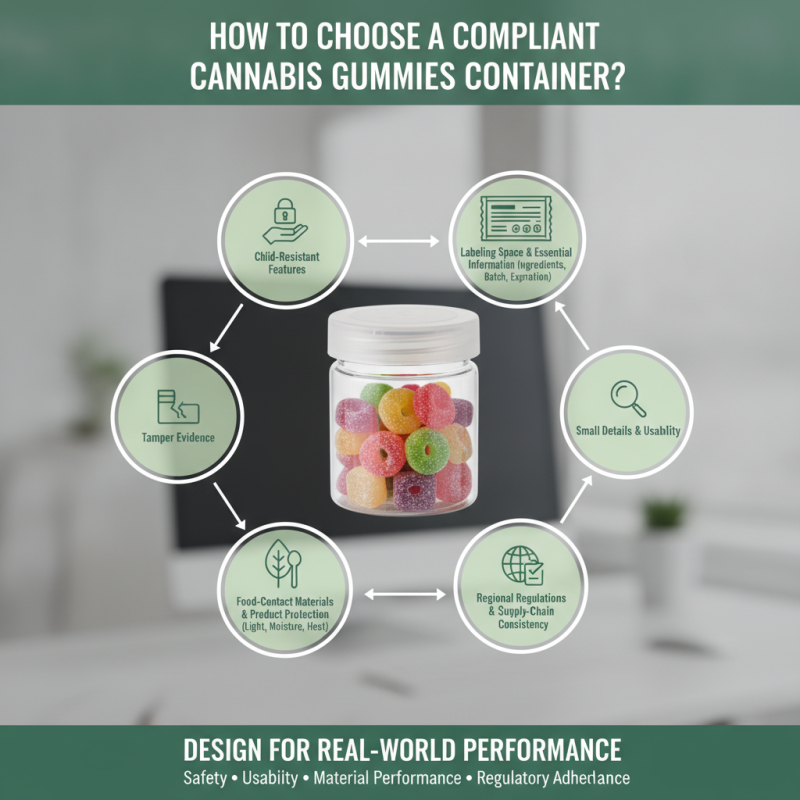
| Child Resistance | Use a container and closure system certified or tested to the child-resistant packaging standard required in the target jurisdiction. | Obtain an accredited laboratory report and retain supplier compliance documentation. | Cannabis edibles must be designed to reduce the risk of accidental access by children. |
| Opaque or Light-Blocking Design | Select an opaque container or packaging format where local rules restrict cannabis products from being visible through the package. | Perform a visual inspection under normal retail lighting and compare the design with applicable regulations. | Opaque packaging can limit product visibility and help prevent packaging from appealing to minors. |
| Tamper Evidence | Include a tamper-evident seal, band, shrink sleeve, or equivalent feature when required by the applicable market. | Document seal integrity testing, opening evidence, and package-line inspection procedures. | Tamper evidence helps indicate whether the package may have been opened or altered after filling. |
| Food-Contact Safety | Use materials suitable for direct contact with food and compatible with gummy ingredients, oils, acids, and colorants. | Review food-contact declarations, material specifications, migration information, and supplier certificates. | The container must not introduce harmful substances, odors, flavors, or contaminants into the gummies. |
| Material Compatibility | Choose a material that resists moisture, grease, sticking, and chemical interaction during the intended shelf life. | Conduct accelerated and real-time compatibility or stability testing with the finished product. | Poor compatibility can cause leaking, deformation, odor transfer, gummy adhesion, or potency changes. |
| Package Integrity | Use a rigid, properly sealed container that protects the gummies from crushing, contamination, and accidental opening. | Perform leak, drop, compression, closure-torque, and seal-strength tests appropriate to the package format. | A reliable package preserves product quality throughout filling, transportation, storage, and retail handling. |
| Single-Serving or Multi-Serving Format | Select a format that supports accurate serving identification and complies with local limits for package and serving quantities. | Confirm net quantity, serving count, and cannabinoid concentration against the approved product specification. | Clear portion control supports accurate labeling and reduces the risk of unintended overconsumption. |
| Label Application Surface | Provide a smooth, clean, and sufficiently large surface for mandatory information and regulatory symbols. | Create a packaging proof and verify readability, contrast, adhesion, and available label area before production. | A compliant container must allow required information to remain visible and legible during normal use. |
| Label Durability | Use labels, inks, and adhesives that withstand handling, moisture, refrigeration, and expected storage conditions. | Conduct rub, moisture, temperature, and adhesion tests on the completed package. | Mandatory warnings, potency information, batch details, and expiry information must remain readable. |
| Plain and Non-Appealing Presentation | Avoid cartoon characters, candy-like imagery, misleading claims, neon presentation, or design elements that may appeal to children. | Complete a regulatory artwork review and compare all graphics and text with the rules of the sales jurisdiction. | Many cannabis markets restrict packaging that resembles ordinary confectionery or targets minors. |
| Child-Attractive Shape and Function | Avoid containers shaped like toys, animals, common food items, or other objects that may attract children. | Review the physical shape, opening method, color scheme, and overall presentation during design approval. | Packaging form can be regulated independently from the product label and material. |
| Recyclability and Material Identification | Use clearly identified materials and design the package according to local recycling, waste, and environmental requirements. | Review resin identification, component separation, recycled-content rules, and applicable extended producer responsibility obligations. | Environmental obligations may apply to the container, closure, label, and secondary packaging separately. |
| Traceability Support | Reserve space for batch or lot information, production dates, expiry dates, and required tracking codes. | Verify that variable data can be printed, scanned, and retained through the distribution process. | Traceability supports recalls, inventory control, complaint investigations, and regulatory inspections. |
| Storage and Transport Conditions | Specify temperature, humidity, light, stacking, and transport conditions that the container can withstand. | Use distribution simulation and shelf-life testing based on the intended logistics route. | Gummies may soften, stick, bloom, or lose quality when exposed to heat, moisture, or pressure. |
| Regulatory Market Coverage | Confirm requirements separately for every state, province, country, or municipality where the product will be sold. | Maintain a jurisdiction-specific compliance checklist reviewed by qualified regulatory personnel. | Cannabis packaging rules are not uniform and may differ in child resistance, labeling, warnings, recycling, and design restrictions. |