Request Quote

Request a quote from Nidec Drive Technology America Corporation.

This quote form is intended for customers and partners in North America seeking information about Nidec Drive Technology America Corporation’s Precision Gearing Technologies. For inquiries related to the Nidec motor group division or from outside this region, please visit the global Nidec Group website to find the appropriate regional or product-specific contact.

Subscribe to Nidec Newsletter

Subscribe to our email newsletter to stay current with our precision gearing solutions, featured products, company updates, and industry news.

How to Choose an Automatic BOV Aerosol Filling Machine?

Choosing an Automatic BOV Aerosol Filling Machine requires more than comparing speed, price, and attractive product photos. On a real production floor, small details often decide long-term performance. A clean stainless-steel frame matters. So does stable dosing.

This guide explains how to evaluate machine structure, filling accuracy, bag placement, crimping quality, propellant handling, and control systems. It also considers container sizes, product viscosity, line compatibility, and future production changes. A machine designed for liquid products may struggle with thicker formulas. That difference can create leaks, inconsistent weights, or costly downtime.

Look closely at the supplier’s technical evidence. Ask for filling tolerance data, tested container specifications, maintenance instructions, and documented safety features. Factory acceptance testing can reveal problems before shipment. Operator training should not be treated as an optional extra. Clear alarms and accessible components reduce mistakes during busy shifts.

A brochure is not proof.

From practical equipment evaluations, I have learned that the fastest machine is not always the best investment. A slower system with accurate dosing and dependable changeover may produce better results over several years. However, every application is different, and published specifications may not match your formula or packaging design. Sample testing remains essential.

The right Automatic BOV Aerosol Filling Machine should support consistent quality, safe operation, regulatory compliance, and measurable productivity. Compare suppliers carefully. Request references when possible. Then choose equipment that fits your actual process, not an idealized sales presentation.

How to Choose an Automatic BOV Aerosol Filling Machine?

Understand How Automatic BOV Aerosol Filling Machines Work

How to Choose an Automatic BOV Aerosol Filling Machine?

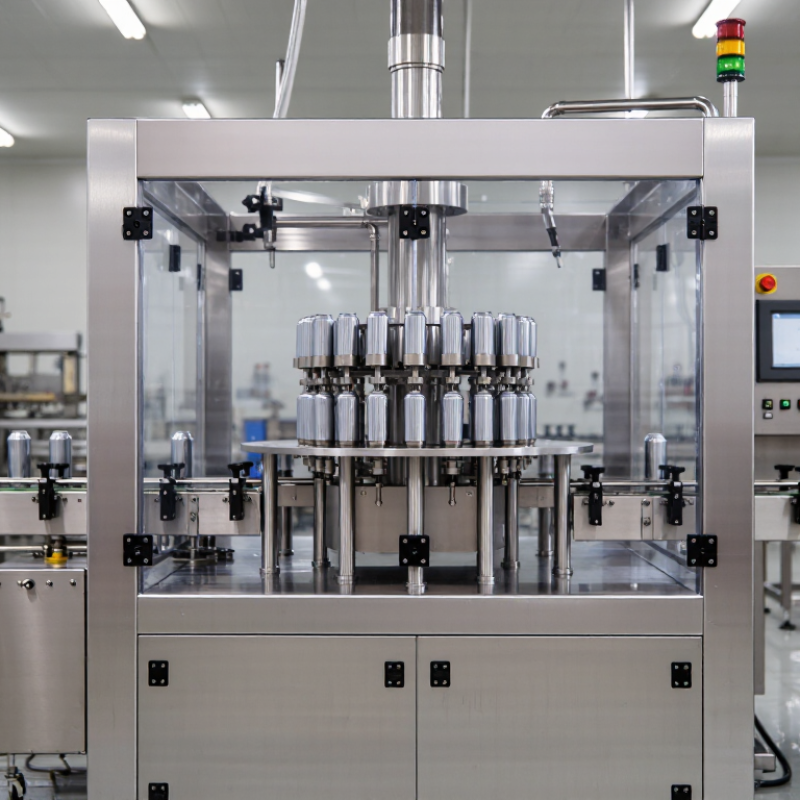
An automatic BOV aerosol filling machine separates the product from the propellant. The product enters a flexible bag inside the can. Pressurized air or another approved propellant surrounds that bag. When the actuator opens, pressure squeezes the bag and releases the product evenly. No direct propellant contact occurs.

The filling cycle normally includes can loading, bag insertion, product dosing, valve placement, crimping, propellant charging, and leak testing. Sensors check can position and filling pressure during each step. A programmable control system records key settings for repeatable production. Operators should inspect dosing pumps, sealing heads, and pressure gauges regularly. Small faults can create large quality problems.

Watch the details.

When choosing equipment, match its filling range to your container size and product viscosity. A machine designed for thin liquids may struggle with creams or gels. Ask for test runs using your actual formula and packaging components. Check whether the system allows simple cleaning and tool changes. In practical installations, the first setup is rarely perfect. Line speed may need adjustment after observing foam, leakage, or uneven discharge. Reliable suppliers should provide clear manuals, training, safety features, and maintenance support. A well-designed machine improves consistency, but skilled operation still matters.

Define Product, Container, and Production Requirements

Choosing an automatic BOV aerosol filling machine starts with the product, not the machine. Define viscosity, density, fill weight, propellant type, and target spray pattern. BOV systems separate the product from the propellant, so valve compatibility and bag dimensions require close testing. In factory trials, small changes in formulation can affect dosing accuracy and crimp quality.

Container details are equally important. Record can diameter, height, neck finish, valve specification, and pressure rating. Also confirm whether the container is aluminum, steel, or another approved material. The European Aerosol Federation reported more than 5 billion aerosol units produced in Europe in 2023. That scale shows why repeatable container handling matters. A machine must manage rejects without slowing the main conveyor.

Production requirements should include hourly output, batch size, changeover time, filling tolerance, cleanability, and available utilities. PMMI industry research continues to identify labor efficiency and flexible automation as major packaging priorities. Still, higher speed is not always better. It may increase foam, product loss, or inspection errors. Specify actual demand, not an optimistic target.

Tips: Request a live trial using your real formula and container. Measure fill accuracy, crimp dimensions, leak-test results, and changeover minutes. Review data logs, operator access, and maintenance points. Do not ignore manual handling; it can expose weak design choices. A perfect specification is rare. Recheck it after testing.

Compare Filling Systems, Materials, and Machine Configurations

Choosing an automatic BOV aerosol filling machine starts with the filling system, not its advertised speed. A 2023 European Aerosol Federation report recorded roughly 5.8 billion aerosol units produced in Europe. That scale favors stable, repeatable automation. Liquid filling, bag insertion, valve crimping, propellant charging, and leak testing must work as one controlled sequence. Pressure filling suits many water-based and sensitive formulations. It can reduce product exposure and improve dose consistency. However, vacuum-assisted systems may offer better control for certain viscosities. Test both with your actual formula.

Material selection affects service life. Stainless steel contact parts resist corrosion and simplify cleaning. Aluminum containers reduce weight, but they require careful handling during conveying and crimping. Check gasket compatibility, especially with alcohol-containing or oily formulas. A 2024 Smithers packaging outlook identifies lightweighting and recyclable formats as continuing aerosol-market priorities. That sounds straightforward, but thinner containers can increase deformation risks. Your machine needs adjustable guides, gentle indexing, and accurate pressure control.

Tips: Request production trials using real valves, bags, containers, and product temperatures. Compare rotary and linear configurations by changeover time, floor space, and maintenance access. A monoblock layout saves space, while separated stations may simplify troubleshooting. Review sensors, recipe control, reject tracking, and data logging. Confirm that the system supports applicable ISO, pressure-equipment, and local packaging requirements. Do not judge output by cans per minute alone. We once underestimated cleaning downtime; the faster machine was not faster across a full shift.

Evaluate Safety Features, Quality Control, and Compliance

Choosing an automatic BOV aerosol filling machine requires more than checking speed. Safety features should control pressure, grounding, guarding, and emergency shutdowns. The 2023 NFPA Fire Loss report recorded 1,504,500 fires in the United States, with property damage reaching about $16.2 billion. This broader risk data supports a conservative approach to filling equipment. Select a machine with pressure sensors, interlocked doors, overload protection, and documented pneumatic testing. If flammable atmospheres may occur, verify suitable ATEX or equivalent hazardous-area protection.

Quality control must be visible on the production floor. The machine should record fill weight, propellant pressure, crimp dimensions, and leak-test results. Automatic rejection is useful, but operators still need calibrated scales and traceable records. For regulated products, align procedures with GMP expectations, including FDA 21 CFR Part 211.110 for in-process controls, or applicable regional requirements. ISO 9001 can strengthen process discipline, but it does not replace product-specific compliance. I would not trust a certificate alone. Inspect the actual valves, hoses, seals, and software logs.

Tips: Ask for a factory acceptance test using your container, valve, and formulation. Check repeatability across several shifts, not only one demonstration. Confirm cleaning access and changeover time. A practical weakness is often overlooked: operators may bypass alarms during production pressure. Review alarm history weekly, train against shortcuts, and require documented corrective actions.

How to Choose an Automatic BOV Aerosol Filling Machine? — Evaluate Safety Features, Quality Control, and Compliance

Use the following measurable criteria when comparing automatic bag-on-valve (BOV) aerosol filling machines. Final requirements should be confirmed against the product formulation, propellant, container design, production volume, and regulations applicable to the installation location.

Evaluation Area Key Selection Dimension Recommended Target or Acceptance Criterion How to Verify It Why It Matters Risk Level if Missing
Safety Machine risk assessment Documented risk assessment based on ISO 12100, covering filling, crimping, propellant charging, cleaning, maintenance, and abnormal operating conditions. Review the signed risk assessment, hazard register, safeguarding layout, and residual-risk instructions. Identifies mechanical, pneumatic, electrical, chemical, pressure, and flammable-propellant hazards before commissioning. High
Safety Explosion and ignition control For flammable propellants, use appropriately classified equipment, bonding and grounding, ventilation, gas detection, and ignition-source control according to the site classification. Check hazardous-area drawings, electrical certificates, grounding-resistance records, ventilation calculations, and gas-detector test reports. BOV aerosol production may involve flammable propellants and requires controls that prevent ignition and limit vapor accumulation. High
Safety Emergency-stop and interlock system Emergency stops should be clearly accessible; guards, doors, pressure switches, and access panels should stop or place the relevant section in a safe state. Perform documented functional tests for every emergency stop, guard switch, access door, and reset sequence. Prevents continued operation when an operator enters a hazardous zone or when an unsafe condition occurs. High
Safety Safety-related control performance The required performance level should be determined by risk assessment; safety circuits should be designed and validated according to ISO 13849-1 or an equivalent standard. Request the safety-circuit calculation, validation report, component list, and proof-test procedure. Confirms that safety functions are capable of achieving the required risk reduction throughout the machine life cycle. High
Safety Pressure protection Filling circuits, manifolds, and pressure vessels must have suitable pressure ratings, pressure relief, isolation, and controlled depressurization. Compare design pressure with operating pressure; inspect relief-device certificates, pressure-test records, and piping diagrams. Protects operators and equipment from overpressure during propellant filling, blockage, thermal expansion, or valve failure. High
Quality Control BOV component verification Verify valve, bag, actuator, gasket, can, and dip-tube specifications before production; use part-presence and orientation checks where practical. Review approved component drawings, incoming-inspection records, barcode or recipe controls, and rejected-part records. Incorrect BOV components can cause leakage, poor product delivery, loss of pressure, or container failure. High
Quality Control Product and propellant dosing accuracy Define the accuracy and repeatability required by the product specification; a common starting point is a validated target of approximately ±1% for liquid dosing and tighter limits where formulation performance requires it. Conduct gravimetric studies over multiple cycles, operators, shifts, and machine speeds using calibrated instruments. Accurate dosing supports consistent net content, spray performance, product efficacy, and regulatory labeling. High
Quality Control Crimping and valve-seat quality Crimp diameter, crimp height, valve alignment, and insertion depth must remain within the container and valve supplier’s validated limits. Use calibrated crimp gauges, dimensional checks, destructive tests, and periodic sectioning or pull-out tests as defined in the control plan. Improper crimping is a major cause of leakage, valve malfunction, and inconsistent dispensing. High
Quality Control Leak detection and pressure testing Include a validated leak or pressure-decay test after filling and crimping; acceptance limits must be based on container, valve, and product characteristics. Review the test method, sensitivity study, calibration records, challenge samples, and automatic reject verification. Detects leaks that could cause product loss, poor shelf life, flammable-vapor release, or customer safety issues. High
Quality Control In-process inspection coverage Monitor container presence, BOV orientation, fill level, crimp condition, code readability, actuator presence, and reject confirmation. Check the PLC inspection list, sensor challenge tests, reject-bin-full alarm, and sample inspection frequency. Prevents defective units from moving to secondary packaging and provides early warning of process drift. Medium
Quality Control Recipe management and changeover Password-controlled recipes should record product, container, valve, dosing, crimp, speed, and inspection settings; changeover parts should be uniquely identified. Test recipe access levels, parameter limits, electronic change logs, barcode controls, and first-off approval after changeover. Reduces setup errors and prevents incorrect settings from being used on a new product or container format. Medium
Quality Control Data integrity and traceability Record batch number, recipe version, operator, machine status, alarms, inspection results, rejects, and critical process values with protected timestamps. Review audit-trail functions, user permissions, backup procedures, data export, and retention controls. Supports investigations, recalls, continuous improvement, and regulated manufacturing documentation. High
Compliance Machinery safety documentation Supply a technical file or equivalent documentation package, including manuals, drawings, risk assessment, safety validation, and declarations required by the target market. Use a document checklist before purchase and verify that manuals cover installation, operation, cleaning, maintenance, and emergency procedures. Demonstrates that the machine has been designed and documented for safe use and regulatory review. High
Compliance Electrical and control-system compliance Electrical equipment and control panels should be designed and tested against applicable requirements such as IEC 60204-1 and local electrical codes. Inspect schematics, short-circuit ratings, protective devices, panel labels, insulation tests, grounding tests, and conformity documents. Reduces electrical shock, fire, electromagnetic-interference, and unplanned-downtime risks. High
Compliance Pressure-equipment requirements Pressure vessels, gas circuits, and safety accessories must be assessed under the pressure-equipment rules applicable to the installation country, such as the EU Pressure Equipment Directive where relevant. Review vessel categories, material certificates, welding records, relief-device certificates, and inspection requirements. Confirms that pressure-containing components are suitable for their fluid, pressure, temperature, and service conditions. High
Compliance GMP and hygienic design For pharmaceutical, medical, or sensitive personal-care products, use cleanable product-contact surfaces, suitable materials, controlled lubrication, and documented cleaning procedures. Review material certificates, surface-finish specifications, cleaning validation or verification, lubrication controls, and sanitation instructions. Reduces contamination, cross-contamination, and batch-release risks. High
Compliance Materials and chemical compatibility Product-contact materials, elastomers, seals, and lubricants must be compatible with the formulation, propellant, cleaning agents, and expected temperature range. Request material declarations, compatibility data, extractables or leachables assessment where applicable, and supplier change-notification controls. Prevents swelling, embrittlement, corrosion, contamination, leakage, and changes in product performance. High
Performance Validated production capacity Select a rated speed that meets demand while allowing time for inspection, cleaning, changeover, maintenance, and rejects; validate output using the actual product and container format. Run a factory acceptance test and site acceptance test using production-equivalent materials and documented performance criteria. Nominal speed alone does not guarantee sustainable output or acceptable quality. Medium
Performance Overall equipment effectiveness Measure availability, performance, and quality separately; establish an agreed baseline rather than relying only on the machine’s maximum cycle rate. Collect downtime, micro-stop, speed-loss, reject, and changeover data during a representative production trial. Provides a realistic view of usable capacity and operating cost. Medium
Maintenance Critical spare parts and serviceability Identify safety-critical, long-lead, and wear parts; provide preventive-maintenance intervals, lubrication points, troubleshooting steps, and changeover tools. Review the spare-parts list, maintenance schedule, mean-time-to-repair assumptions, and technician training plan. Improves uptime and helps prevent unsafe temporary repairs or extended production interruptions. Medium
Acceptance Testing Factory and site acceptance testing Define measurable FAT and SAT criteria for safety functions, dosing accuracy, crimp quality, leak detection, reject handling, alarms, data records, and changeover performance. Use signed test protocols with traceable instruments, approved samples, deviation records, and final corrective-action closure. Confirms that the installed machine meets the agreed specification before routine production. High
Reference framework: ISO 12100 for machinery risk assessment, ISO 13849-1 for safety-related control systems, IEC 60204-1 for electrical equipment of machines, applicable explosion-protection requirements for hazardous areas, applicable pressure-equipment regulations, and GMP or electronic-record requirements when relevant to the product and market.

Select a Supplier and Plan Installation, Training, and Maintenance

Choosing an automatic BOV aerosol filling machine starts with the supplier, not the catalog. Request documented experience with bag-on-valve systems, product-contact materials, filling accuracy, and pressure controls. A capable supplier should provide factory acceptance testing, electrical drawings, spare-parts lists, and risk-assessment records. PMMI’s 2024 workforce research identifies skilled-labor shortages as a continuing packaging-industry pressure. Therefore, remote support alone may be insufficient during commissioning.

Plan installation before the machine arrives. Confirm floor loading, ventilation, compressed-air quality, electrical capacity, drainage, and safe material flow. Ask for site acceptance testing with real containers and approved formulations. Training should include setup, changeover, fault diagnosis, cleaning, and emergency isolation. Keep sessions practical. Operators should adjust valves, read alarms, and inspect seals themselves. The U.S. Bureau of Labor Statistics reported 2.6 million nonfatal workplace injuries in private industry during 2023. Good training cannot remove every risk, but it can reduce careless recovery actions.

Maintenance needs measurable intervals. Track nozzle wear, gasket condition, filling weight, pressure stability, and rejected units. Request preventive-maintenance checklists and troubleshooting videos from the supplier. Keep critical seals and sensors locally. A perfect handover is rare. The first maintenance schedule may also be too optimistic. Review it after the first production month, using downtime records and operator feedback. A supplier who accepts these revisions is usually more reliable than one promising zero problems.