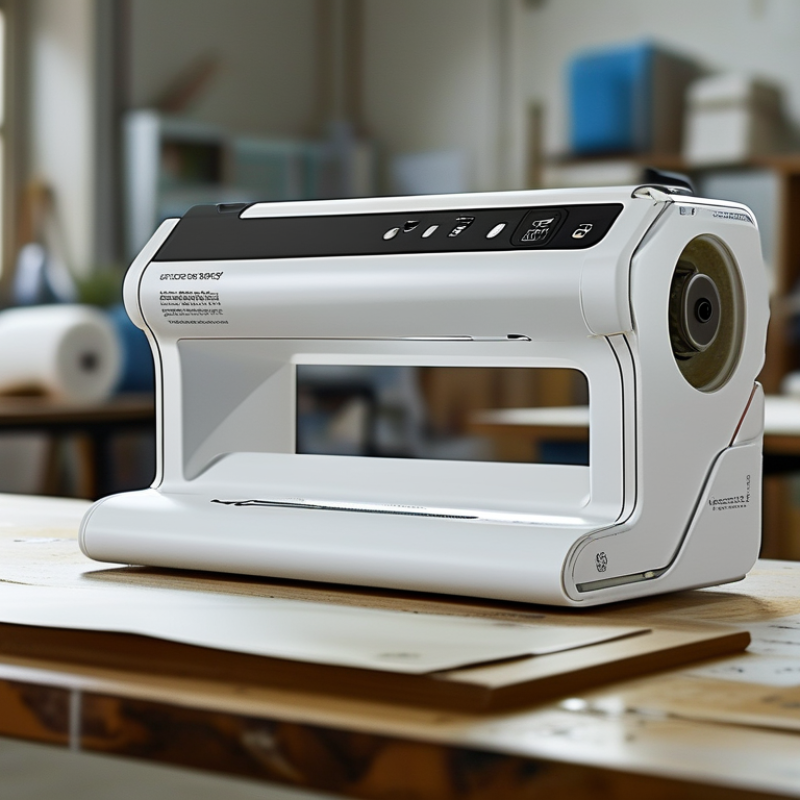
| Manual or Semi-Automatic Folding Unit | 20–50 masks/min
Approximately 1,200–3,000 masks/hour | Usually within ±2–3 mm, depending on operator adjustment and material consistency | Manual feeding with motorized folding; basic controls and limited sensors | 10–20 minutes | Generally not required, or less than 0.3 MPa when pneumatic parts are installed | Small-batch, seasonal, or backup production | Lower purchase cost and easier maintenance, but labor requirements and output variation are higher |
| Single-Lane Automatic Folding Machine | 60–100 masks/min
Approximately 3,600–6,000 masks/hour | Typically within ±1–2 mm with stable nonwoven material and calibrated guides | Automatic feeding, folding, counting, length adjustment, and fault detection | 8–15 minutes | 0.5–0.7 MPa; approximately 100–250 L/min, depending on design | Regular production with moderate daily demand | A practical balance of capacity, accuracy, footprint, and operating cost |
| High-Speed Single-Lane Folding Machine | 100–150 masks/min
Approximately 6,000–9,000 masks/hour | Typically within ±1 mm under controlled material tension and synchronized feeding | Servo-driven folding, automatic tension control, photoelectric sensors, alarm monitoring, and recipe storage | 5–10 minutes | 0.5–0.7 MPa; approximately 150–350 L/min | Medium-to-high volume production | Suitable when consistent output and reduced operator intervention are more important than the lowest initial cost |
| Dual-Lane Automatic Folding Machine | 160–240 masks/min
Approximately 9,600–14,400 masks/hour | Typically within ±1–1.5 mm; lane synchronization must be checked during acceptance testing | Independent lane control, automatic counting, material detection, servo synchronization, and centralized HMI control | 8–15 minutes | 0.6–0.8 MPa; approximately 250–500 L/min | High-volume production with continuous demand | Provides higher throughput, but requires more floor space, stronger material supply control, and more complex maintenance |
| Integrated Folding and Packaging Line | 80–150 finished packs/min, depending on pack size and packaging format | Folding position typically within ±1–2 mm; pack-count accuracy can reach 99.5% or higher with calibrated sensors | Automatic folding, counting, stacking, bag feeding, sealing, inspection, reject handling, and data communication | 15–30 minutes | 0.6–0.8 MPa; approximately 300–600 L/min | Large-scale production requiring low manual handling | Best for labor reduction and traceable production, but integration, validation, and service requirements are significantly higher |
| Custom High-Precision Servo Folding System | 60–140 masks/min, depending on mask structure and folding pattern | Typically within ±0.5–1 mm after commissioning and material qualification | Closed-loop servo control, recipe management, web-tension feedback, vision inspection, and remote diagnostics | 10–25 minutes | 0.6–0.8 MPa; approximately 200–450 L/min | Products with strict dimensional or appearance requirements | Choose when repeatability and process control justify a higher investment and specialized technical support |
| Data interpretation: The figures above are typical engineering ranges for mask-folding equipment and should be treated as comparison benchmarks rather than guaranteed specifications. Actual performance depends on mask type, nonwoven basis weight, material elasticity, folding geometry, operator skill, maintenance condition, and whether the machine is tested at rated speed or sustained production speed. |
| Acceptance checklist: Before purchase, request a production trial using the actual mask material, verify sustained output for at least 30–60 minutes, measure fold-position deviation from a representative sample, confirm compressed-air and electrical requirements, and evaluate safety guarding, spare-part availability, cleaning access, training, and after-sales support. |