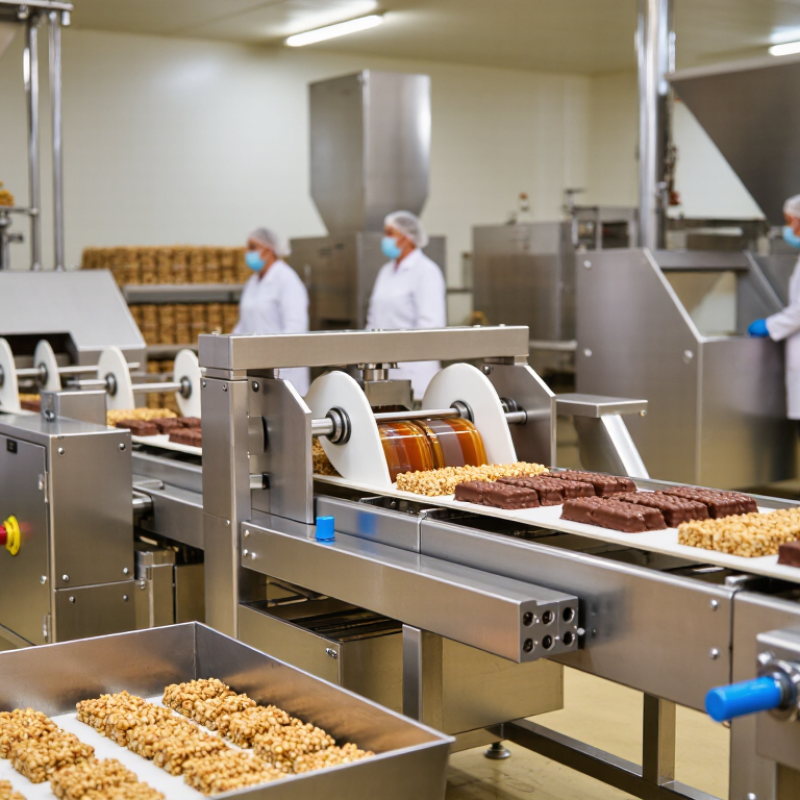
China’s top cereal bar cutting line manufacturers increasingly compete through engineering, not only production capacity. Modern lines combine servo-driven rollers, ultrasonic knives, and synchronized conveyors. These systems control bar length while protecting soft inclusions, such as nuts, fruit pieces, and crisped grains. In practical factory trials, stable feeding often matters more than maximum speed. A fast cutter cannot rescue uneven slab thickness.
Servo motors adjust blade timing in milliseconds, reducing compression marks at the cut edge. Ultrasonic cutting uses controlled vibration to lower product drag and residue buildup. It is especially useful for sticky syrups and high-protein recipes. Vision sensors inspect width, gaps, and surface defects before packaging. When linked with PLC controls, operators can trace settings and identify drift earlier. Stainless steel frames, tool-free guards, and washdown-friendly layouts also support hygienic production. Small design choices matter.
Experienced engineers still test each recipe because one cutting profile rarely suits every formula. Temperature, moisture, and cooling time can change fracture behavior. That part is often underestimated. Remote monitoring can improve maintenance, but it cannot replace skilled inspection. Manufacturers should verify line output, changeover time, cleaning access, and measured waste under real conditions. A reliable supplier explains limitations, records validation data, and accepts that occasional adjustment is normal. Perfect claims deserve questions.