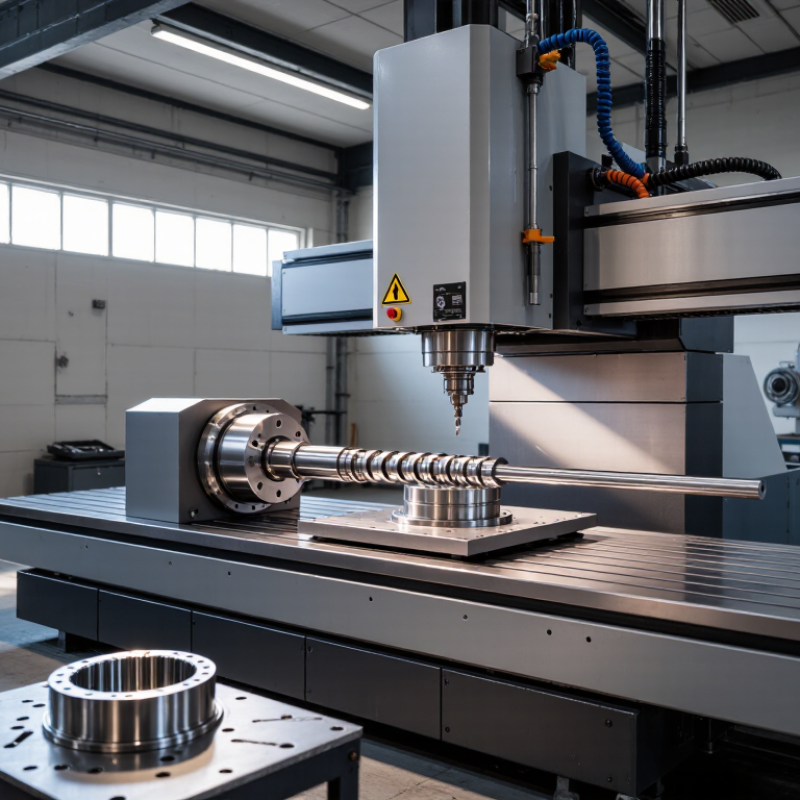
| Gundrilling Process Expertise | Confirm that the machine is designed for gun drilling, and clarify whether it supports single-spindle or multi-spindle operation. Distinguish gun drilling from BTA drilling, which uses a different tool and chip-removal arrangement. | Different deep-hole drilling processes require different tooling, coolant delivery, chip evacuation, and machine configurations. | Process descriptions, machine layout drawings, tool recommendations, and sample results for the intended workpiece material. |
| Workpiece and Hole Capacity | Check the specified drilling diameter range, maximum drilling depth, workpiece length and weight limits, and available workholding options. | Capacity is model-specific. A machine’s advertised maximum depth does not by itself confirm that it can handle a particular part or hole geometry. | Machine specifications, working-envelope drawings, and a review of the buyer’s part drawings and operating requirements. |
| Machine Structure and Motion | Review the bed, guideways, spindle arrangement, feed system, axis configuration, and the method used to support or rotate the workpiece. | Machine rigidity, alignment, and feed stability influence drilling behavior and the machine’s suitability for the intended production setup. | Technical drawings, axis specifications, installation requirements, and inspection or acceptance-test procedures. |
| Coolant and Chip Management | Ask how coolant is delivered to the cutting zone and review the coolant system’s pressure, flow, filtration, tank capacity, and chip-handling provisions. | Gun drilling commonly uses coolant delivered through the tool. Coolant flow and chip evacuation are important operating considerations in deep-hole drilling. | Coolant-system specifications, filtration details, recommended coolant requirements, and a demonstration using a representative application. |
| CNC Control and Automation | Check supported axes, programming functions, operator interface, alarm handling, data interfaces, and compatibility with the proposed loading or automation method. | Control capabilities affect setup, repeatability of programmed operations, operator workflow, and integration with the production line. | Control-system documentation, sample programs, interface details, and a demonstration of the intended operating sequence. |
| Accuracy and Surface-Finish Claims | Request application-specific targets and clarify how straightness, hole diameter, position, and surface finish are measured. Confirm the workpiece material, hole depth, tooling, and test conditions. | Results depend on the complete process, including machine condition, tool selection, coolant, material, and measurement method; one specification should not be assumed to apply to every job. | A test report for a representative workpiece, with measurement methods, instruments, test conditions, and acceptance criteria identified. |
| Tooling and Application Support | Ask which tool sizes and toolholder arrangements are supported, how tools are selected, and whether guidance is available for setup, cutting parameters, and tool maintenance. | Tool compatibility and correct process setup are necessary to evaluate a machine for a specific deep-hole drilling task. | Tooling compatibility list, setup guidance, recommended spare parts, and documented application-support arrangements. |
| Quality Management and Traceability | Review the manufacturer’s documented production inspections, component traceability, final testing, and any quality-management certification relevant to the supplied facility and product scope. | Documented quality processes help buyers understand how manufacturing and inspection are managed. Certification should be checked for validity and scope rather than assumed. | Applicable certificates, inspection records, serial-number traceability information, and the machine’s final test documentation. |
| Installation, Training, and Service | Confirm commissioning responsibilities, operator and maintenance training, service response arrangements, warranty terms, and availability of replacement parts. | Installation conditions, operator knowledge, and access to service affect the practical operation and maintenance of the equipment. | Written warranty and service terms, installation checklist, training plan, spare-parts information, and support contact procedures. |
| Application-Based Acceptance | Agree on a trial or acceptance test based on the buyer’s part, material, hole requirements, production conditions, and measurement plan. | A representative test provides more useful evidence of suitability than a general product description or an unqualified performance claim. | A signed test protocol defining the sample, process conditions, measurement methods, acceptance limits, and responsibilities of each party. |