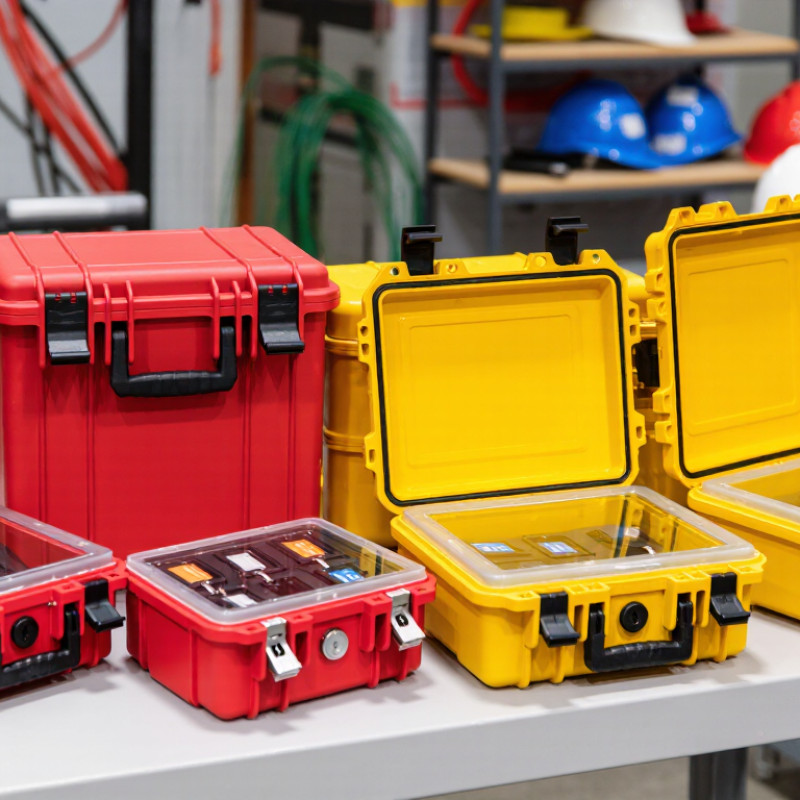
| Regulatory and Safety Compliance | Products should support an employer’s lockout/tagout program and be suitable for hazardous-energy control procedures. | Product specifications, application instructions, risk assessment, and compliance statement referencing applicable local requirements. | 15% | A lockout box is part of a safety system; suitability depends on the workplace procedure, not appearance alone. |
| Quality Management System | A documented quality system with controlled production, inspection, corrective action, and traceability processes. | Valid third-party quality-management certificate, audit scope, certificate number, issuing body, and expiration date. | 10% | Consistent processes reduce variation between production batches. |
| Material Selection | Material should match the environment; common options include impact-resistant polycarbonate, ABS, powder-coated steel, or stainless steel. | Material grade, thickness, safety data where applicable, color stability information, and sample inspection. | 10% | Material affects impact resistance, corrosion resistance, weight, visibility, and service life. |
| Mechanical Durability | The enclosure, hinges, latch, wall mount, and padlock holes should withstand routine industrial handling without sharp edges or functional failure. | Defined inspection criteria, load or impact test records, dimensional drawings, and pre-shipment inspection reports. | 10% | A damaged enclosure or latch can prevent authorized users from applying or removing locks correctly. |
| Environmental Protection | For outdoor, dusty, or wet locations, request an enclosure tested to an appropriate ingress-protection level under IEC 60529. | Ingress-protection test report, test conditions, enclosure configuration, gasket details, and installation limitations. | 8% | Dust and water can affect locks, labels, hinges, and the long-term usability of the box. |
| Capacity and Layout | Capacity should accommodate the required number of personal locks, tags, keys, and group-lockout accessories with clear identification. | Internal dimensions, number and diameter of lock holes, accessory layout, mounting dimensions, and product drawings. | 8% | Insufficient capacity can force unsafe workarounds during group lockout operations. |
| Customization Capability | The supplier should support practical customization such as dimensions, mounting options, labels, colors, and language requirements. | Approved drawings, artwork procedures, prototype samples, tooling ownership terms, and change-control records. | 7% | Customized identification can improve recognition and integration with site procedures. |
| Testing and Inspection | Critical dimensions, materials, appearance, function, and packaging should be checked using documented acceptance criteria. | Incoming, in-process, and final inspection plans; sampling standard; calibration records; and corrective-action reports. | 10% | Documented inspection is more reliable than a visual review of one sample. |
| Sample Approval Process | The supplier should provide representative samples before mass production and record approved specifications. | Sample approval form, signed drawings, test results, deviation list, and production-to-sample comparison procedure. | 6% | Approval controls reduce the risk of receiving products that differ from the quotation sample. |
| Production Capacity and Lead Time | Lead times should be quoted separately for samples, standard orders, customized orders, and replenishment orders. | Capacity statement, production schedule, material availability, order milestones, and historical on-time delivery data. | 6% | Reliable delivery supports maintenance planning and prevents shortages of safety equipment. |
| Packaging and Export Documentation | Packaging should protect the box from abrasion, deformation, moisture, and contamination during transport. | Packing specification, carton dimensions, product labels, commercial invoice, packing list, and agreed shipping terms. | 4% | Correct packaging and documents reduce transit damage and customs delays. |
| Warranty and After-Sales Support | Warranty terms should define coverage, exclusions, claim evidence, response time, replacement policy, and spare-part availability. | Written warranty, complaint-handling process, service contact, replacement procedure, and technical documentation. | 6% | Clear support arrangements reduce downtime when defects or installation questions occur. |