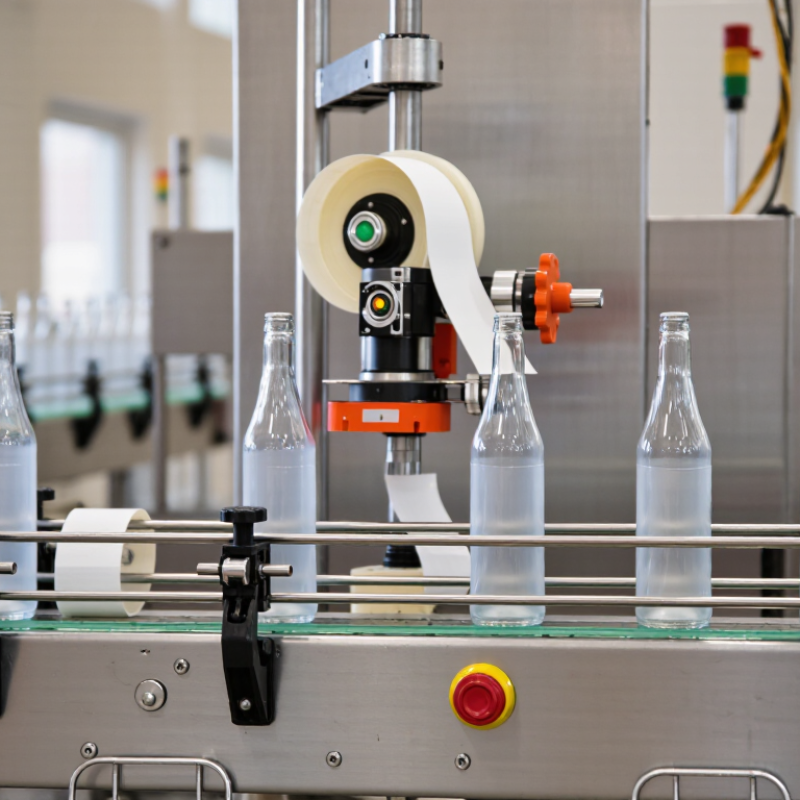
| Bottle shape and dimensional consistency | Changes in diameter, taper, seams, or surface profile can affect bottle spacing, rotation, label placement, and contact with the applicator. | Bottle diameter and height variation; skewed labels; wrinkles or lifting near curved areas. | Use bottles within the machine’s specified size range, select suitable guides and change parts, and maintain consistent bottle presentation. |
| Line speed and product spacing | The label feed and application system must keep pace with bottles arriving at the labeling station. Insufficient spacing can cause missed labels or collisions. | Bottles per minute; gaps between bottles; missed, doubled, or mispositioned labels. | Coordinate the conveyor, infeed, sensor, and label-feed settings. Set operating speed according to the machine configuration and product stability. |
| Label dimensions and material | Label length, width, stiffness, thickness, and liner properties influence feeding, dispensing, wrapping, and registration. | Label roll specifications; edge damage; skewing; dispensing consistency. | Use labels compatible with the applicator and bottle, keep rolls properly aligned, and confirm label dimensions and winding direction during setup. |
| Adhesive and bottle-surface condition | Adhesion depends on the adhesive type and on the cleanliness, dryness, temperature, and surface energy of the bottle. | Edge lift, bubbles, label movement, or poor adhesion after application. | Match the adhesive to the bottle material and operating conditions. Keep application surfaces free from moisture, dust, oil, and residue. |
| Label positioning and registration | Sensor timing, product detection, bottle orientation, and label-feed timing determine where the label lands. | Label height and wrap position; alignment to seams, shoulders, or other reference points. | Set sensor position and timing for the specific bottle and label. Verify placement over a representative run, not just a single bottle. |
| Web tension and label-feed path | Incorrect tension or a poorly aligned web can cause stretching, tearing, wrinkles, inconsistent dispensing, or liner breaks. | Web tracking; liner tension; label-feed interruptions; repeatability of label release. | Thread the web correctly, align rollers, and adjust tension within the equipment’s operating guidance. |
| Application method and contact pressure | Wipe-on, wrap-around, or other application arrangements require appropriate bottle contact and pressure for the package geometry. | Wrinkles, trapped air, incomplete wrap, or labels that shift after application. | Position applicator rollers or brushes correctly and use even contact pressure suited to the bottle and label construction. |
| Operating environment | Temperature and humidity can affect adhesive behavior, label stiffness, static, and bottle-surface conditions. | Changes in adhesion, label curl, static-related feeding issues, or condensation on bottles. | Follow label-material storage recommendations and allow bottles and labels to reach stable conditions before application. |
| Machine setup and maintenance | Worn rollers, dirty sensors, loose guides, or incorrect change-part settings can reduce repeatability and increase stoppages. | Unplanned stops; sensor errors; inconsistent placement; wear or residue on contact parts. | Clean sensors and rollers, inspect wear items, secure guides, and verify setup whenever bottle or label specifications change. |