Precision Group Best Practices for Digital Marketing Strategies?
In today’s rapidly evolving digital landscape, brands must adapt their marketing strategies to stay competitive. The precision group is at the forefront of this change, leveraging data-driven insights to enhance engagement. According to a recent report by McKinsey, personalized marketing can improve customer interactions by over 80%. Yet, many companies still struggle to implement effective strategies.
Engaging the precision group effectively requires a clear understanding of target audiences. Many brands overlook the importance of segmentation, resulting in wasted resources. Industry findings show that poorly targeted campaigns can cost businesses up to 50% in potential revenue. Understanding customer preferences is critical. Brands must reflect on their approaches and be willing to adjust.
Moreover, the precision group emphasizes the importance of staying agile. Constantly analyzing data can help uncover new opportunities. Yet, many companies fail to adapt quickly enough. Reports indicate that 70% of brands have data access but lack the strategy to use it. This gap highlights the need for ongoing evaluation and learning. An effective digital marketing strategy is not just about execution; it's also about ongoing refinement and responsiveness to market changes.

Defining Precision Marketing in the Digital Landscape
In the digital landscape, precision marketing has gained significant attention. It focuses on delivering targeted messages to specific audiences. According to a recent study, companies using precision marketing strategies achieve a 20% higher conversion rate. This data highlights the power of tailored marketing approaches.
Marketers need to understand their audience deeply. Collecting data through various channels is essential. For instance, analyzing user behavior on websites and social media platforms can reveal valuable insights. This helps in crafting personalized messages. However, many brands struggle with data overload. They find it challenging to extract actionable insights, leading to wasted resources.
Digital marketing requires constant reflection and adaptation. Campaigns that worked last year may not resonate today. A significant 70% of marketers feel pressured to innovate continuously. This pressure can lead to mistakes. It's crucial to test and iterate strategies while keeping the audience's evolving needs in mind. Precision marketing is not just about targeting; it's about refining our approach based on real-time data and feedback.
Key Components of Effective Digital Marketing Strategies
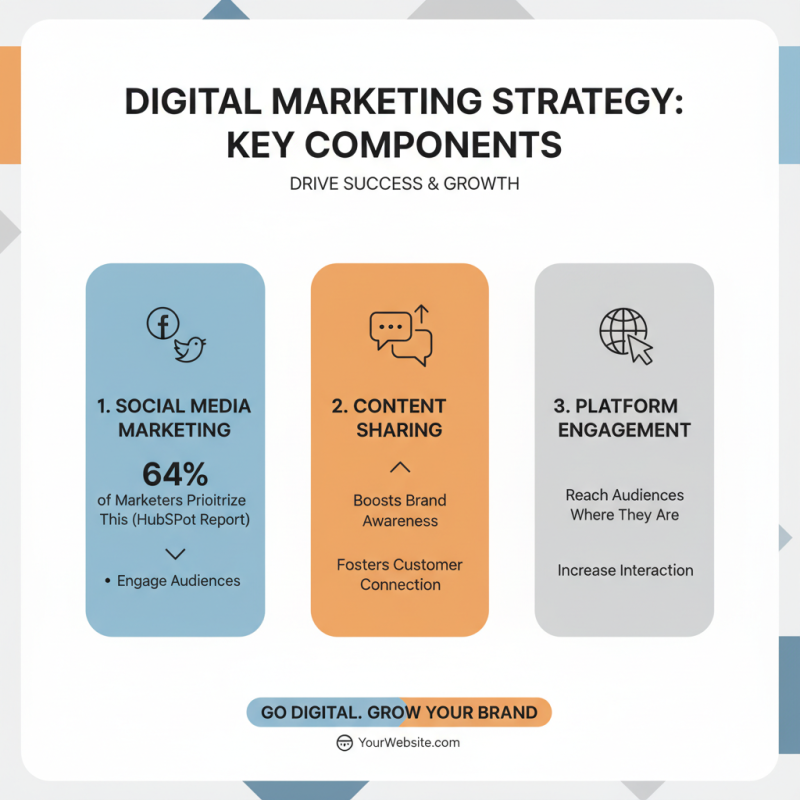
Developing effective digital marketing strategies involves key components that drive success. According to a recent report by HubSpot, 64% of marketers prioritize social media marketing. Engaging with audiences on platforms they frequent is crucial. Brand awareness and customer connection grow when content is shared widely.
Tips: Focus on visual content. Posts with images receive 94% more views. Create videos, infographics, and eye-catching visuals. Use storytelling to connect emotionally with your audience. Simple visuals can convey messages quickly.
Moreover, data-driven decision-making is essential. A study by Google shows businesses that use analytics report 3x better results. Tracking metrics helps you understand customer behavior. Adjust your strategy based on these insights. Remember, not all campaigns will perform well. Analyze failures and learn.
Tips: Test different strategies. A/B testing can reveal what works best. Don't be afraid to adapt and pivot when necessary. Sometimes, short-term losses lead to long-term gains. Keep iterating until you find a winning formula.
Utilizing Data Analytics for Targeted Marketing Campaigns
Data analytics plays a crucial role in developing targeted marketing campaigns. Businesses that utilize data effectively see notable improvements. According to a report from McKinsey, companies using advanced analytics can achieve up to 30% higher marketing effectiveness. This is a significant advantage in today’s competitive landscape.
However, relying too heavily on data can lead to pitfalls. Some marketers become so focused on numbers that they ignore creative aspects. A Harvard Business Review study highlighted that 70% of analytical insights fail to translate into action. This suggests that data alone cannot drive success without a human touch.
Understanding customer behavior is vital. Using segmentation based on data analytics helps tailor campaigns. For example, analyzing browsing history allows marketers to create personalized offers. Nevertheless, it’s essential to continually assess these strategies. Data-driven decisions should evolve with changing consumer preferences. Engaging directly with customers can reveal insights that numbers alone may miss.
Leveraging Social Media for Enhanced Customer Engagement
Social media is a powerful tool for marketers. It offers a direct line to customers. Building relationships through engagement is vital. Brands should focus on authenticity. This helps in creating genuine connections. Share stories that resonate with your audience. Use visuals that capture attention. High-quality images and videos can make a difference.
Engagement does not stop at posting content. Responding to comments is crucial. It shows that you value your audience’s input. However, it’s important to avoid generic replies. Personalizing responses can enhance the interaction. Not every post will generate buzz. Some might require reflection and adjustments. Analyze what works and what does not.
Using hashtags can broaden your reach. But overloading posts with hashtags may confuse your audience. Aim for clarity and relevance. Regularly monitor analytics to understand your audience better. This helps refine your strategy. Experiment with different content types. Some efforts may flop, but learning from them is key. Effective engagement takes time and ongoing effort.
Precision Group Best Practices for Digital Marketing Strategies - Leveraging Social Media for Enhanced Customer Engagement
| Strategy |
Platform |
Engagement Rate (%) |
Content Type |
Best Time to Post |
| User-Generated Content |
Instagram |
4.5 |
Photos & Videos |
Evenings (6 PM - 9 PM) |
| Influencer Partnerships |
Twitter |
5.2 |
Tweets & Threads |
Midday (12 PM - 1 PM) |
| Interactive Content |
Facebook |
3.8 |
Polls & Quizzes |
Weekends (10 AM - 12 PM) |
| Video Marketing |
YouTube |
6.0 |
Tutorials & Reviews |
Evenings (7 PM - 9 PM) |
| Email Marketing |
Email |
2.5 |
Newsletters |
Tuesdays (10 AM) |
Measuring Success: Metrics and KPIs in Digital Marketing
Measuring success in digital marketing involves understanding key metrics and KPIs. A report from HubSpot suggests that 61% of marketers prioritize web traffic as a primary indicator. This metric reflects audience engagement and content effectiveness. However, focusing solely on traffic may not offer a complete picture. It’s essential to balance this with conversion rates.
Tips: Track not just visits but actions taken. For example, see how many visitors subscribe to newsletters or make purchases. This gives insight into overall effectiveness.
Social media is another critical area. According to Sprout Social, 73% of marketers find social media engagement important. Yet, it’s common to see brands chasing likes rather than meaningful interactions. Engagement should lead to conversions to justify time spent.
Tips: Set specific engagement goals. For instance, seek to increase interaction by 20% over three months. Measure what truly matters to your business. Emphasizing metrics that align with overall goals leads to improved strategies. Adjusting focus might be necessary, based on performance data.
Measuring Success: Metrics and KPIs in Digital Marketing