7 Best NBR Seal Kits for Global Buyers
Choosing the right Nbr Seal Kit is rarely as simple as comparing prices or counting included rings. Global buyers face different machines, climates, fluids, and service expectations. A kit that performs well in a construction excavator may fail inside a hydraulic press. Material quality matters.
“An NBR kit should be selected from operating conditions, not from appearance alone,” says Dr. Helena Markovic, an elastomer sealing engineer with more than two decades of field experience. “The seal’s temperature, oil exposure, hardness, and groove fit must agree.”
That sounds obvious. It is often overlooked.
This guide examines seven Nbr Seal Kit options for international purchasing teams, maintenance managers, and equipment distributors. Each option is considered through practical details, including dimensional accuracy, rubber consistency, coverage, packaging, documentation, and supplier responsiveness. A reliable kit should arrive with clearly identified sizes, clean sealing surfaces, and protection against heat, moisture, and dust. Small packaging failures can create large maintenance delays.
Global sourcing also requires careful review of technical drawings and replacement references. Metric and imperial dimensions can look deceptively similar. They are not interchangeable. Buyers should confirm compound compatibility with hydraulic oil, diesel exposure, temperature cycles, and pressure demands. Certification documents may help, but they do not replace application testing.
No ranking can fit every machine. That is an uncomfortable limitation. Some kits offer broad coverage but include unused sizes. Others provide fewer seals with better traceability and tighter quality control. The best choice depends on risk, availability, and the cost of downtime. This comparison aims to make that decision clearer, while recognizing that real equipment conditions can still challenge even a well-selected Nbr Seal Kit.
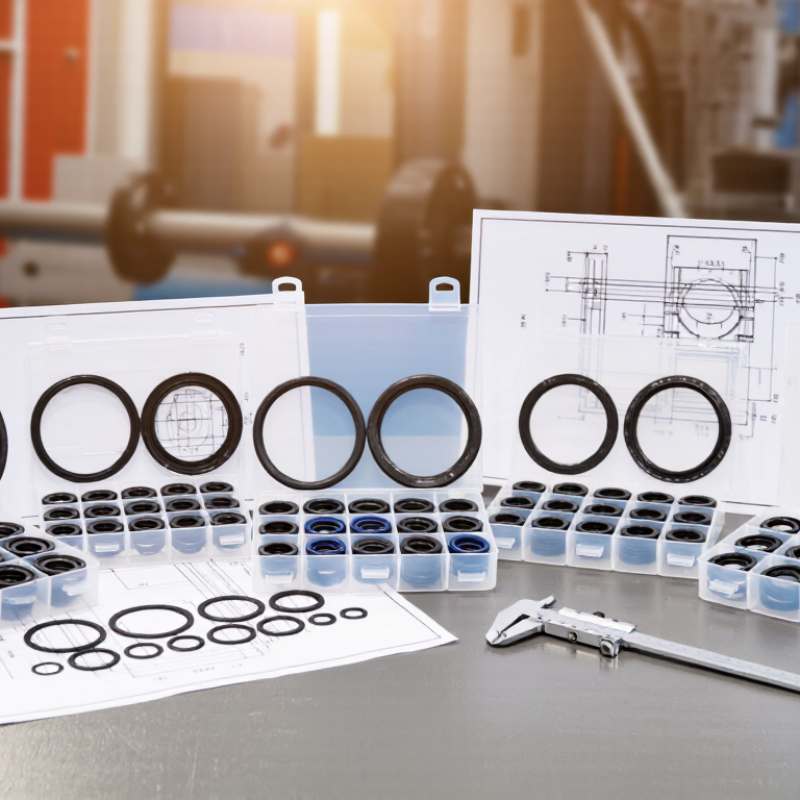
What NBR Seal Kits Are and Where They Are Used
NBR seal kits contain O-rings, backup rings, wipers, and bonded seals made from acrylonitrile-butadiene rubber. They resist petroleum oils, diesel, and many hydraulic fluids. Typical service temperatures range from about -30°C to 100°C, depending on the compound and design. They are not universal.
NBR kits are used in hydraulic cylinders, pumps, valves, pneumatic equipment, fuel systems, and industrial maintenance. A technician may keep one beside a press, replacing a flattened O-ring before contamination enters the circuit. Correct sizing still matters. Check groove diameter, cross-section, hardness, and fluid compatibility. Color alone is unreliable. ISO 3601 provides dimensional and quality guidance for many O-rings.
Market data shows their industrial importance. Fortune Business Insights valued the global hydraulic equipment market at about USD 43.2 billion in 2023, with further growth projected through 2032. Grand View Research also identifies transportation, oil and gas, and machinery as major nitrile rubber demand sectors. These figures do not prove every application needs NBR. Heat, pressure spikes, ozone, and abrasive particles may require another elastomer. ASTM D2000 recommends tested compound properties, not material names alone. A dependable kit should include batch traceability, dimensions, hardness, and storage dates. Small details prevent expensive leaks.
7 Best NBR Seal Kits for Global Buyers
Typical NBR seal-kit operating ranges by application
NBR seal kits are assortments of nitrile rubber O-rings, gaskets, and lip seals used to replace worn sealing components. NBR is widely selected for mineral oils, hydraulic fluids, fuels, compressed air, and general industrial equipment. The temperature ranges shown are representative engineering selection ranges; the actual limit depends on the NBR compound, acrylonitrile content, pressure, fluid, installation, and exposure conditions.
Material, Size, Compatibility, and Performance Considerations
7 Best NBR Seal Kits for Global Buyers
Choosing the best NBR seal kit starts with the working fluid. NBR suits mineral oils, grease, and many hydraulic applications. It performs reliably across common industrial temperatures, but excessive heat can harden the rubber. Check the actual temperature range, not only the equipment label. A kit with 70 Shore A seals often balances flexibility and wear resistance. Harder compounds may resist extrusion better under pressure. Softer seals can seal uneven surfaces more effectively.
Size accuracy matters more than a large part count. Measure the shaft, bore, groove width, and cross-section with clean calipers. Even a small error can cause leakage or installation damage. Useful kits may include O-rings, bonded washers, lip seals, and backup rings. However, more pieces do not always mean better value. Match each profile with the original groove and pressure direction. Compatibility also includes the mating material. Rough shafts can cut an otherwise suitable seal.
Performance depends on storage and fitting practice. Keep NBR seals away from sunlight, ozone, and sharp metal edges. Apply a compatible lubricant before installation. Do not stretch small rings excessively. I have seen failed replacements caused by twisted seals, not poor rubber. That is easy to overlook. NBR is not ideal for every chemical, outdoor exposure, or high-temperature system. Verify chemical charts and operating data before purchase. A carefully checked seven-kit shortlist may outperform a cheaper universal assortment. Some assumptions still need testing on the actual machine.
