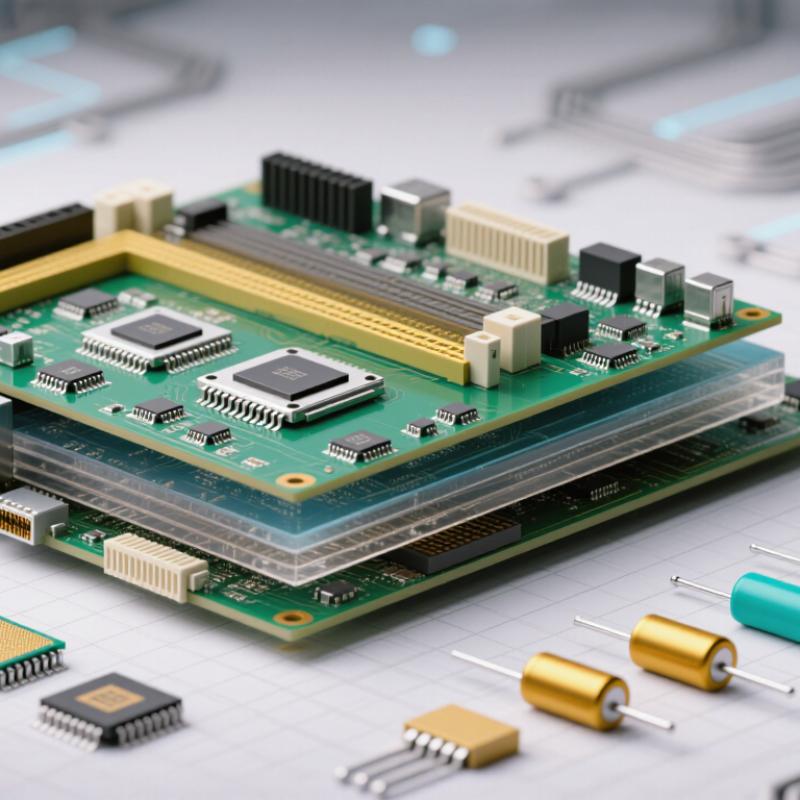
Choosing a multilayer PCB for 2026 starts with the materials and electrical demands, not the largest possible layer count. FR-4 remains practical for many control boards, sensor systems, and moderate-speed designs. For higher signal speeds, low-loss laminates can reduce transmission loss, but they may cost more and require tighter fabrication controls. High-frequency performance also depends on copper roughness, dielectric thickness, and trace geometry. A premium material alone cannot fix a poorly planned stackup.
Layer count should follow routing density, power needs, and signal integrity targets. A four- or six-layer board may suit a compact controller, with dedicated planes helping reduce noise and simplify routing. Dense computing or communication hardware may need eight or more layers. More layers add routing options, but also increase cost, drilling complexity, and inspection demands. I have seen designs gain layers before anyone checked whether placement could be improved. That is an easy assumption to regret.
Thermal needs matter too: copper planes spread heat, but component placement and airflow still shape actual temperatures.
Tips: Ask the fabricator about laminate availability, minimum via dimensions, and stackup tolerances before finalizing the layout. Keep fast signals over continuous reference planes, and verify impedance with the real material data. Leave room for testing. Small layout changes can outperform one extra layer.