2026 Best Filling Equipment Options for Efficient Manufacturing Processes
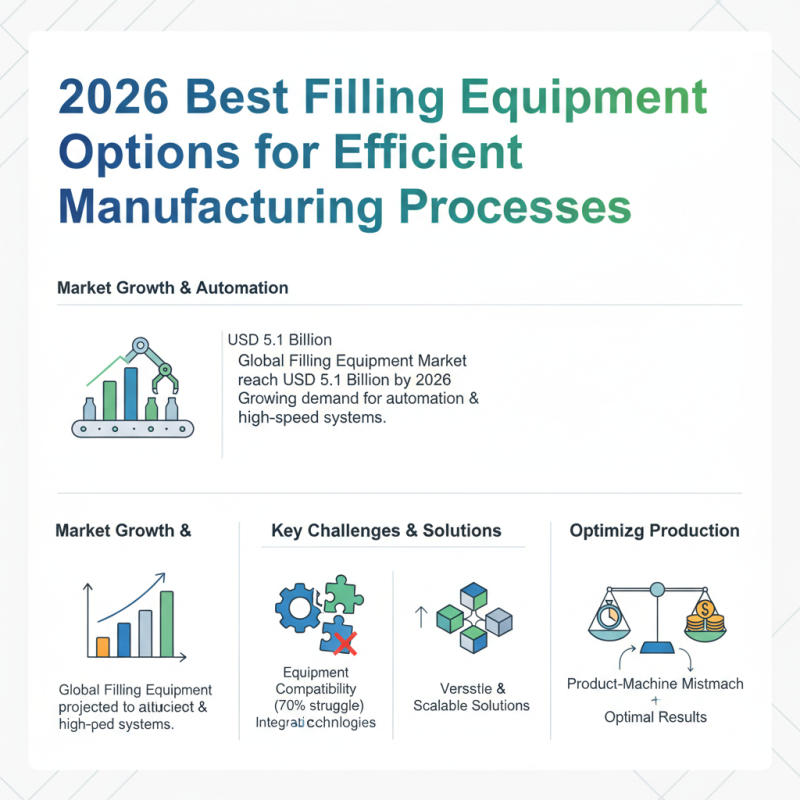
The manufacturing landscape is evolving rapidly, especially in the area of filling equipment. According to a recent report by Mordor Intelligence, the global filling equipment market is projected to reach USD 5.1 billion by 2026. This trend reflects a growing demand for automation and efficiency in production lines. Companies are increasingly focusing on high-speed filling systems to optimize output and minimize waste.
Selecting the right filling equipment is crucial. Efficient systems reduce downtime and enhance productivity. However, manufacturers often face challenges, such as integrating new technologies or maintaining equipment. Research by PMMI shows that 70% of companies struggle with equipment compatibility during upgrades. Investing in versatile and scalable filling solutions is, therefore, essential.
Despite advances, some inefficiencies persist. Not all equipment meets the unique needs of a production line. There can be mismatches between the product and the machine's capabilities. This calls for a thoughtful reassessment of the filling process. Companies need to weigh options carefully to achieve optimal results. Balancing speed and accuracy with cost-effectiveness remains a complex task.
2026 Trends in Filling Equipment Technology for Improved Efficiency
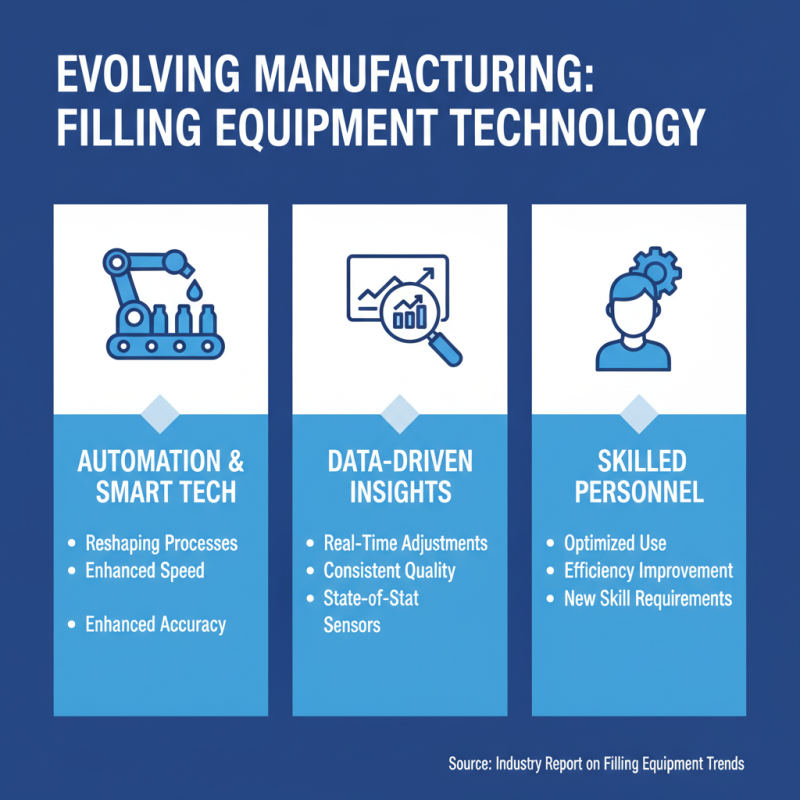
As the manufacturing landscape evolves, filling equipment technology is undergoing significant changes. Trends in automation and smart technology are reshaping processes. Companies now seek solutions that enhance speed and accuracy. State-of-the-art sensors help monitor the filling process, ensuring consistent quality. Data-driven insights allow for real-time adjustments. Efficiency improves, but these systems require skilled personnel for optimal use.
Investing in modular equipment can offer flexibility. Each module can adapt to different product sizes or types. This reduces downtime associated with equipment changes. It’s crucial to evaluate how often your products change. Frequent adjustments may negate benefits of high-speed machines. Assess the balance between speed and versatility.
Tip: Conduct regular training sessions for your team. This keeps them informed about new trends. Encouraging open discussions can lead to innovative solutions. Engaging employees enhances their commitment to efficiency. Remember, technology is a tool. It's the people who drive real progress.
Key Types of Filling Equipment and Their Applications in Manufacturing
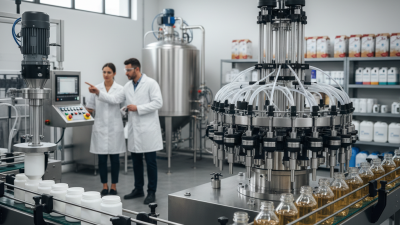
Filling equipment plays a vital role in manufacturing processes. There are various types to consider, each suited for specific applications. These include gravity fillers, pressure fillers, and piston fillers. Gravity fillers are ideal for thin liquids, offering simplicity and efficiency. They rely on gravity to move the product from the container to the bottle, minimizing waste.
Pressure fillers are more versatile. They work well with both viscous and non-viscous liquids. However, setting the correct pressure and flow rate can be challenging. These fillers often require extensive calibration and maintenance. In contrast, piston fillers deliver precise amounts of product. They are great for thick pastes but may involve a steep learning curve.
Choosing the right filling equipment can be daunting. Each type has its advantages and limitations. Manufacturers must consider their specific needs and the nature of the product. It’s essential to assess production goals and workflow requirements consistently. Doing so can lead to improved efficiency and reduced errors in the manufacturing process.
2026 Best Filling Equipment Options for Efficient Manufacturing Processes
This chart displays the various types of filling equipment options and their applications in manufacturing, emphasizing capacity and efficiency.
Performance Metrics for Evaluating Filling Equipment Efficiency in 2026
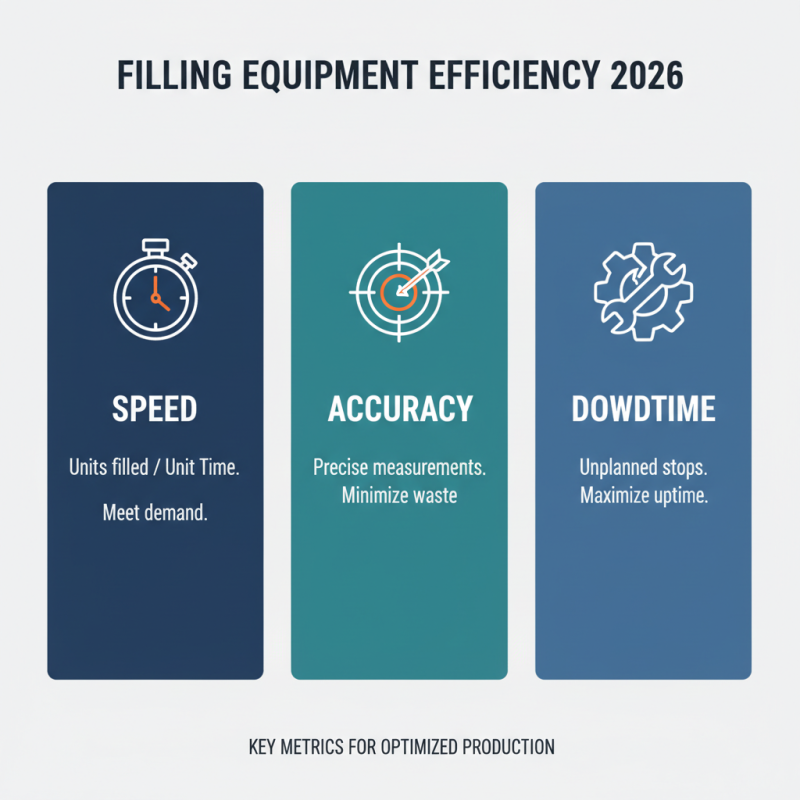
In 2026, evaluating the efficiency of filling equipment is crucial. To measure performance, key metrics include speed, accuracy, and downtime. Speed refers to the number of units filled in a specific time. It's essential to ensure that production meets demand without excessive wait times.
Accuracy is another vital aspect. Poor accuracy leads to product waste and customer dissatisfaction. Regular calibration of filling machines can improve this metric. Companies should also track equipment downtime, as it directly impacts overall productivity. High downtime often signals issues that need addressing.
**Tips:** Regularly review your performance metrics. Implementing a maintenance schedule can prevent unexpected downtimes. Monitor speed and accuracy trends over time to identify areas for improvement. Reflect on your past challenges; this can provide valuable insights into future enhancements. Make adjustments based on real data, not assumptions.
Impact of Automation and AI on Filling Equipment Processes
The integration of automation and artificial intelligence (AI) in filling equipment significantly transforms manufacturing processes. Industry reports indicate that businesses adopting automation can enhance productivity by up to 30%. This shift is evident as machines efficiently handle repetitive tasks, leading to consistent fill levels and reduced waste. The rise of AI in this area allows for real-time monitoring. Sensors can detect inconsistencies and adjust processes on-the-fly, which minimizes errors and maximizes output.
However, challenges remain. Implementing advanced technologies can be costly and time-consuming. Many companies struggle with training staff to operate new systems efficiently. Without proper understanding, the benefits of AI and automation may not be fully realized. Moreover, there’s a risk of over-reliance on technology. Manual oversight is still vital to address unforeseen issues.
Despite these challenges, the overall impact of automation and AI on filling processes appears promising. According to a recent survey, nearly 70% of manufacturers report improved accuracy with automated systems. Yet continuous evaluation and adaptation are necessary. Balancing innovation with human insight is crucial for future success.
Cost-Benefit Analysis of Modern Filling Equipment Solutions
Modern filling equipment is at the heart of efficient manufacturing processes. The right choice can lead to significant savings. According to a recent industry report, adopting advanced machines can reduce operational costs by up to 30%. Yet, many manufacturers hesitate due to initial investment fears. While high-tech equipment may seem costly upfront, the long-term benefits are compelling.
Maintenance costs are another critical factor. A study indicates that automated systems can lower maintenance expenses by about 25%. However, not all facilities are ready for automation. Training staff requires time and money. There’s also the risk of equipment needing upgrades sooner than expected. Some companies find themselves grappling with these unexpected costs.
Operational efficiency also hinges on the right filling technology. Data suggests that the wrong choice can lead to 15% more waste. It’s vital to consider production volume and product types. Not every solution fits all. This challenge leads many manufacturers to rethink their strategies. The cost-benefit analysis is complex. Each option has its trade-offs.