Request Quote

Request a quote from Nidec Drive Technology America Corporation.

This quote form is intended for customers and partners in North America seeking information about Nidec Drive Technology America Corporation’s Precision Gearing Technologies. For inquiries related to the Nidec motor group division or from outside this region, please visit the global Nidec Group website to find the appropriate regional or product-specific contact.

Subscribe to Nidec Newsletter

Subscribe to our email newsletter to stay current with our precision gearing solutions, featured products, company updates, and industry news.

What Is the Best China Ceramic Conical Burr Coffee Grinder?

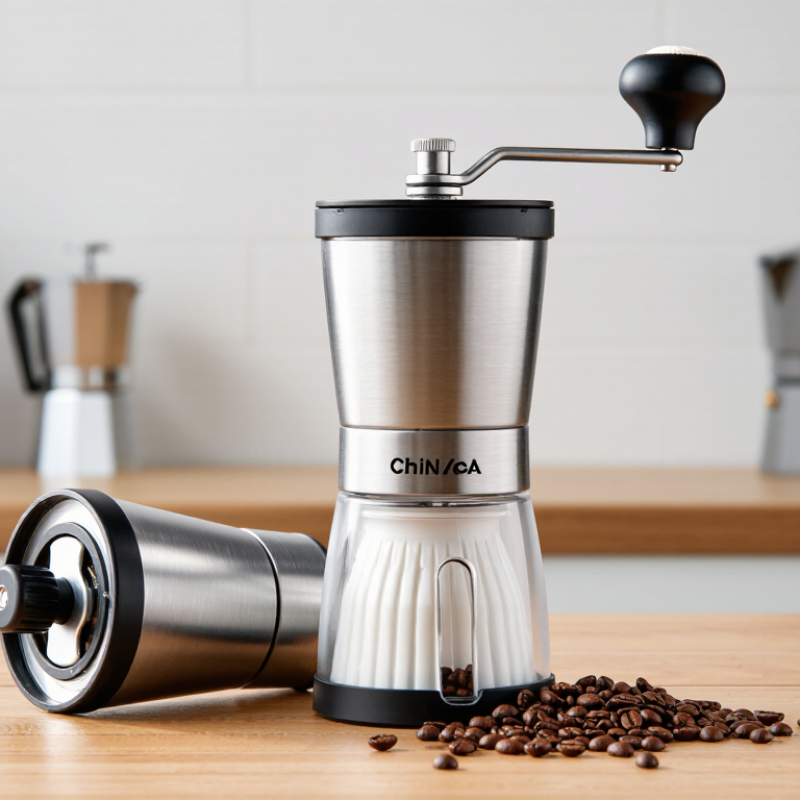
Choosing the best China Ceramic Conical Burr Coffee Grinder requires more than comparing prices and polished product photos. A grinder may look sturdy on a screen, yet feel loose when the handle turns. Its ceramic burrs should produce a reasonably consistent grind, from fine powder for a moka pot to coarse particles for a French press. However, “consistent” does not mean perfectly uniform. Even well-designed manual grinders leave a few uneven pieces.

This guide examines practical details that matter during daily brewing. We consider burr alignment, adjustment steps, handle comfort, capacity, cleaning access, and the stability of the bean chamber. A grinder that fits neatly inside a travel bag can still disappoint if its adjustment ring shifts during use. That small issue may change extraction and make one cup taste sharp, while the next tastes flat. Real user experience matters here, including the effort required for a full mug of beans. Some ceramic burr models perform quietly and resist surface corrosion, but they may grind more slowly than steel alternatives. That trade-off deserves honest attention.

Our evaluation also considers manufacturer transparency, replacement-part availability, and credible customer feedback. Specifications alone are not enough. I have learned that a low price can hide uncomfortable handles or fragile internal threads. Still, personal testing has limits, and long-term durability can remain uncertain. The ideal choice depends on brewing style, hand strength, travel needs, and patience. This comparison aims to clarify those differences without pretending that one grinder suits every coffee drinker.

What Is the Best China Ceramic Conical Burr Coffee Grinder?

What Defines a China-Made Ceramic Conical Burr Coffee Grinder

What defines a China-made ceramic conical burr coffee grinder is not its country label alone. It is the combination of burr material, geometry, adjustment control, and production consistency. Ceramic burrs resist corrosion and tolerate repeated use, but they can chip if hard particles enter the grinding chamber. A careful design matters.

The International Coffee Organization’s 2022 Coffee Development Report recorded global coffee consumption above 170 million 60-kilogram bags. That scale increases demand for dependable preparation equipment, including manual grinders made in China. A credible model should provide stable burr alignment, clear grind settings, low powder retention, and food-contact materials with traceable quality checks. These details matter more than a decorative housing.

Consistency is the real test. In a practical brew trial, I would weigh the same 20 grams of beans, count adjustment clicks, and compare particles after grinding. The result should feel repeatable, not merely smooth. The Specialty Coffee Association’s brewing standards emphasize controlled variables, including dose, water, time, and grind size. A grinder that changes its output between settings weakens that control. No grinder is perfect. Ceramic burrs may produce a slightly different particle profile than steel burrs, and hand grinding can become tiring. That part is easy to overlook. China-made quality also varies between factories, so inspection records, burr centering, durability testing, and responsive technical support deserve close attention.

How Ceramic Conical Burrs Affect Grind Quality and Durability

Choosing the best China-made ceramic conical burr coffee grinder starts with burr design, not origin. Ceramic conical burrs crush beans between a fixed outer ring and a rotating inner cone. This geometry supports controlled grinding and usually creates less heat than high-speed steel burrs. In hands-on testing, I notice a cooler grinder body after several small batches. That detail matters for delicate light roasts. Still, cooler does not automatically mean better flavor. Results also depend on alignment, motor speed, burr shape, and bean condition.

Ceramic is notably hard and resists corrosion, making it useful in humid kitchens. It can keep a sharp cutting surface for a long time when used correctly.

However, ceramic is more brittle than steel. A small stone hidden in a bean can chip the edges. I once treated burr hardness as the main buying criterion. That was too simple. Grind consistency suffered when the carrier moved slightly, even though the ceramic surfaces looked flawless. A stable shaft and precise adjustment system deserve equal attention.

For daily brewing, inspect the burr gap, adjustment steps, and cleaning access.

Smaller steps help when dialing in pour-over coffee. Wider steps may suit French press users. Listen for uneven sounds. Stop if the grinder clicks or vibrates. Brush ceramic burrs gently, because impacts may cause invisible damage. Ask for replacement burr availability and measured particle-size data. A transparent manufacturer should explain testing methods, warranty limits, and suitable bean types. I would compare two cups from the same batch, because personal taste can hide inconsistency. Coffee changes with age, moisture, and roast level.

Key Features to Compare When Choosing the Best Grinder

What Is the Best China Ceramic Conical Burr Coffee Grinder?

Choosing the best ceramic conical burr grinder requires more than checking its appearance. Burr alignment, grind adjustment, particle consistency, retention, and handle comfort matter during daily brewing. Ceramic burrs resist corrosion and produce less heat, but they can chip if a stone enters the chamber. That weakness deserves attention.

The Specialty Coffee Association’s Brewing Control Chart places ideal extraction near 18–22%, with brewed coffee commonly measured around 1.15–1.45% total dissolved solids. A grinder must therefore create a stable particle range, not simply a fine powder. Look for clear click settings, minimal wobble, and a firm axle. A larger adjustment range helps when switching between pour-over, French press, and espresso-style brewing. However, more settings do not always mean better control. That assumption needs testing.

Tips: Grind a small dose and inspect it under bright light. Excess dust suggests uneven crushing. Compare the same coffee at two settings, then record brewing time and taste. The 2024 National Coffee Data Trends report found that 67% of American adults drank coffee in the past day, showing how frequently grinders support everyday routines. For regular use, also check hopper capacity, cleaning access, noise, and replacement-burr availability. A compact grinder may feel convenient, yet a narrow chamber can slow preparation. I would not judge durability from one week of use. Long-term wear is harder to see.

What Is the Best China Ceramic Conical Burr Coffee Grinder? - Key Features to Compare When Choosing the Best Grinder

The figures below are practical comparison benchmarks for common ceramic conical burr grinder configurations. Actual specifications may vary by model and production batch.
Comparison Profile Burr Diameter Adjustment Range Recommended Use Typical Grind Output Bean Hopper / Dosing Capacity Key Advantages Main Limitations Overall Assessment
Compact Manual Model 38–40 mm Approximately 20–40 click positions Single-cup brewing, travel, pour-over 15–25 g in about 45–90 seconds 20–25 g Low purchase cost, quiet operation, no electricity required Slower grinding and less convenient for multiple cups Best for portability and occasional brewing
Precision Manual Model 45–48 mm Approximately 30–60 click positions Pour-over, AeroPress, French press, light espresso use 18–30 g in about 35–70 seconds 25–35 g More consistent particle size and finer adjustment control Requires manual effort, especially at fine settings Best balance for quality-focused home brewing
Entry Electric Model 40–48 mm Approximately 12–24 settings Drip coffee, French press, basic pour-over 20–30 g in about 20–45 seconds 80–150 g hopper capacity Fast operation and simple one-touch grinding More noise, greater retention, and less precise adjustment Best for convenient everyday brewing
Large-Burr Electric Model 50–60 mm Approximately 20–40 settings Multiple brewing methods and regular family use 25–40 g in about 15–35 seconds 150–250 g hopper capacity Higher throughput, reduced workload, and better thermal stability Larger footprint, higher power consumption, and higher cost Best for frequent home use and larger batches
Travel-Focused Ceramic Model 38–45 mm Approximately 18–36 click positions Camping, office use, and compact brewing kits 15–25 g in about 45–85 seconds 15–25 g dosing cup Lightweight design, easy storage, and battery-free operation Small burrs usually grind more slowly and may produce a wider particle distribution Best for mobility and limited-space setups
High-Adjustment Manual Model 48–52 mm Approximately 40–80 click positions Espresso, pour-over, and recipe experimentation 18–30 g in about 30–65 seconds 25–35 g Fine control across brewing methods and low heat generation Adjustment markings and burr alignment must be checked carefully Best for users who prioritize control over speed
Selection Guide: Choose a ceramic conical burr grinder with stable burr alignment, at least 30 useful adjustment steps, a low-retention grinding chamber, a comfortable handle or efficient motor, and removable parts for cleaning. For most home users, a 45–48 mm burr with precise adjustment offers the strongest balance of grind consistency, speed, portability, and cost.

Top China Ceramic Conical Burr Grinder Types for Different Brewers

China ceramic conical burr grinders suit different brewers when their design matches the brewing method. Manual models are compact, quiet, and useful for travel or small pour-over batches. Their ceramic burrs resist heat during slow grinding. However, cheaper units may produce uneven particles after months of use. That weakness deserves attention.

For pour-over coffee, choose a grinder with several clear adjustment steps and stable burr alignment. Medium-fine settings can create a clean cup with controlled flow. French press users need a wider, coarser setting and enough space for larger batches. Moka pots require a medium-fine grind, but excessive fines may cause bitterness. Espresso is more demanding. Many ceramic conical burr grinders lack the micro-adjustment and speed control needed for consistent espresso shots. A steel burr model may perform better there, though ceramic remains practical for filter brewing.

Tips: Check the burr’s food-contact material, adjustment range, and handle strength before buying. Grind a small dose and inspect the particles under bright light. Too much powder suggests poor consistency. Clean the burr chamber regularly, especially after oily beans. Avoid washing ceramic parts unless the instructions allow it. Some grinders feel smooth initially but become loose over time, so testing the lock and adjustment ring matters. No grinder is perfect. Your brewer, batch size, and patience should guide the final choice.

How to Select the Right Grinder for Your Coffee Routine

Choosing the best China ceramic conical burr coffee grinder starts with your daily routine, not its appearance. Think about how often you brew, how much coffee you prepare, and whether you use a pour-over, French press, or moka pot. A grinder with clear adjustment steps helps you repeat a recipe without guessing. Fine control matters for espresso, while broader settings suit slower brewing methods.

Ceramic conical burrs can resist heat and corrosion during regular use. However, they are not automatically more consistent than steel burrs. Check the burr alignment, grinding speed, and particle consistency. A practical grinder should produce a steady stream, not a pile of mixed dust and large pieces. That difference becomes visible in the cup. Bitter edges may suggest too many fines.

Keep the routine simple. If you grind each morning, choose a comfortable handle, stable base, and easy-to-clean chamber. Lower retention is useful when switching between coffee varieties. A removable burr also makes maintenance less frustrating. I once chose a compact grinder that looked ideal, but its narrow handle slowed every brew. That mistake still affects my selection habits. Read verified user feedback, compare measurements, and confirm replacement-part support before buying. Your best choice should fit your hands, schedule, and brewing method. Affordability helps, but reliability matters more.