What is Automation Solutions and How Can They Transform Your Business?
In the rapidly evolving business landscape, "automation solutions" have emerged as a critical factor for success. Industry expert Dr. Jane Smith, a leading voice in automation, states, “Automation solutions are not just tools; they are game-changers.” This highlights the transformative impact these technologies can have on organizations.
Automation solutions streamline operations and improve efficiency. They can help companies reduce labor costs and minimize human error. However, some businesses struggle with implementation. Resistance to change often hampers progress. It’s essential to recognize the potential pitfalls along the way.
As we delve into the world of automation solutions, it’s crucial to evaluate how these changes affect both employees and processes. The balance between technology and human touch remains delicate. Embracing automation requires thoughtful consideration and strategic planning.
Understanding Automation Solutions: Definitions and Key Concepts
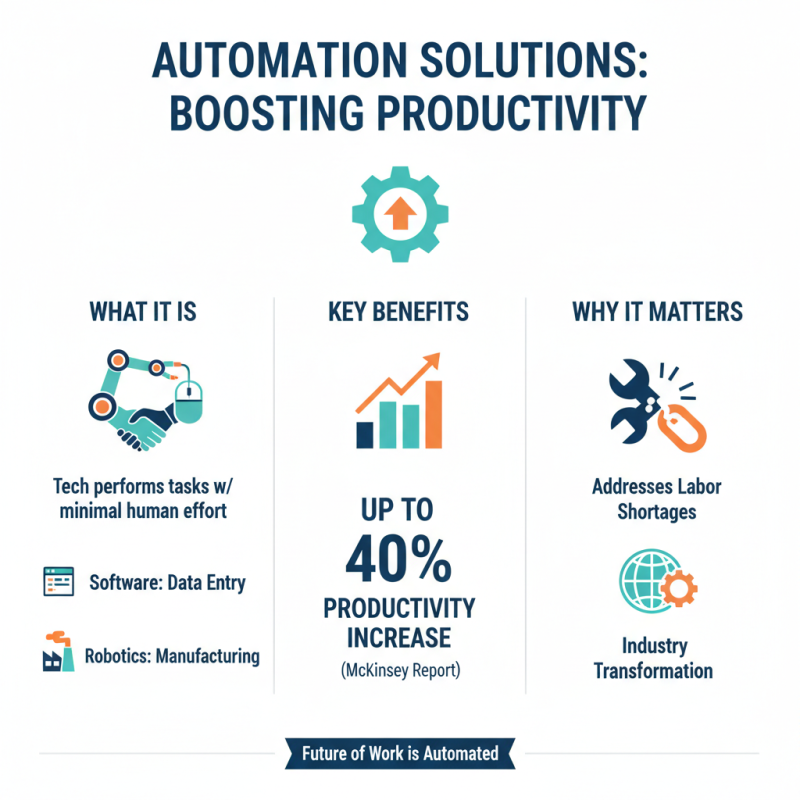
Automation solutions leverage technology to perform tasks with minimal human intervention. These systems can range from software automating data entry to robotics in manufacturing. According to a report by McKinsey, implementing automation can increase productivity by up to 40%. This transformation is particularly relevant in industries facing labor shortages.
Understanding the key concepts of automation is crucial. Businesses must assess their processes and identify areas for improvement. Many companies struggle with selecting the right tools. A recent study found that 70% of automation projects failed due to poor planning or execution. It's essential to align automation goals with business objectives.
**Tip:** Start small. Identify a single task that can be automated. This approach minimizes risk and allows for adjustments.
Another challenge is the fear of job displacement. While automation can replace specific tasks, it often creates new roles. Employees may need to reskill for more complex tasks. The World Economic Forum anticipates that by 2025, 85 million jobs may be displaced, but 97 million new ones may emerge.
**Tip:** Encourage employee training and upskilling. It prepares your workforce for a future where automation plays a larger role.
Types of Automation Solutions: A Comprehensive Overview
Automation solutions have become vital for modern businesses. They streamline operations and improve efficiency. A 2022 report from McKinsey suggests that automation can increase productivity by up to 40%. Many types of automation solutions exist, catering to various business needs.
Robotic Process Automation (RPA) is one key type. It handles repetitive tasks, such as data entry or invoice processing. The adoption of RPA can reduce operational costs by about 30% within the first year. However, companies may struggle with proper implementation. Some organizations rush into RPA without adequate planning, which leads to mixed results.
Another type is Business Process Automation (BPA), which goes beyond simple task automation. BPA focuses on optimizing entire workflows. According to a Forrester report, BPA can lead to a 20% reduction in project completion time. Yet, without clear goals, teams may face challenges in adoption and efficiency. This calls for careful consideration of existing processes before implementing solutions.
Benefits of Implementing Automation Solutions in Business Operations
Automation solutions can significantly enhance business operations. They streamline processes, reduce errors, and save time. By automating repetitive tasks, companies can focus on more strategic activities. Employees can shift their attention from mundane chores to creative solutions.
The benefits of implementing automation extend beyond efficiency. For instance, customer service automation improves response times. Chatbots can handle inquiries 24/7, and this immediate assistance builds customer satisfaction. However, it's essential to monitor these systems regularly. Over-reliance on automation can lead to detachment from customer needs.
Cost savings are also crucial. Automation can lower labor costs and minimize operational expenses. Yet, businesses must consider initial investment costs. Balancing short-term expenses with long-term gains can be challenging. Ultimately, finding the right mix of automation is vital.
Challenges and Considerations When Adopting Automation Solutions
Implementing automation solutions can bring significant benefits. However, organizations often face challenges. A recent industry report states that 57% of companies struggle with the change management aspect. Employees may resist new technologies due to fear of job loss or lack of understanding. This resistance can slow down the adoption process and affect productivity.
Integration is another challenge. Automation technology must work with existing systems. According to a survey, 45% of businesses reported compatibility issues with their current infrastructure. This can lead to increased costs and delays. It's crucial for organizations to conduct thorough assessments before implementation.
Moreover, businesses must not overlook ongoing training. Automation tools require new skills. A study revealed that 60% of employees feel they lack adequate training for automated systems. Without proper support, the full potential of automation may not be realized. Addressing these considerations is key to a successful transition.
Impact of Automation Solutions on Business Efficiency
This chart illustrates the improvement in operational efficiency after implementing automation solutions in businesses, highlighting the significant benefits of adopting such technologies.
Future Trends in Automation Solutions and Their Impact on Industries
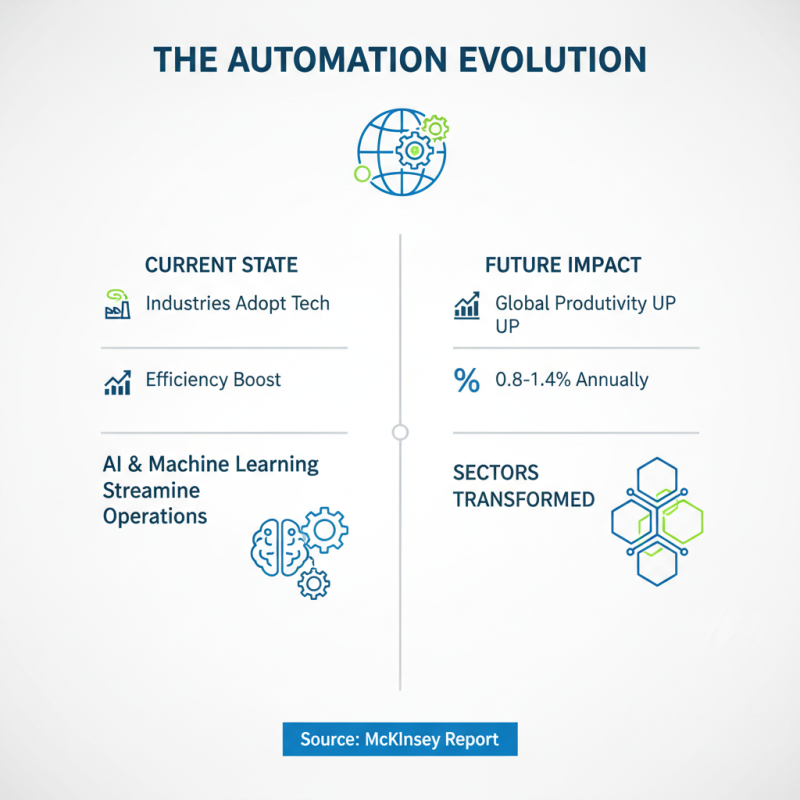
Automation solutions are rapidly evolving. Many industries are adopting these technologies to improve efficiency. According to a report by McKinsey, automation could boost global productivity by 0.8 to 1.4% annually. This trend may reshape whole sectors. Businesses are leveraging AI and machine learning to streamline operations.
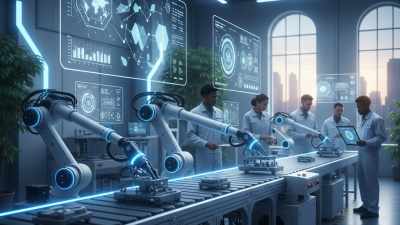
A key area of automation is in manufacturing. Robots handle repetitive tasks, reducing human error. In 2022, manufacturing robots accounted for 70% of all industrial robot sales, highlighting a growing reliance on machinery. However, this shift poses challenges. Workforce displacement and skill gaps are significant concerns. Companies must rethink training programs to ensure team members can adapt.
Tips: Invest in training employees. Upskilling can mitigate automation risks. Communication is key. Keep teams informed about changes and expectations. Monitor the evolving landscape. Stay aware of emerging technologies that may influence your sector. Embrace change, but remain realistic about the potential difficulties ahead.