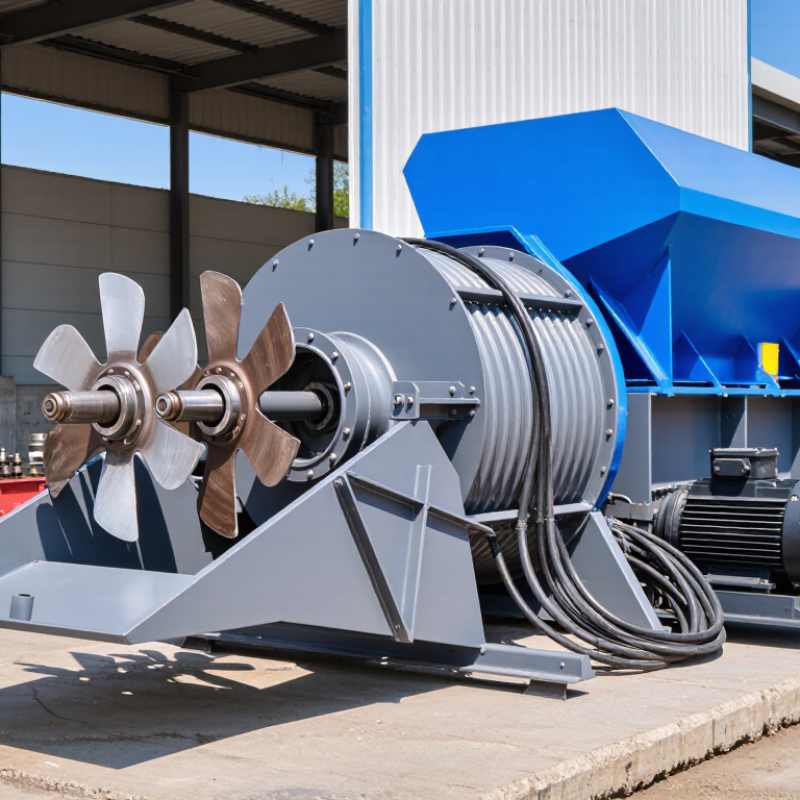
| Mixer type | Horizontal twin-shaft forced-action concrete mixer | Suitable for ready-mix concrete, precast production, block making and infrastructure projects. |
| Nominal discharge capacity | 1.5 m³ per batch | The batch size is measured as compacted concrete discharge volume; actual output depends on the mix and operating cycle. |
| Typical production rate | Approximately 60–90 m³/h under continuous plant operation | Theoretical capacity is based on cycle time; loading, discharge, material dosing and site logistics reduce real output. |
| Recommended total cycle | 30–60 seconds per batch, excluding long material-loading delays | Shorter cycles are achievable with efficient feeding, correct moisture control and a properly configured discharge system. |
| Typical mixing stage | 15–30 seconds after all main ingredients enter the mixing chamber | The optimum time varies with slump, aggregate grading, cement content, admixtures and required uniformity. |
| Mixing uniformity control | Controlled through calibrated batching, consistent feed sequence, moisture correction and timed mixing | Uniformity should be verified by sampling fresh concrete at different discharge points and testing according to the applicable local standard. |
| Aggregate size compatibility | Commonly configured for aggregate sizes up to approximately 80 mm | The allowable size depends on shaft, paddle, liner and discharge-gate configuration; confirm before ordering. |
| Drive arrangement | Two electric drive motors are commonly used for twin-shaft operation | Motor voltage, frequency, enclosure rating and installed power must match the destination site's electrical supply. |
| Typical installed power range | Approximately 55–75 kW, depending on configuration and duty requirement | Higher-moisture mixes, heavy aggregates and frequent high-load operation may require a larger drive configuration. |
| Discharge gate | Bottom discharge gate, commonly hydraulic or pneumatic | Select the actuator and outlet arrangement according to plant layout, cleaning access and required discharge speed. |
| Wear protection | Replaceable wear liners and abrasion-resistant mixing paddles | Liner thickness and material should be selected according to aggregate abrasiveness and expected operating hours. |
| Moisture-management requirement | Moisture measurement or routine correction is recommended for sand and aggregates | Correcting aggregate moisture helps maintain water-cement ratio, slump consistency and batch-to-batch uniformity. |
| Quality-control checkpoints | Batch weighing, water metering, mixing-time control, slump checks and periodic strength tests | A mixer alone does not guarantee concrete quality; the complete batching and testing process determines results. |
| Recommended cleaning interval | Clean after each production shift and remove buildup before hardened concrete forms | Regular cleaning protects mixing efficiency, reduces wear and helps maintain the designed working volume. |
| Best-fit applications | Medium-to-high-volume concrete production requiring repeatable batch quality | A practical choice for commercial batching plants, precast yards, road projects and large construction sites. |