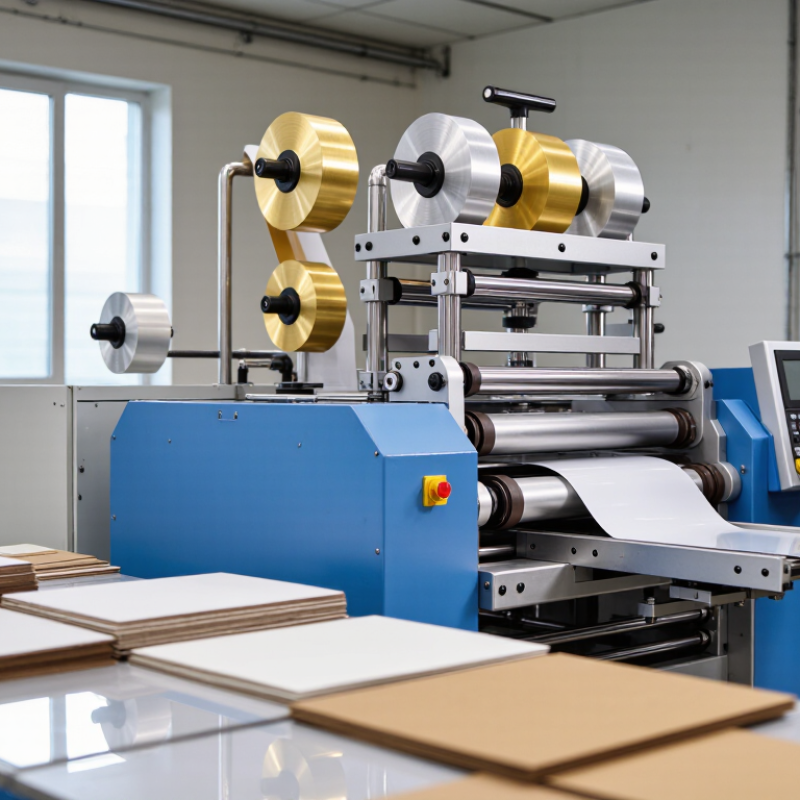
| Foil Transfer Quality | Coverage, edge definition, adhesion, pinholes and consistency across the sheet | Uniform transfer without visible gaps, scorching or excessive foil waste | Directly affects appearance, rejection rate and material cost |
| Temperature Control | Independent heating zones, sensor accuracy, warm-up time and over-temperature protection | Stable temperature with adjustable control suited to the selected foil and substrate | Reduces incomplete transfer, substrate damage and color variation |
| Pressure and Registration | Pressure adjustment, platen parallelism, repeatability and sheet alignment | Repeatable positioning with no visible movement between production cycles | Important for fine text, detailed graphics and multi-color work |
| Production Speed | Rated speed versus tested speed with the buyer’s actual artwork and material | Confirm output using finished acceptable pieces, not only machine cycles | Real productivity includes setup, loading, inspection and waste |
| Foil-Saving System | Intermittent feeding, programmable foil advance, tension control and rewinding | Foil advance should match the image area with minimal unused spacing | Lower foil consumption improves operating economics |
| Substrate Compatibility | Minimum and maximum thickness, surface coating, moisture sensitivity and flexibility | Run a test with the exact substrate, ink, coating and foil combination | Compatibility cannot be confirmed from machine size alone |
| Control and Automation | Touchscreen settings, job memory, diagnostics, alarm history and language options | Clear controls with repeatable job settings and accessible fault messages | Shortens setup time and supports international operators |
| Safety and Compliance | Emergency stops, guards, hot-surface protection, electrical documentation and conformity markings | Documentation and configuration should match the destination country requirements | Supports legal installation, operator safety and customs clearance |
| Utilities and Installation | Voltage, frequency, phase, compressed-air demand, floor load and ventilation | Confirm compatibility with the buyer’s electrical and workshop conditions before purchase | Prevents installation delays and unexpected infrastructure costs |
| Serviceability | Access to heating elements, sensors, belts, rollers, spare parts and technical manuals | Routine maintenance should be possible without specialist tools wherever practical | Reduces downtime and long-distance service dependence |