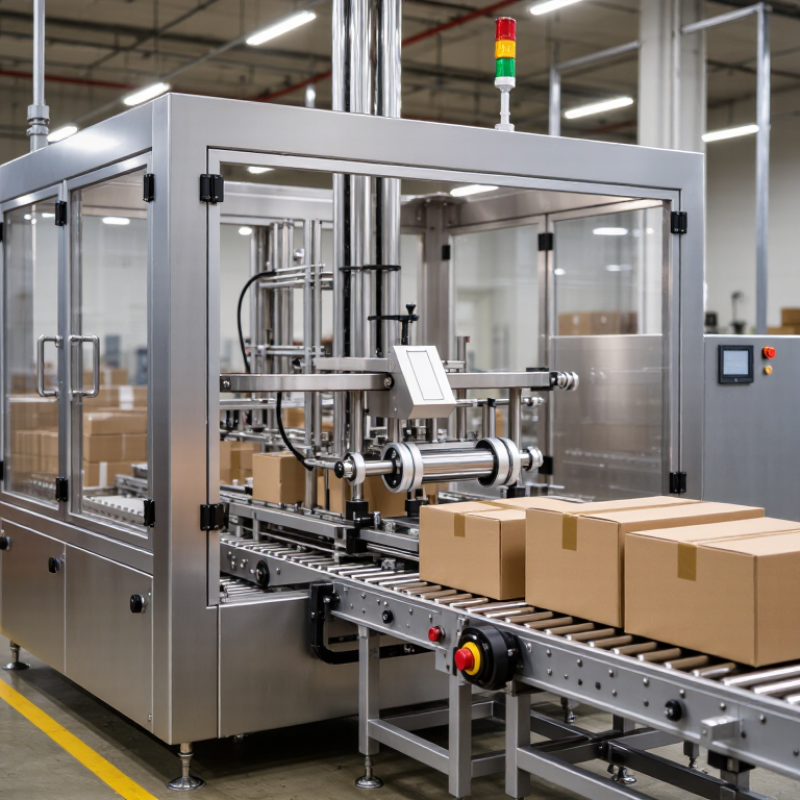
| Semi-Automatic RSC Case Erector | Regular Slotted Container (RSC) shipping cases sealed with tape or hot-melt adhesive | Approximately 8–15 cases per minute | Corrugated board commonly from 3-ply to 5-ply; approximately 3–7 mm thickness depending on flute and design | Small and medium production runs, contract packing, seasonal products, and facilities with frequent carton-size changes | Lower investment, simple operation, flexible format changes, and reduced manual folding labor | Check operator loading requirements, carton-size range, sealing method, and availability of local service support |
| Automatic RSC Case Erector | RSC cases formed from flat knocked-down blanks and sealed at the bottom | Approximately 15–40 cases per minute | Regular corrugated board, typically 3-ply or 5-ply; board strength must match the packed product and transport conditions | Food, beverage, household goods, e-commerce fulfillment, and general secondary packaging | Continuous forming, consistent squareness, lower labor demand, and easy integration with conveyors | Confirm carton blank quality, maximum blank weight, case dimensions, line speed, and tape or hot-melt compatibility |
| High-Speed RSC Case Erector | High-volume RSC shipping cases with automated bottom sealing | Approximately 30–60 cases per minute under stable conditions | Uniform corrugated blanks with controlled moisture, score depth, slot accuracy, and compression strength | Large distribution centers, beverage multipacks, fast-moving consumer goods, and high-throughput production lines | High productivity, stable case presentation, and efficient connection to robotic loading or automatic case packing | Requires consistent blanks, sufficient floor space, dependable compressed air, and coordinated upstream and downstream equipment |
| Wrap-Around Case Former and Packer | Wrap-around corrugated cases formed around the product and sealed after loading | Approximately 10–30 cases per minute, depending on pack pattern and product handling | Corrugated wrap-around blanks, often using E-flute, B-flute, or comparable grades selected for product protection | Bottles, cans, cartons, trays, multipacks, and products that can be grouped before case forming | Compact package design, strong product retention, fewer empty spaces, and efficient combined packing and case forming | Evaluate product grouping accuracy, blank stiffness, glue application, changeover time, and product orientation requirements |
| Tray Former | Open-top trays, display trays, and retail-ready corrugated trays | Approximately 10–35 trays per minute | Corrugated board or solid fiberboard; commonly designed with crease lines and glued or lock-bottom corners | Fresh produce, dairy, beverages, bakery products, promotional displays, and shelf-ready retail packaging | Improves shelf presentation, supports automated product loading, and can reduce repacking at retail locations | Confirm tray wall height, corner construction, stacking strength, product weight, and whether hot-melt or mechanical locking is preferred |
| 4-Corner and 6-Corner Carton Former | Pre-glued folding cartons with four-corner or six-corner crash-lock and folding structures | Approximately 15–50 cartons per minute, depending on carton size and folding geometry | Paperboard and lightweight corrugated materials, commonly about 0.4–1.5 mm thick depending on the package structure | Premium food packaging, cosmetics, gift boxes, bakery products, and retail cartons requiring a formed base | Fast setup after tooling preparation, attractive shelf appearance, and strong automatic bottom construction | Check carton design compatibility, crease quality, glue pattern, tooling requirements, and acceptable tolerance for blank warping |
| Vertical Carton Erector | Paperboard cartons erected vertically before filling or product insertion | Approximately 20–60 cartons per minute | Folding carton board, often around 0.3–0.8 mm thick; exact limits depend on coating, grain direction, and carton geometry | Powders, granules, sachets, bottles, pouches, and products loaded from the top | Good access for top loading, compact footprint, and straightforward connection to filling or weighing equipment | Verify carton opening performance, product loading height, dust control, suction requirements, and carton magazine capacity |
| Horizontal Cartoning Machine with Carton Forming | Pre-glued folding cartons erected horizontally, filled, and closed in one continuous process | Approximately 30–150 cartons per minute, depending on product type and carton style | Paperboard folding cartons, generally about 0.3–0.8 mm thick; coated and embossed boards require machine trials | Pharmaceutical products, personal care items, small food products, household goods, and individually boxed consumer products | Combines carton erecting, product insertion, and closing; supports coding, leaflet insertion, and inspection modules | Assess product infeed stability, leaflet and code requirements, serialization or inspection needs, format-change time, and validation documentation |
| Case Sealer with Integrated Forming Section | RSC cases erected, filled, and sealed in a synchronized packaging line | Approximately 12–35 cases per minute | Corrugated shipping cases with consistent flap length, board thickness, and blank dimensions | End-of-line packaging where case forming, product loading, flap folding, and sealing must operate as one system | Compact line layout, synchronized case handling, and reduced manual transfer between forming and sealing stages | Check product loading method, case compression requirements, sealing-head adjustment, line accumulation, and emergency-stop integration |
| Robotic Case Erecting and Forming Cell | RSC cases, trays, or customized corrugated cases handled by robotic picking and forming equipment | Approximately 10–40 cases per minute, depending on robot configuration and carton complexity | Corrugated blanks with defined pickup areas, consistent dimensions, and suitable stiffness for vacuum or mechanical handling | Mixed-SKU operations, flexible manufacturing, irregular product lines, and facilities requiring automated format changes | High flexibility, programmable recipes, reduced manual handling, and potential integration with vision inspection | Evaluate robot payload, end-of-arm tooling, vision accuracy, safety guarding, programming support, and changeover strategy |